
Similes are one of the most effective tools writers use to make language vivid, expressive, and memorable. By comparing one thing to another using the words “like” or “as,” similes help readers clearly imagine emotions, actions, and experiences. They play a vital role in figurative language because they add color and depth to everyday writing.
Whether you’re crafting a story, poem, essay, or speech, similes can make your descriptions more engaging and relatable. Nature often provides some of the strongest and most meaningful comparisons because readers instantly recognize natural imagery. Trees, for example, symbolize strength, growth, resilience, wisdom, and human emotion, making them powerful sources of inspiration in creative writing.
Just as a tree can withstand fierce storms, people often experience strong emotions that shape their character and actions. In this guide, you’ll discover creative similes for furious that can help you describe anger with greater clarity, imagery, and emotional impact.
What Is a Simile?
A simile is a figure of speech that compares two unlike things using the words “like” or “as.” The purpose of a simile is to create a vivid image and help readers better understand an idea or emotion.
Example:
He was as furious as a volcano ready to erupt.
This comparison instantly helps readers visualize the intensity of the person’s anger.
As Furious as a Volcano About to Erupt
Meaning: Extremely angry and close to losing control.
Usage Insight: Ideal for describing explosive anger that has been building over time.
Examples:
- He stood as furious as a volcano about to erupt after hearing the news.
- The coach looked as furious as a volcano about to erupt during the final minutes of the game.
Like a Thunderstorm Breaking Across the Sky
Meaning: Angry in a sudden and powerful way.
Usage Insight: Perfect for dramatic scenes involving unexpected rage.
Examples:
- Her anger arrived like a thunderstorm breaking across the sky.
- He stormed into the room like a thunderstorm breaking across the sky.
As Fierce as a Wildfire in Dry Woods
Meaning: Anger that spreads quickly and intensely.
Usage Insight: Works well when describing emotions that affect others around them.
Examples:
- His temper was as fierce as a wildfire in dry woods.
- The argument grew as fierce as a wildfire in dry woods.
Like Waves Crashing Against Rocky Cliffs
Meaning: Powerful and relentless anger.
Usage Insight: Effective for ongoing frustration and repeated conflict.
Examples:
- Her complaints came like waves crashing against rocky cliffs.
- His fury hit the team like waves crashing against rocky cliffs.
As Furious as a Lion Defending Its Pride

Meaning: Angry because of protection or loyalty.
Usage Insight: Useful when describing anger motivated by love or responsibility.
Examples:
- She became as furious as a lion defending its pride.
- The father was as furious as a lion defending its pride.
Like a Tornado Tearing Through a Field
Meaning: Destructive and uncontrollable anger.
Usage Insight: Best used for intense emotional scenes.
Examples:
- His rage moved through the office like a tornado tearing through a field.
- She reacted like a tornado tearing through a field.
As Hot as the Desert at Noon
Meaning: Burning with anger and irritation.
Usage Insight: Great for emphasizing emotional heat and frustration.
Examples:
- He felt as hot as the desert at noon after the unfair accusation.
- Her temper grew as hot as the desert at noon.
Like a Storm-Shaken Tree in the Wind
Meaning: Angry while struggling to maintain control.
Usage Insight: Useful for showing internal conflict.
Examples:
- He stood like a storm-shaken tree in the wind, trying not to shout.
- She trembled like a storm-shaken tree in the wind.
As Furious as a Bear Disturbed from Hibernation
Meaning: Intensely angry after being interrupted or provoked.
Usage Insight: Perfect for situations involving annoyance and disruption.
Examples:
- He was as furious as a bear disturbed from hibernation.
- The manager looked as furious as a bear disturbed from hibernation.
Like Lightning Splitting an Ancient Oak
Meaning: Sudden and shocking anger.
Usage Insight: Effective for unexpected emotional outbursts.
Examples:
- His words struck like lightning splitting an ancient oak.
- Her anger appeared like lightning splitting an ancient oak.
As Restless as a Stormy Sea
Meaning: Angry and unable to calm down.
Usage Insight: Useful for describing lingering frustration.
Examples:
- He remained as restless as a stormy sea all afternoon.
- Her emotions churned as restless as a stormy sea.
Like Fire Racing Through Tall Grass
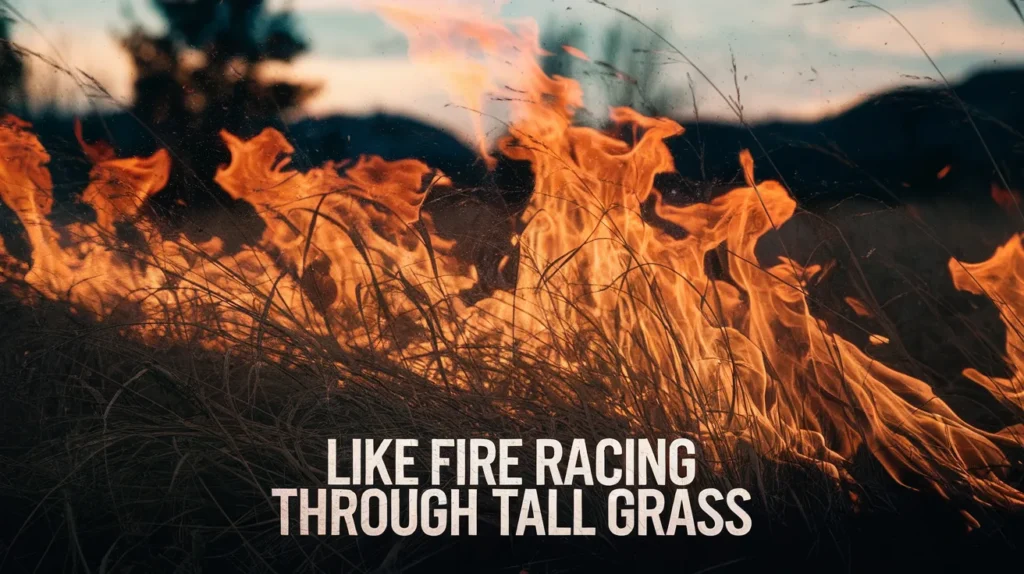
Meaning: Anger spreading rapidly.
Usage Insight: Ideal for conflicts that escalate quickly.
Examples:
- The tension spread like fire racing through tall grass.
- His fury moved through the crowd like fire racing through tall grass.
As Furious as a Wolf Cornered in the Wild
Meaning: Angry because of pressure or fear.
Usage Insight: Works well in high-stakes situations.
Examples:
- He fought back as furious as a wolf cornered in the wild.
- She looked as furious as a wolf cornered in the wild.
Like Dark Clouds Gathering Before a Storm
Meaning: Anger building beneath the surface.
Usage Insight: Excellent for creating suspense.
Examples:
- His expression changed like dark clouds gathering before a storm.
- Tension grew like dark clouds gathering before a storm.
As Powerful as an Earthquake Beneath the Ground
Meaning: Deep and overwhelming anger.
Usage Insight: Best for portraying emotional intensity.
Examples:
- His rage felt as powerful as an earthquake beneath the ground.
- She spoke with anger as powerful as an earthquake beneath the ground.
How to Use Similes Effectively in Writing
Similes can make descriptions more vivid and memorable when used thoughtfully. Here are some practical tips:
- Choose comparisons that match the emotion you want to express.
- Use nature similes to create strong visual imagery.
- Avoid overusing similes in every paragraph.
- Keep comparisons clear and easy to understand.
- Use similes in poems to enhance rhythm and emotion.
- Add similes to stories to strengthen characterization.
- Include similes in essays when they help explain ideas.
- Use them in songs to create memorable lyrics.
- Read similes in literature to see how professional writers use them.
- Create original comparisons to make your writing stand out.
FAQs
What are similes for furious?
Similes for furious are comparisons that describe intense anger using the words “like” or “as” to create vivid imagery.
What is the difference between a simile and a metaphor?
A simile compares two things using “like” or “as,” while a metaphor makes a direct comparison without those words.
Why are similes useful for describing anger?
They help readers visualize emotional intensity and better understand a character’s feelings.
Can similes for furious be used in academic writing?
Yes, when used appropriately, they can clarify ideas and make writing more engaging.
Are similes commonly used in literature?
Absolutely. Many authors use similes in literature to create memorable descriptions, emotions, and comparisons.
Conclusion
Similes for furious offer powerful ways to describe anger with clarity, creativity, and emotional depth. By comparing fury to volcanoes, storms, wildfires, and other forces of nature, writers can create vivid images that resonate with readers. These figurative language examples transform simple descriptions into memorable experiences, helping audiences feel the intensity of a character’s emotions. Whether you’re writing poetry, fiction, essays, songs, or creative descriptions, well-crafted similes can make your work more expressive and engaging. Mastering similes for furious will not only strengthen your writing but also help you communicate emotion with greater precision and impact.