
Writing becomes more interesting and memorable when it includes vivid comparisons. One of the easiest and most effective ways to add color to writing is by using similes. Similes help readers understand ideas by comparing one thing to another using the words “like” or “as.”
They are an important part of figurative language because they create strong mental images and make descriptions more engaging. Students often use similes in stories, poems, essays, and classroom assignments to improve their writing skills. Nature provides endless inspiration for similes because natural elements are familiar and easy to visualize.
Trees, for example, are powerful symbols of strength, growth, resilience, wisdom, and human emotion, making them excellent subjects for comparisons. In this guide, you will discover useful simile examples for students, along with meanings, writing tips, and examples that can help you become a stronger writer.
What Is a Simile?
A simile is a figure of speech that compares two different things using the words “like” or “as.” Similes help readers create a clear picture in their minds and make writing more expressive.
Example:
The student was as busy as a bee preparing for exams.
This comparison helps readers quickly understand how active and hardworking the student was.
As Busy as a Bee
Meaning
Very active and hardworking.
Usage Insight
Use this simile when describing someone who is constantly working or completing tasks.
Example Sentences
- Maria was as busy as a bee during the science fair.
- The students worked as busy as bees to finish their project on time.
As Bright as the Morning Sun
Meaning
Very intelligent, cheerful, or positive.
Usage Insight
Perfect for describing a student’s personality or academic abilities.
Example Sentences
- Ethan is as bright as the morning sun in mathematics class.
- Her smile was as bright as the morning sun.
As Calm as a Still Lake
Meaning
Very peaceful and relaxed.
Usage Insight
Works well when describing emotions or behavior.
Example Sentences
- Before the presentation, she remained as calm as a still lake.
- The classroom was as calm as a still lake during reading time.
As Fast as a Shooting Star
Meaning
Extremely quick.
Usage Insight
Useful when describing speed or rapid movement.
Example Sentences
- The runner was as fast as a shooting star crossing the sky.
- He completed the quiz as fast as a shooting star.
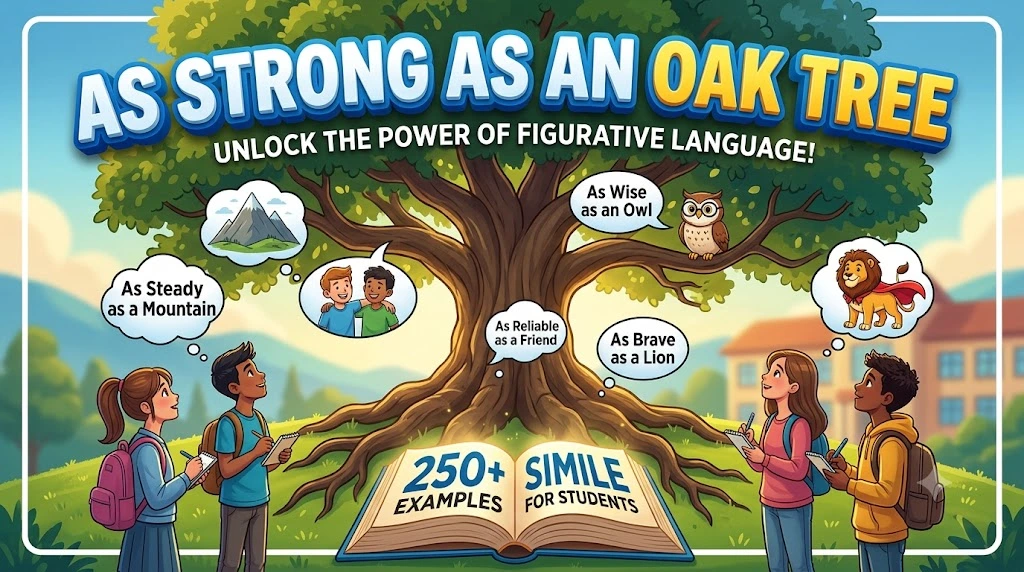
As Strong as an Oak Tree
Meaning
Very strong and dependable.
Usage Insight
Great for describing physical or emotional strength.
Example Sentences
- The team captain was as strong as an oak tree under pressure.
- Her determination remained as strong as an oak tree.
As Curious as a Cat Exploring a New Room
Meaning
Very interested in learning or discovering.
Usage Insight
Ideal for students who enjoy asking questions.
Example Sentences
- Liam was as curious as a cat exploring a new room.
- The young scientist examined the experiment with curiosity.
As Quiet as Falling Snow
Meaning
Extremely silent.
Usage Insight
Perfect for describing peaceful environments.
Example Sentences
- The library was as quiet as falling snow.
- The students listened as quietly as snow settling on the ground.
As Happy as a Bird in Spring
Meaning
Full of joy and excitement.
Usage Insight
Useful for positive and uplifting descriptions.
Example Sentences
- She was as happy as a bird in spring after receiving good grades.
- The children looked as happy as birds enjoying warm weather.
As Sharp as a Hawk’s Eyes
Meaning
Very observant and attentive.
Usage Insight
Works well when describing focus and awareness.
Example Sentences
- The teacher was as sharp as a hawk’s eyes when checking assignments.
- His attention to detail was as sharp as a hawk’s vision.
As Gentle as a Summer Breeze
Meaning
Kind and soft in behavior.
Usage Insight
Perfect for describing friendly people.
Example Sentences
- Her voice was as gentle as a summer breeze.
- The counselor spoke as gently as a warm wind.
As Brave as a Lion
Meaning
Very courageous and fearless.
Usage Insight
Excellent for describing confidence and determination.
Example Sentences
- The student was as brave as a lion during the speech competition.
- She faced challenges as bravely as a lion.
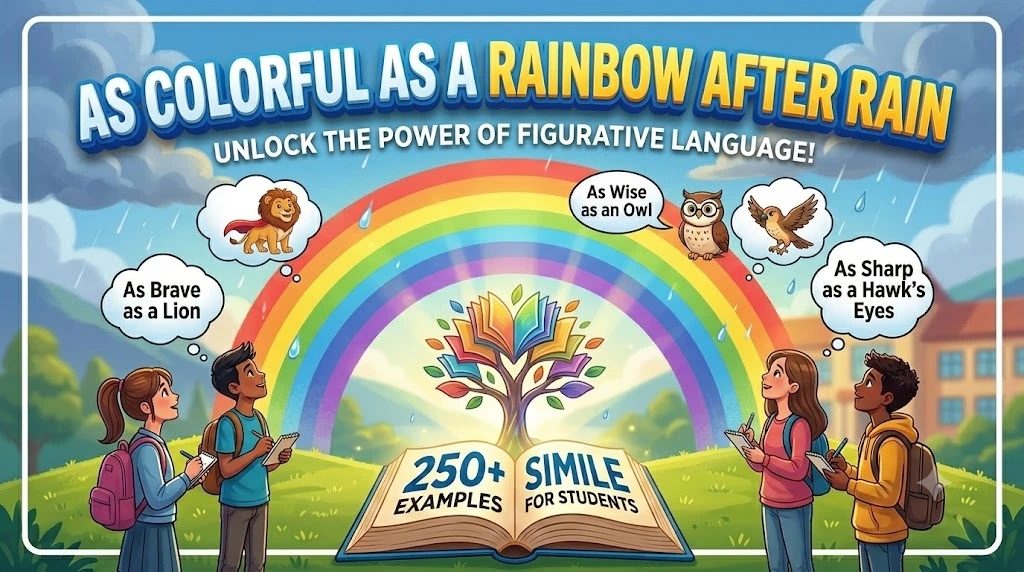
As Colorful as a Rainbow After Rain
Meaning
Bright, lively, and full of variety.
Usage Insight
Useful for creative descriptions and artwork.
Example Sentences
- The classroom display was as colorful as a rainbow after rain.
- Her painting looked as colorful as the sky after a storm.
As Steady as a Mountain
Meaning
Reliable and dependable.
Usage Insight
Works well when describing consistency.
Example Sentences
- His focus remained as steady as a mountain.
- The mentor was as dependable as a mountain through every challenge.
As Sweet as Honey
Meaning
Very kind and pleasant.
Usage Insight
Great for describing personality and behavior.
Example Sentences
- The new student was as sweet as honey.
- Her words were as sweet as honey and encouraged everyone.
As Creative as a Painter with a Blank Canvas
Meaning
Highly imaginative and inventive.
Usage Insight
Perfect for describing artistic thinking.
Example Sentences
- Noah was as creative as a painter with a blank canvas.
- Her ideas flowed as creatively as an artist at work.
How to Use Similes Effectively in Writing
Poems
- Use sensory details and vivid imagery.
- Connect emotions with nature-inspired comparisons.
- Keep similes fresh and original.
For Stories
- Match similes to the mood and setting.
- Use comparisons to reveal character traits.
- Avoid excessive repetition.
Essays
- Use similes to clarify ideas and explanations.
- Keep comparisons relevant to the topic.
- Maintain a balance between creativity and clarity.
For Songs
- Create memorable and emotional imagery.
- Use rhythmic and relatable comparisons.
- Support the theme of the song.
Creative Descriptions
- Engage multiple senses.
- Draw inspiration from everyday life and nature.
- Use comparisons that strengthen the overall image.
FAQs About Simile Examples for Students
What are simile examples for students?
Simile examples for students are comparisons that use “like” or “as” to make writing more vivid and easier to understand.
What is the difference between a simile and a metaphor?
A simile uses “like” or “as” to compare two things, while a metaphor directly states that one thing is another.
Why are similes important in writing?
Similes help readers visualize ideas, understand emotions, and enjoy more engaging descriptions.
Can students use similes in academic writing?
Yes. Similes can improve clarity and make explanations more interesting when used appropriately.
Are similes commonly used in literature?
Yes. Similes in literature help authors create imagery, establish mood, and develop memorable descriptions.
Conclusion
Simile examples for students are valuable tools that make writing clearer, more expressive, and more enjoyable to read. Whether comparing a hardworking student to a busy bee or a courageous learner to a lion, similes create vivid imagery that helps readers connect with ideas and emotions. These figurative language examples strengthen poems, stories, essays, songs, and creative descriptions by adding depth and imagination. By practicing different comparisons and exploring nature similes, students can develop stronger writing skills and communicate their thoughts more effectively. The right simile can turn an ordinary sentence into a memorable and powerful expression.