
Similes are one of the most popular and effective tools in figurative language. They help writers create clear and memorable images by comparing one thing to another using words such as “like” or “as.” These comparisons make descriptions more interesting and help readers better understand emotions, actions, and ideas.
Similes are commonly found in literature, poetry, storytelling, speeches, and everyday conversations because they bring language to life. Many of the most powerful similes come from nature, where familiar images create strong emotional connections. Trees, for example, symbolize strength, growth, resilience, wisdom, and human emotion, making them valuable symbols in creative writing.
Just as trees grow through changing seasons and weather difficult storms, people experience challenges, growth, and transformation throughout life. Understanding how similes work can help writers create richer descriptions and stronger connections with their audience.
What Is a Simile?
A simile is a figure of speech that compares two different things using the words “like” or “as.” Similes help readers visualize ideas and make writing more engaging.
Example:
Her smile was like sunshine on a cold morning.
This simile compares a smile to sunshine, helping readers imagine warmth, comfort, and happiness.
Like a River Flowing Toward the Sea
Meaning
Represents natural progress, movement, and purpose.
Usage Insight
Works well when describing determination or life journeys.
Examples
- His career moved like a river flowing toward the sea.
- Her ambitions grew like a river flowing toward the sea.
Like a Bird Riding the Wind
Meaning
Suggests freedom, confidence, and ease.
Usage Insight
Ideal for describing carefree emotions or adventurous experiences.
Examples
- She felt like a bird riding the wind during her travels.
- The athlete moved like a bird riding the wind across the field.
Like Sunlight Through the Trees
Meaning
Represents warmth, hope, and positivity.
Usage Insight
Perfect for uplifting and emotional descriptions.
Examples
- Her kindness spread like sunlight through the trees.
- The good news arrived like sunlight through the trees.
Like Stars Scattered Across the Night Sky
Meaning
Suggests beauty, wonder, and endless possibilities.
Usage Insight
Excellent for poetic and imaginative writing.
Examples
- His dreams were like stars scattered across the night sky.
- The city lights looked like stars scattered across the night sky.
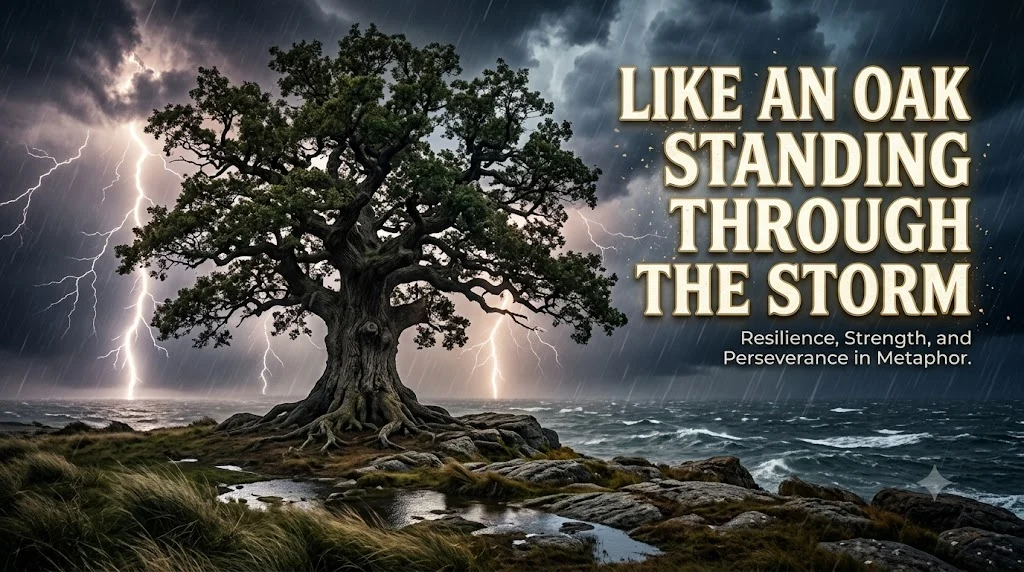
Like an Oak Standing Through the Storm
Meaning
Represents resilience and strength.
Usage Insight
Useful for describing perseverance and courage.
Examples
- She remained like an oak standing through the storm.
- His determination was like an oak standing through the storm.
Like Waves Rolling Onto the Shore
Meaning
Suggests consistency and natural rhythm.
Usage Insight
Works well for describing recurring emotions or events.
Examples
- Memories returned like waves rolling onto the shore.
- Inspiration came like waves rolling onto the shore.
Like a Seed Reaching for the Sun
Meaning
Represents growth, ambition, and potential.
Usage Insight
Perfect for motivational and inspirational writing.
Examples
- Her confidence grew like a seed reaching for the sun.
- The young company expanded like a seed reaching for the sun.
Like a Rainbow After Rain
Meaning
Represents hope, happiness, and renewal.
Usage Insight
Ideal for describing positive outcomes after challenges.
Examples
- The opportunity appeared like a rainbow after rain.
- Their success felt like a rainbow after rain.
Like a Lantern in the Darkness
Meaning
Suggests guidance and encouragement.
Usage Insight
Effective when describing mentors or supportive individuals.
Examples
- His advice was like a lantern in the darkness.
- The teacher became like a lantern in the darkness for her students.
Like a Butterfly Emerging From a Cocoon
Meaning
Represents transformation and personal growth.
Usage Insight
Useful for stories about change and self-improvement.
Examples
- She blossomed like a butterfly emerging from a cocoon.
- His confidence appeared like a butterfly emerging from a cocoon.
Like a Mountain Touching the Clouds
Meaning
Suggests greatness, ambition, and achievement.
Usage Insight
Perfect for inspirational and success-oriented writing.
Examples
- Her goals stood like a mountain touching the clouds.
- His accomplishments seemed like a mountain touching the clouds.
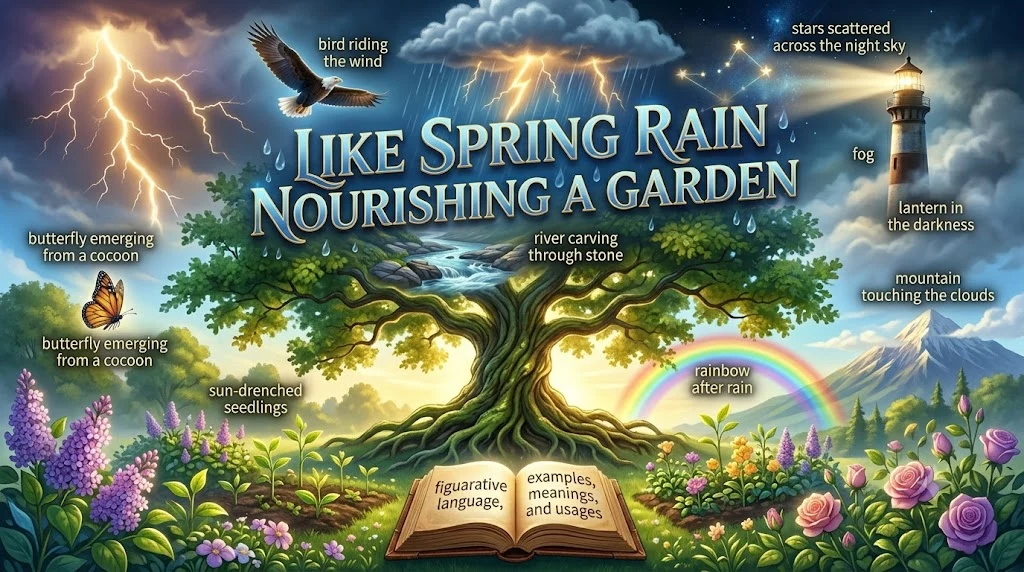
Like Spring Rain Nourishing a Garden
Meaning
Represents care, growth, and renewal.
Usage Insight
Excellent for describing support and encouragement.
Examples
- Her words were like spring rain nourishing a garden.
- The program helped students like spring rain nourishing a garden.
Like Fireflies Dancing at Dusk
Meaning
Suggests beauty, wonder, and joy.
Usage Insight
Ideal for creative and descriptive writing.
Examples
- Their laughter floated like fireflies dancing at dusk.
- The celebration sparkled like fireflies dancing at dusk.
Like a Path Through a Forest
Meaning
Represents direction and discovery.
Usage Insight
Useful for describing journeys and personal development.
Examples
- His plan unfolded like a path through a forest.
- The experience felt like a path through a forest.
Like Morning Dew on Fresh Leaves
Meaning
Represents freshness, purity, and new beginnings.
Usage Insight
Perfect for optimistic and reflective writing.
Examples
- Her ideas felt like morning dew on fresh leaves.
- The new project arrived like morning dew on fresh leaves.
How to Use Similes Effectively in Writing
Poems
- Use vivid imagery that appeals to the senses.
- Draw inspiration from nature and emotions.
For Stories
- Use similes to reveal character traits and emotions.
- Create memorable scenes with meaningful comparisons.
Essays
- Use similes carefully to clarify ideas.
- Keep comparisons relevant to the topic.
For Songs
- Choose emotional and relatable imagery.
- Create comparisons that match the song’s mood.
Creative Descriptions
- Focus on originality and clarity.
- Compare unfamiliar ideas to familiar experiences.
FAQs About Similes for Like
What are similes for like?
Similes for like are comparisons that use the word “like” to connect two different things and create vivid imagery.
Why are similes important in writing?
Similes help readers visualize ideas, understand emotions, and engage more deeply with the text.
What is the difference between a simile and a metaphor?
A simile uses words such as “like” or “as,” while a metaphor makes a direct comparison without those words.
Can similes be used in academic writing?
Yes, similes can clarify complex concepts when used appropriately and sparingly.
How do I create effective similes?
Choose two things that share a similar quality and compare them in a clear and imaginative way.
Conclusion
Similes for like are essential tools that help writers create vivid comparisons and meaningful imagery. Whether comparing determination to an oak tree, hope to a rainbow after rain, or growth to a seed reaching for the sun, these figurative language examples make writing more engaging and memorable. Similes add clarity, emotion, and creativity to poems, stories, essays, songs, and descriptive passages. They allow readers to visualize ideas and connect with them on a deeper level. By mastering the art of comparisons, writers can transform ordinary language into compelling and expressive communication. The best similes for like inspire imagination, strengthen descriptions, and bring words to life.