
Similes are wonderful tools that make writing more colorful, expressive, and memorable. They help readers understand emotions and ideas by comparing one thing to another using words such as “like” or “as.” Because emotions can sometimes be difficult to describe, similes provide vivid imagery that helps readers connect with what a writer is trying to express.
Similes are commonly used in poetry, stories, novels, songs, and everyday conversations. They are an important part of figurative language because they turn ordinary descriptions into engaging and meaningful comparisons. Nature often inspires the best similes, as natural elements carry deep symbolic meaning.
Trees, for example, symbolize strength, growth, resilience, wisdom, and human emotion, making them powerful images in literature and storytelling. Whether you are writing about joy, excitement, gratitude, or celebration, the right simile can make feelings of happiness come alive on the page.
What Is a Simile?
A simile is a figure of speech that compares two different things using the words “like” or “as.” It helps readers better understand an idea or emotion by connecting it to something familiar.
Example:
She was as happy as a bird singing at sunrise.
This comparison creates a vivid image of joy and freedom.
As Happy as a Bird Greeting the Morning Sun
Meaning
Describes pure joy, optimism, and excitement.
Usage Insight
Works well when portraying fresh beginnings and cheerful moods.
Examples
- She was as happy as a bird greeting the morning sun after hearing the good news.
- The children looked as happy as birds greeting the morning sun on the first day of summer.
Like Sunshine Spreading Across a Meadow
Meaning
Represents warmth, positivity, and happiness that affects others.
Usage Insight
Perfect for describing uplifting personalities.
Examples
- Her smile was like sunshine spreading across a meadow.
- His happiness moved through the room like sunshine spreading across a meadow.
As Happy as a Tree Dancing in a Spring Breeze
Meaning
Suggests carefree joy and contentment.
Usage Insight
Ideal for nature-inspired writing and peaceful scenes.
Examples
- She felt as happy as a tree dancing in a spring breeze.
- The family was as happy as a tree dancing in a spring breeze during the picnic.
Like a Rainbow After a Summer Storm
Meaning
Represents happiness that follows difficulty or hardship.
Usage Insight
Useful for stories involving personal growth or triumph.
Examples
- Her relief felt like a rainbow after a summer storm.
- Winning the scholarship was like a rainbow after a summer storm.
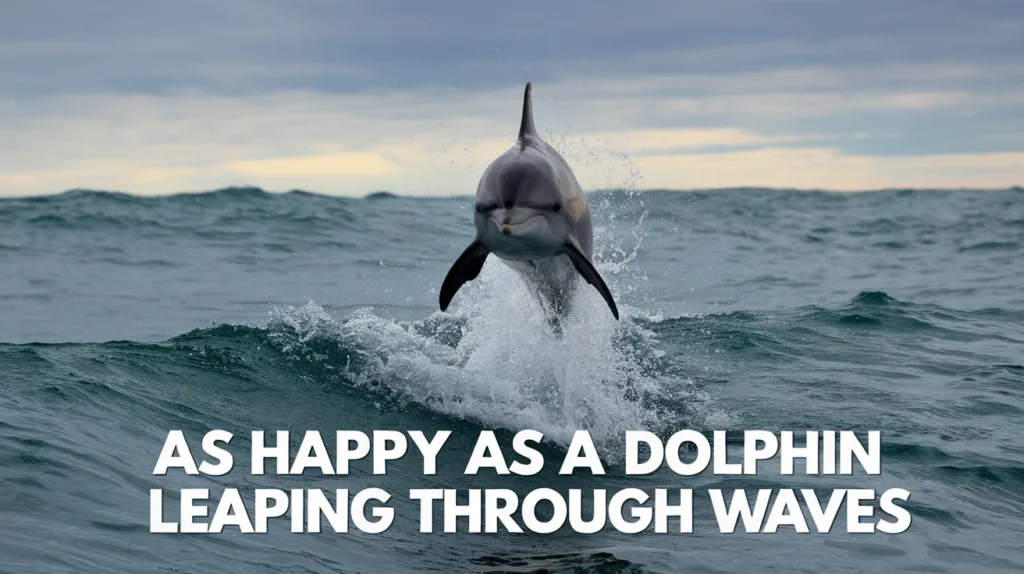
As Happy as a Dolphin Leaping Through Waves
Meaning
Describes energetic and playful happiness.
Usage Insight
Works best in lively and joyful descriptions.
Examples
- The boy was as happy as a dolphin leaping through waves.
- She laughed as happily as a dolphin leaping through waves.
Like Flowers Opening to the Morning Light
Meaning
Represents happiness, growth, and positivity.
Usage Insight
Excellent for describing emotional transformation.
Examples
- Her confidence bloomed like flowers opening to the morning light.
- The team responded like flowers opening to the morning light after the victory.
As Happy as a Child Finding Hidden Treasure
Meaning
Suggests excitement, delight, and wonder.
Usage Insight
Perfect for describing unexpected happiness.
Examples
- He was as happy as a child finding hidden treasure.
- She looked as happy as a child finding hidden treasure when she opened the gift.
Like a Stream Sparkling Under the Sun
Meaning
Represents bright and natural happiness.
Usage Insight
Ideal for descriptive and poetic writing.
Examples
- Her eyes sparkled like a stream under the sun.
- His mood flowed like a stream sparkling under the sun.
As Happy as Butterflies in a Blooming Garden
Meaning
Describes carefree and vibrant joy.
Usage Insight
Useful for cheerful and colorful imagery.
Examples
- The guests were as happy as butterflies in a blooming garden.
- She felt as happy as butterflies in a blooming garden during her vacation.
Like Music Floating Through the Air
Meaning
Represents happiness that feels effortless and uplifting.
Usage Insight
Works well in emotional and artistic descriptions.
Examples
- Her laughter was like music floating through the air.
- The celebration felt like music floating through the air.
As Happy as a River Reaching the Sea
Meaning
Suggests fulfillment, achievement, and contentment.
Usage Insight
Perfect for describing long-awaited success.
Examples
- He felt as happy as a river reaching the sea after graduation.
- She was as happy as a river reaching the sea when her dream came true.
Like Stars Shining on a Clear Night

Meaning
Represents radiant and lasting happiness.
Usage Insight
Ideal for poetic and inspirational writing.
Examples
- Her joy glowed like stars shining on a clear night.
- Their smiles were like stars shining on a clear night.
As Happy as Bees in a Field of Wildflowers
Meaning
Describes energetic and productive happiness.
Usage Insight
Works well when depicting excitement and satisfaction.
Examples
- The workers were as happy as bees in a field of wildflowers after completing the project.
- She seemed as happy as bees in a field of wildflowers.
Like an Eagle Soaring Above the Mountains
Meaning
Represents freedom, confidence, and joy.
Usage Insight
Useful for describing personal achievement and liberation.
Examples
- He felt like an eagle soaring above the mountains after overcoming his fears.
- Her happiness was like an eagle soaring above the mountains.
As Happy as the First Blossom of Spring
Meaning
Suggests renewal, hope, and fresh happiness.
Usage Insight
Perfect for describing new beginnings.
Examples
- She was as happy as the first blossom of spring on her wedding day.
- The community felt as happy as the first blossom of spring after the good news.
How to Use Similes Effectively in Writing
Poems
- Use sensory details to create vivid imagery.
- Draw inspiration from nature and emotions.
For Stories
- Use similes to reveal character feelings and moods.
- Make descriptions more memorable and engaging.
Essays
- Use similes sparingly to clarify ideas.
- Ensure comparisons support the topic naturally.
For Songs
- Choose emotional and relatable imagery.
- Use rhythmic comparisons that fit the lyrics.
Creative Descriptions
- Focus on original comparisons.
- Connect emotions to familiar experiences in nature and daily life.
FAQs About Similes for Feeling Happy
What are similes for feeling happy?
Similes for feeling happy are comparisons that describe joy, excitement, or contentment using “like” or “as.”
What is the difference between a simile and a metaphor?
A simile uses words such as “like” or “as” to compare two things, while a metaphor makes a direct comparison without those words.
Why are similes useful for describing happiness?
They create vivid imagery and help readers connect emotionally with feelings of joy and positivity.
Can similes be used in academic writing?
Yes, but they should be used carefully and only when they improve understanding or explanation.
How do writers create original similes?
Writers identify shared qualities between different things and use creative comparisons that readers can easily visualize.
Conclusion
Similes for feeling happy are powerful tools that help writers express joy, excitement, gratitude, and contentment with vivid imagery and emotional depth. Whether happiness is compared to sunshine spreading across a meadow, a bird greeting the morning sun, or a rainbow after a storm, these comparisons make emotions easier to understand and more memorable. Strong similes enrich poems, stories, essays, and creative descriptions by transforming simple feelings into colorful and engaging language. They help readers visualize emotions and connect with them on a deeper level. By mastering figurative language, writers can create more meaningful and impactful descriptions that resonate with their audience. The best similes for feeling happy bring warmth, clarity, and inspiration to every piece of writing.