
Similes and metaphors are among the most powerful tools in figurative language. They help writers create vivid imagery, express emotions, and make ideas easier for readers to understand. A simile compares two things using words such as “like” or “as,” while a metaphor makes a direct comparison without those words.
These literary devices appear in poetry, novels, speeches, songs, and everyday conversations because they make language more engaging and memorable. Nature often inspires the best comparisons because natural elements carry deep symbolic meanings. Trees, for example, are powerful symbols of strength, growth, resilience, wisdom, and human emotion.
Their ability to stand firm through storms while continuing to grow makes them a common image in literature and creative writing. Learning how similes and metaphors work can help writers create stronger descriptions and connect more deeply with their readers.
What Is a Simile?
A simile is a figure of speech that compares two different things using the words “like” or “as.” Similes help readers visualize ideas by connecting them to familiar images.
Example:
Her determination was as strong as an oak tree standing against the wind.
This simile helps readers picture unwavering strength and resilience.
As Steady as an Ancient Oak
Meaning
Describes someone who is dependable, strong, and unwavering.
Usage Insight
Works well when portraying reliability and inner strength.
Examples
- His leadership was as steady as an ancient oak.
- She remained as steady as an ancient oak during difficult times.
Like a River Carving Through Stone
Meaning
Represents persistence and gradual achievement.
Usage Insight
Ideal for describing determination and long-term effort.
Examples
- Her dedication was like a river carving through stone.
- Success came to him like a river carving through stone.
As Bright as the Morning Sun
Meaning
Suggests intelligence, positivity, or hope.
Usage Insight
Perfect for uplifting and cheerful descriptions.
Examples
- Her smile was as bright as the morning sun.
- The future seemed as bright as the morning sun.
Like a Lighthouse in the Fog
Meaning
Represents guidance and hope during uncertainty.
Usage Insight
Useful when describing mentors or inspiring figures.
Examples
- His advice was like a lighthouse in the fog.
- The teacher stood like a lighthouse in the fog for her students.
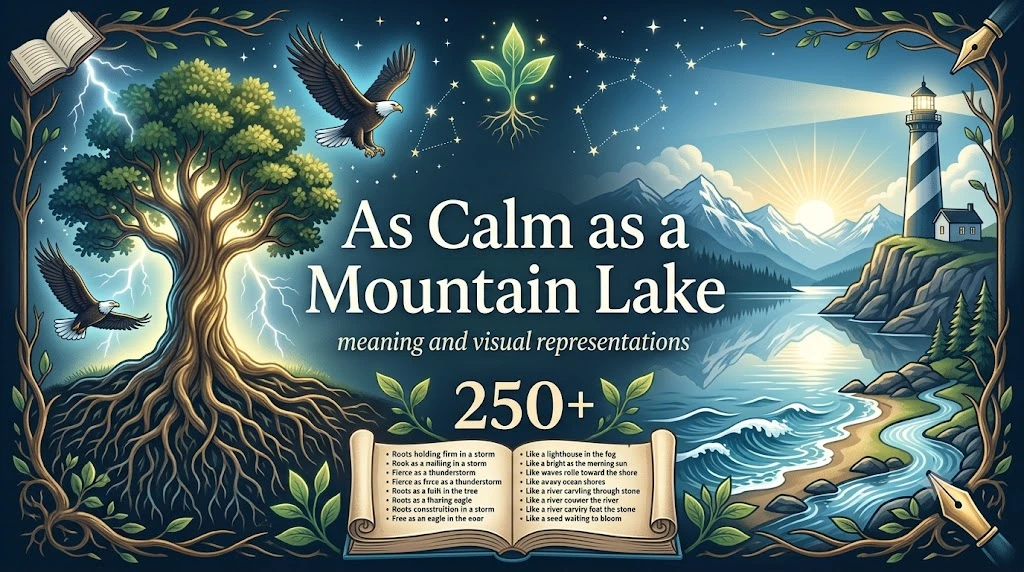
As Calm as a Mountain Lake
Meaning
Describes peace, serenity, and emotional balance.
Usage Insight
Excellent for reflective and descriptive writing.
Examples
- Her voice was as calm as a mountain lake.
- He remained as calm as a mountain lake under pressure.
Like Roots Holding Firm in a Storm
Meaning
Represents resilience and stability.
Usage Insight
Effective when describing emotional strength.
Examples
- Their friendship was like roots holding firm in a storm.
- She stood like roots holding firm in a storm.
As Free as an Eagle Riding the Wind
Meaning
Suggests freedom, confidence, and independence.
Usage Insight
Works well in inspirational and adventurous writing.
Examples
- He felt as free as an eagle riding the wind.
- The traveler was as free as an eagle riding the wind.
Like Stars Scattered Across the Sky
Meaning
Represents beauty, wonder, and limitless possibilities.
Usage Insight
Ideal for poetic and imaginative descriptions.
Examples
- Her dreams were like stars scattered across the sky.
- The city lights looked like stars scattered across the sky.
As Gentle as Spring Rain
Meaning
Describes kindness, warmth, and compassion.
Usage Insight
Perfect for character descriptions.
Examples
- Her words were as gentle as spring rain.
- He had a heart as gentle as spring rain.
Like a Bridge Across a River
Meaning
Represents connection, understanding, and support.
Usage Insight
Useful for describing relationships and teamwork.
Examples
- Communication became like a bridge across a river.
- Her encouragement was like a bridge across a river.
As Fierce as a Thunderstorm
Meaning
Describes intensity, passion, and power.
Usage Insight
Works well in dramatic and emotional scenes.
Examples
- His determination was as fierce as a thunderstorm.
- The competition became as fierce as a thunderstorm.
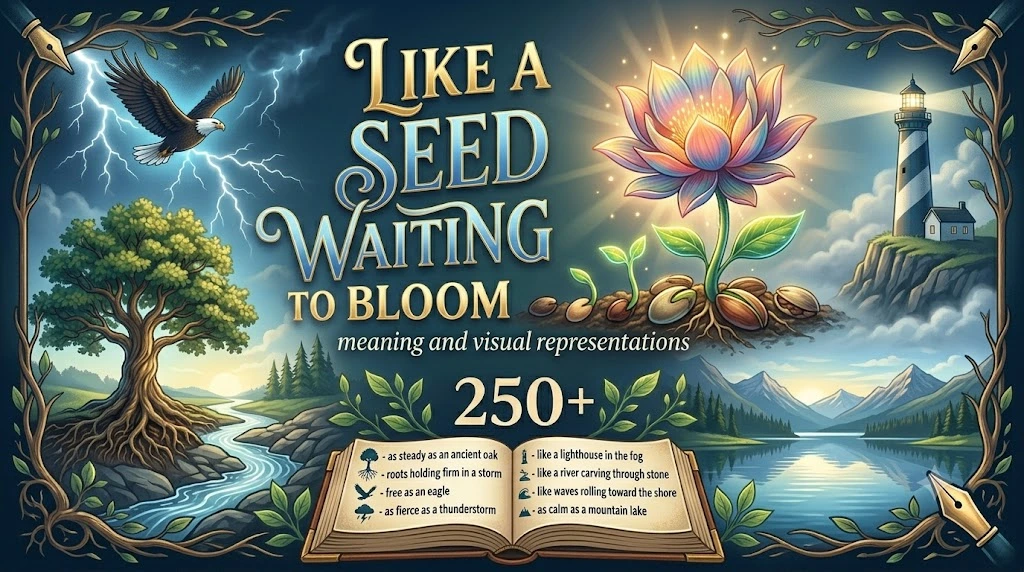
Like a Seed Waiting to Bloom
Meaning
Represents hidden potential and future growth.
Usage Insight
Ideal for motivational writing.
Examples
- Her talent was like a seed waiting to bloom.
- Every opportunity felt like a seed waiting to bloom.
As Clear as a Cloudless Sky
Meaning
Suggests honesty, understanding, and clarity.
Usage Insight
Useful for explanations and descriptions.
Examples
- His intentions were as clear as a cloudless sky.
- The solution became as clear as a cloudless sky.
Like Waves Rolling Toward the Shore
Meaning
Represents consistency and natural progress.
Usage Insight
Effective in reflective writing.
Examples
- Inspiration came like waves rolling toward the shore.
- Memories returned like waves rolling toward the shore.
As Strong as a Tree Rooted Deep in the Earth
Meaning
Represents endurance, stability, and courage.
Usage Insight
Perfect for themes of resilience and perseverance.
Examples
- She remained as strong as a tree rooted deep in the earth.
- Their bond was as strong as a tree rooted deep in the earth.
How to Use Similes Effectively in Writing
Poems
- Use vivid imagery that appeals to the senses.
- Draw inspiration from nature and emotions.
For Stories
- Reveal character traits through meaningful comparisons.
- Use similes to make scenes more memorable.
Essays
- Keep comparisons relevant and easy to understand.
- Avoid overusing figurative language in formal writing.
For Songs
- Choose emotional and relatable imagery.
- Create comparisons that fit the rhythm and tone.
Creative Descriptions
- Focus on originality and clarity.
- Connect abstract ideas to familiar experiences.
FAQs About Similes and Metaphors
What are similes and metaphors?
Similes and metaphors are figurative language devices used to compare two things and create vivid imagery.
What is the difference between a simile and a metaphor?
A simile uses words like “as” or “like,” while a metaphor makes a direct comparison without those words.
Why are similes important in literature?
They help readers visualize ideas, understand emotions, and connect with the text more deeply.
Can similes and metaphors be used in academic writing?
Yes, when used carefully, they can clarify complex ideas and make explanations more engaging.
How can I create original similes and metaphors?
Look for shared qualities between different things and create comparisons that are vivid, meaningful, and easy to understand.
Conclusion
Similes and metaphors are essential tools that bring creativity, imagery, and emotional depth to writing. Whether comparing determination to an ancient oak, hope to a lighthouse, or potential to a seed waiting to bloom, these figurative language examples make descriptions more vivid and memorable. They help writers transform ordinary ideas into engaging experiences that readers can easily imagine and understand. Strong comparisons enrich poems, stories, essays, songs, and creative descriptions by adding clarity and meaning. By mastering similes and metaphors, writers can communicate thoughts and emotions with greater impact. The best comparisons inspire readers, spark imagination, and turn simple words into powerful expressions of human experience.