
Similes are one of the most effective tools writers use to make descriptions more vivid and memorable. By comparing one thing to another using the words “like” or “as,” similes help readers create clear mental images. They are an important part of figurative language because they add color, emotion, and personality to writing.
Whether you are describing a person, a character, or a unique feature, similes can make your words more engaging. Writers often use comparisons to highlight appearance, shape, size, or expression in creative ways. Nature provides endless inspiration for similes because natural elements are familiar and rich in symbolism.
Trees, for example, symbolize strength, growth, resilience, wisdom, and human emotion, making them powerful subjects in literature and descriptive writing. In this guide, you will explore some of the best similes for your nose, complete with meanings, examples, and practical writing tips.
What Is a Simile?
A simile is a figure of speech that compares two different things using the words “like” or “as.” Similes help readers understand descriptions more clearly by connecting them to familiar objects or experiences.
Example:
His nose was as sharp as the peak of a mountain.
This comparison helps readers instantly picture the shape and appearance being described.
As Sharp as a Mountain Peak
Meaning
Describes a nose with a pointed and defined shape.
Usage Insight
Useful when creating detailed character descriptions.
Example Sentences
- His nose was as sharp as a mountain peak against the skyline.
- The portrait showed a face with features as sharp as rocky cliffs.
Like a Hawk’s Beak
Meaning
Represents a curved and prominent nose.
Usage Insight
Works well in literary and descriptive writing.
Example Sentences
- The old sailor’s nose looked like a hawk’s beak.
- Her profile revealed a nose shaped like a bird of prey.
As Straight as an Arrow
Meaning
Describes a perfectly straight nose.
Usage Insight
Ideal for elegant and flattering descriptions.
Example Sentences
- Her nose was as straight as an arrow.
- The sculptor carved a face with a nose as straight as polished wood.
Like a Tiny Hill on a Landscape
Meaning
Represents a small and gentle nose shape.
Usage Insight
Useful for soft and friendly character portrayals.
Example Sentences
- His nose sat like a tiny hill in the center of his face.
- The child had a nose as gentle as a rolling mound.
As Delicate as a Flower Petal
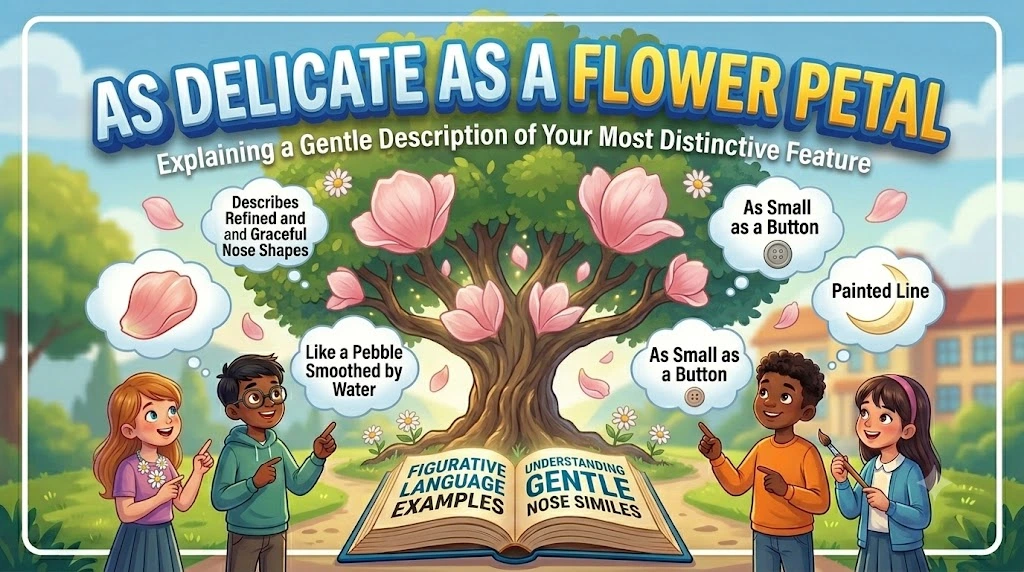
Meaning
Describes a refined and graceful nose.
Usage Insight
Perfect for poetic and romantic writing.
Example Sentences
- Her nose was as delicate as a flower petal.
- The artist captured her gentle features beautifully.
Like the Curve of a Crescent Moon
Meaning
Represents a softly curved nose.
Usage Insight
Great for elegant visual imagery.
Example Sentences
- Her nose curved like a crescent moon.
- The profile appeared graceful and balanced.
As Small as a Button
Meaning
Describes a tiny and cute nose.
Usage Insight
Commonly used in affectionate descriptions.
Example Sentences
- The puppy had a nose as small as a button.
- Her little nose gave her a youthful appearance.
Like a Pebble Smoothed by Water
Meaning
Represents a rounded and balanced nose shape.
Usage Insight
Useful for natural and realistic descriptions.
Example Sentences
- His nose looked like a pebble smoothed by water.
- The sculpted features appeared naturally refined.
As Proud as an Eagle’s Beak
Meaning
Describes a prominent and commanding nose.
Usage Insight
Works well for strong and confident characters.
Example Sentences
- The leader carried a nose as proud as an eagle’s beak.
- His profile projected confidence and authority.
Like a Bridge Across a River
Meaning
Highlights the central position of the nose on the face.
Usage Insight
Ideal for creative descriptive writing.
Example Sentences
- Her nose stood like a bridge across a river.
- The facial features balanced perfectly around its center.
As Graceful as a Swan’s Neck
Meaning
Describes smooth and elegant facial proportions.
Usage Insight
Useful for poetic and artistic descriptions.
Example Sentences
- Her nose appeared as graceful as a swan’s neck.
- Every feature seemed carefully sculpted.
Like a Carved Piece of Marble
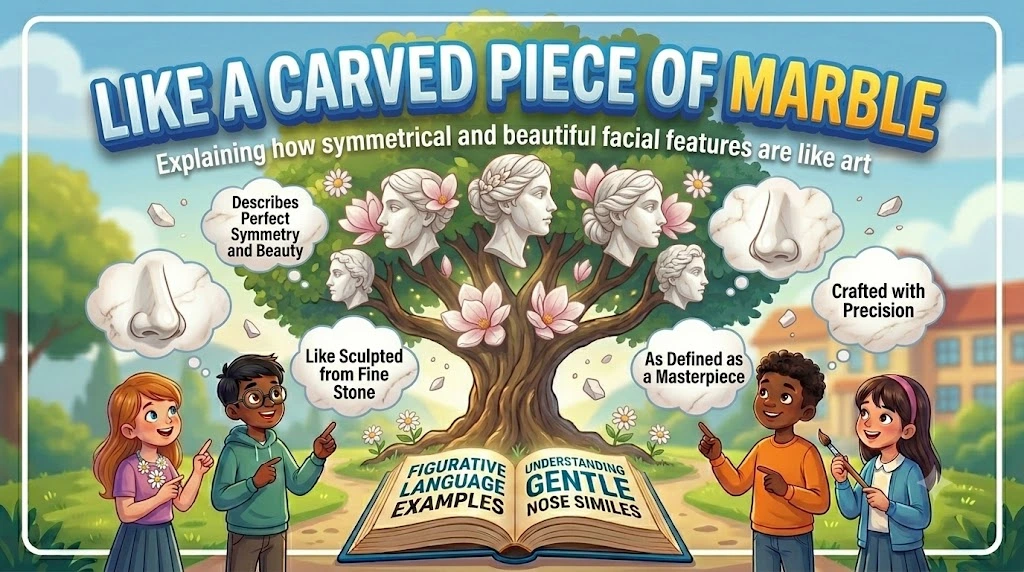
Meaning
Represents symmetry and beauty.
Usage Insight
Excellent for formal and artistic writing.
Example Sentences
- The statue’s nose looked like a carved piece of marble.
- His facial features seemed crafted by an expert sculptor.
As Neat as a Painted Line
Meaning
Describes a well-defined and tidy nose shape.
Usage Insight
Works well in visual descriptions.
Example Sentences
- Her nose was as neat as a painted line.
- The portrait emphasized its clean outline.
Like a Raindrop Resting on a Leaf
Meaning
Represents softness and subtle beauty.
Usage Insight
Perfect for gentle and nature-inspired imagery.
Example Sentences
- Her nose looked like a raindrop resting on a leaf.
- The delicate shape added charm to her smile.
As Distinct as a Lighthouse on a Shore
Meaning
Describes a noticeable and memorable nose.
Usage Insight
Useful when highlighting a unique feature.
Example Sentences
- His nose was as distinct as a lighthouse on a shore.
- The feature made him instantly recognizable.
How to Use Similes Effectively in Writing
Poems
- Use vivid imagery and sensory details.
- Connect descriptions to nature and emotions.
- Avoid overused comparisons.
For Stories
- Match similes to character personalities.
- Use comparisons to create memorable images.
- Keep descriptions natural and relevant.
Essays
- Use similes sparingly for clarity.
- Choose comparisons that support your ideas.
- Maintain a balance between creativity and precision.
For Songs
- Create relatable and memorable imagery.
- Use simple but expressive comparisons.
- Reinforce the emotional tone of the lyrics.
Creative Descriptions
- Draw inspiration from everyday objects and nature.
- Focus on unique and original comparisons.
- Ensure each simile strengthens the image being described.
FAQs About Similes for Your Nose
What are similes for your nose?
Similes for your nose are comparisons that use “like” or “as” to describe the shape, size, appearance, or uniqueness of a nose.
What is the difference between a simile and a metaphor?
A simile uses words such as “like” or “as,” while a metaphor directly compares two things without those words.
Why are similes useful in character descriptions?
They help readers visualize a person’s appearance more clearly and make descriptions more memorable.
Can similes be used in academic writing?
Yes. Similes can clarify ideas and enhance explanations when used appropriately.
Are similes commonly used in literature?
Absolutely. Similes in literature help create imagery, develop characters, and make writing more engaging.
Conclusion
Similes for your nose provide creative and vivid ways to describe one of the most distinctive features of the human face. Whether comparing a nose to a mountain peak, a crescent moon, a button, or a lighthouse, these figurative language examples help readers form clear and memorable images. They enrich stories, poems, essays, and creative descriptions by adding personality, clarity, and emotional depth. By exploring nature similes and imaginative comparisons, writers can create more engaging character portrayals and stronger visual imagery. The right simile can transform a simple description into a lasting impression that readers will remember.