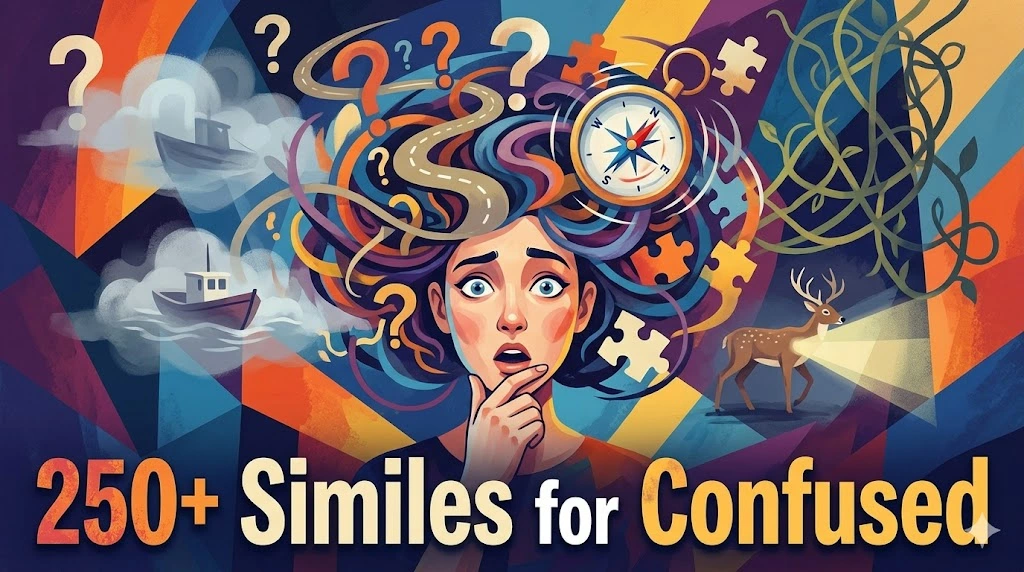
Feeling confused is a common human experience that everyone encounters at some point in life. Whether we are facing a difficult decision, learning something new, or trying to understand complex emotions, confusion can be challenging to describe. This is where similes for confused become valuable tools in writing.
Similes are an important part of figurative language because they compare one thing to another using the words “like” or “as,” helping readers understand ideas more clearly. They create vivid mental images and make descriptions more engaging and relatable. Just as trees symbolize strength, growth, resilience, wisdom, and human emotion in nature similes, comparisons about confusion can reveal uncertainty, hesitation, and inner conflict.
Similes in literature are often used to help readers connect emotionally with characters and situations. In this article, you’ll discover creative similes for confused, along with meanings, examples, and practical writing tips to strengthen your descriptive language.
What Is a Simile?
A simile is a figure of speech that compares two different things using the words “like” or “as.” It helps create vivid imagery and makes descriptions easier to understand.
Example:
He looked as confused as a traveler without a map in a strange city.
As Confused as a Traveler Lost in a Maze
Meaning
Describes someone who feels completely unsure about where to go or what to do.
Usage Insight
Works well when expressing uncertainty, lack of direction, or overwhelming choices.
Example Sentences
- She felt as confused as a traveler lost in a maze after reading the instructions.
- The new employee looked as confused as a traveler lost in a maze on his first day.
Like a Compass Spinning in Every Direction
Meaning
Represents a mind unable to settle on one clear answer.
Usage Insight
Ideal for situations involving difficult decisions.
Example Sentences
- His thoughts moved like a compass spinning in every direction.
- I felt like a compass spinning in every direction during the debate.
As Mixed Up as Autumn Leaves in the Wind
Meaning
Describes thoughts that are scattered and disorganized.
Usage Insight
Perfect for emotional or reflective writing.
Example Sentences
- Her emotions were as mixed up as autumn leaves in the wind.
- After hearing the news, his mind became as mixed up as autumn leaves in the wind.
Like a Boat Drifting Through Thick Fog
Meaning
Suggests uncertainty and lack of clarity.
Usage Insight
Useful for describing confusion about the future.
Example Sentences
- I felt like a boat drifting through thick fog after graduation.
- The company seemed like a boat drifting through thick fog during the crisis.
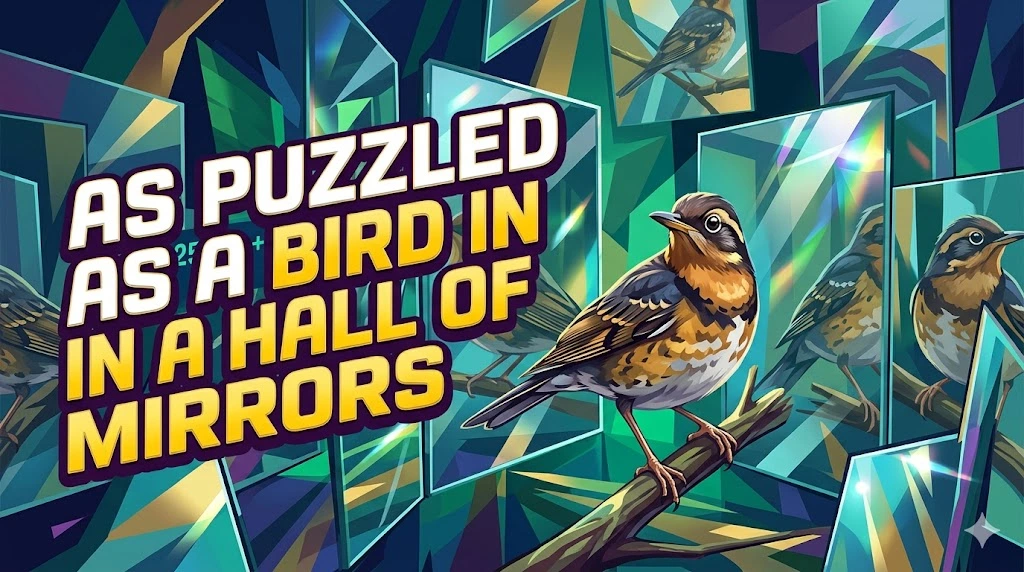
As Puzzled as a Bird in a Hall of Mirrors
Meaning
Represents being overwhelmed by too many possibilities.
Usage Insight
Excellent for imaginative and creative writing.
Example Sentences
- The child looked as puzzled as a bird in a hall of mirrors.
- She stood there as puzzled as a bird in a hall of mirrors.
Like a Puzzle Missing Its Final Piece
Meaning
Describes confusion caused by incomplete information.
Usage Insight
Works best when explaining unanswered questions.
Example Sentences
- The mystery felt like a puzzle missing its final piece.
- His explanation left me feeling like a puzzle missing its final piece.
As Uncertain as Shadows at Sunset
Meaning
Represents doubt and changing perspectives.
Usage Insight
Ideal for poetic and emotional descriptions.
Example Sentences
- Her plans seemed as uncertain as shadows at sunset.
- His future felt as uncertain as shadows at sunset.
Like a Bee Searching for a Hidden Flower
Meaning
Suggests searching for answers without success.
Usage Insight
Useful for educational and problem-solving contexts.
Example Sentences
- I felt like a bee searching for a hidden flower during the exam.
- The detective looked like a bee searching for a hidden flower.
As Lost as a Snowflake in a Storm
Meaning
Describes complete confusion and disorientation.
Usage Insight
Great for dramatic descriptions.
Example Sentences
- He felt as lost as a snowflake in a storm.
- The tourists appeared as lost as snowflakes in a storm.
Like Clouds Tangled in the Wind
Meaning
Represents thoughts that are difficult to organize.
Usage Insight
Effective for describing mental confusion.
Example Sentences
- Her ideas were like clouds tangled in the wind.
- My thoughts felt like clouds tangled in the wind all day.
As Bewildered as a Deer in City Traffic
Meaning
Describes someone overwhelmed by an unfamiliar situation.
Usage Insight
Works well in modern storytelling.
Example Sentences
- He looked as bewildered as a deer in city traffic.
- I felt as bewildered as a deer in city traffic during the meeting.
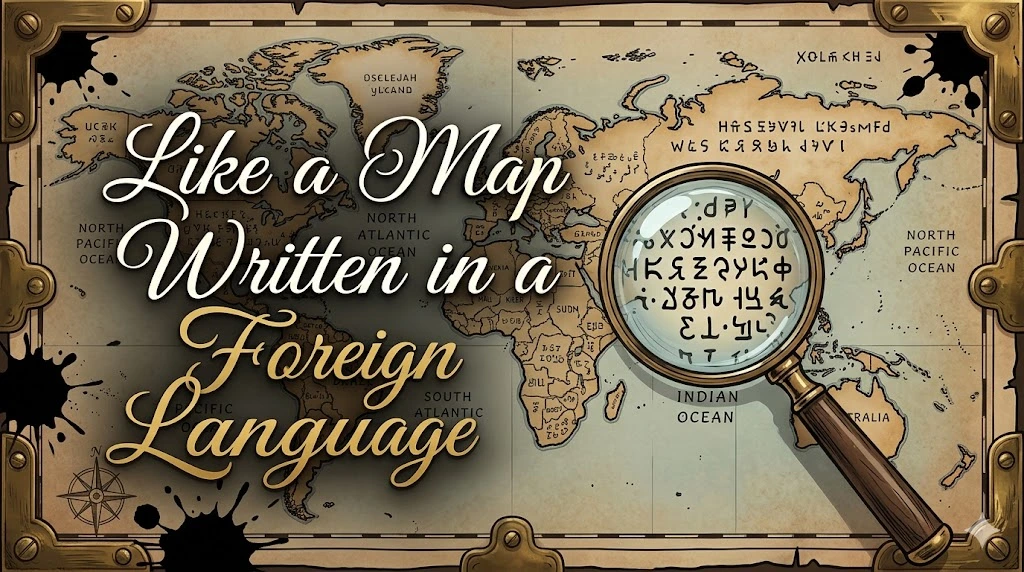
Like a Map Written in a Foreign Language
Meaning
Represents difficulty understanding information.
Usage Insight
Ideal for learning and academic situations.
Example Sentences
- The instructions seemed like a map written in a foreign language.
- Mathematics felt like a map written in a foreign language to her.
As Twisted as Vines in a Dense Forest
Meaning
Describes complicated and tangled thoughts.
Usage Insight
Excellent for literary and nature-inspired descriptions.
Example Sentences
- His reasoning was as twisted as vines in a dense forest.
- The situation became as twisted as vines in a dense forest.
Like a Lantern Flickering in the Wind
Meaning
Represents uncertainty and unstable understanding.
Usage Insight
Useful for describing fragile confidence.
Example Sentences
- My understanding felt like a lantern flickering in the wind.
- Her certainty vanished like a lantern flickering in the wind.
As Directionless as a River Without a Course
Meaning
Describes lacking a clear goal or path.
Usage Insight
Perfect for personal growth and life-transition themes.
Example Sentences
- After college, he felt as directionless as a river without a course.
- The project became as directionless as a river without a course.
How to Use Similes Effectively in Writing
Similes can make your writing more vivid, emotional, and memorable.poetry, they create beautiful imagery and emotional resonance. In stories, they help readers understand characters’ thoughts and feelings. In essays, similes can clarify abstract ideas through familiar comparisons. Songwriters often use similes to make lyrics more expressive and relatable. When writing creative descriptions, choose comparisons that are clear and meaningful. Avoid overusing similes in a single paragraph, as too many comparisons can reduce their effectiveness. The strongest similes feel natural and enhance the message without distracting the reader.
FAQs About Similes for Confused
What are similes for confused?
Similes for confused are comparisons that use “like” or “as” to describe uncertainty, puzzlement, or lack of understanding.
What is the difference between a simile and a metaphor?
A simile uses “like” or “as” to compare two things, while a metaphor directly states that one thing is another.
Why are similes useful for describing confusion?
They help readers visualize and emotionally connect with complex feelings of uncertainty.
Can similes for confused be used in academic writing?
Yes. They can make explanations clearer and more engaging when used appropriately.
How do similes improve creative writing?
They create stronger imagery, emotional depth, and memorable descriptions that bring ideas to life.
Conclusion
Similes for confused are powerful figurative language tools that help writers describe uncertainty, hesitation, and mental struggle in vivid and relatable ways. Through creative comparisons, they transform abstract emotions into clear mental images that readers can easily understand. Whether used in poetry, stories, essays, or everyday communication, these similes add clarity, imagery, and emotional depth. Like many memorable similes in literature and nature similes, comparisons for confusion help readers connect with experiences on a deeper level. By mastering these expressions, you can make your writing more engaging, expressive, and meaningful for any audience.