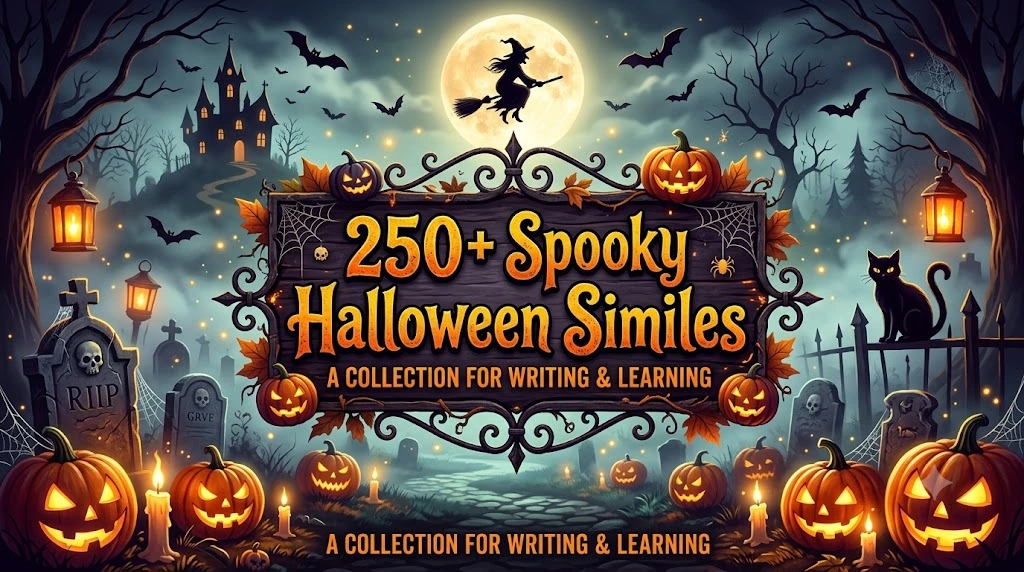
Halloween is the one time of year when language is allowed to get delightfully dark, and nothing captures that eerie mood better than a well-crafted simile. Saying a night is “scary” tells the reader a fact, but comparing the wind to a whisper crawling up the back of your neck tells the reader a ghost story.
Nature has always supplied some of the eeriest imagery available to writers, and bare, twisted trees in particular have become one of literature’s most enduring symbols of fear, mystery, and the unknown. A skeletal tree reaching against a moonlit sky can suggest strength and endurance in daylight, yet the very same silhouette can feel haunted and alive once darkness falls, which is exactly why writers return to it every autumn.
Its bent branches, hollow trunks, and rustling leaves echo both the resilience and the quiet menace we associate with old, wild places. Writers reach for trees, fog, shadows, and howling wind again and again because nature already knows how to unsettle us before a single word is spoken. This is why nature similes appear so often in spooky literature; they let a writer build dread using images readers already fear on some instinctive level.
In this guide, you’ll find fifteen original, ready-to-use Halloween similes, each explained with its meaning, its ideal use in writing, and two polished example sentences to help you conjure a properly spine-chilling scene.
What Is a Simile?
A simile is a figure of speech that compares two different things using the words “like” or “as,” highlighting a shared quality between them to create a vivid picture in the reader’s mind.
For example,
saying “the old house groaned like something waking from a .doesn’t just tell us the house was old — it lets us hear and feel its eeriness, turning a simple description into a haunting image.
1. Silent as a Graveyard at Midnight
Meaning:
This simile describes an unnatural, unsettling stillness, comparing a scene’s silence to the hush of a graveyard when no living thing dares to stir.
Usage Insight:
This works best for setting the scene before something frightening happens, making it a favorite opening line for horror stories and Halloween-themed scenes.
Example Sentences:
- The old farmhouse was silent as a graveyard at midnight, and every breath she took felt too loud.
- Once the trick-or-treaters left, the street fell silent as a graveyard at midnight.
2. Creaking Like an Old Door Hiding a Secret
Meaning:
This simile describes a slow, unsettling sound that hints something is not quite right, comparing ordinary creaks to a door concealing something sinister behind it.
Usage Insight:
Use this simile for small, ordinary sounds that carry outsized dread, especially in scenes set inside old houses, attics, or abandoned buildings.
Example Sentences:
- The staircase creaked like an old door hiding a secret every time she took a step toward the attic.
- Somewhere above them, a floorboard creaked like an old door hiding a secret, though no one else was supposed to be home.
3. Twisted as an Ancient Tree Under a Full Moon
Meaning:
This nature-based simile describes something gnarled, unsettling, and slightly wrong in appearance, comparing it to the eerie silhouette of a bent, ancient tree lit by moonlight.
Usage Insight:
This simile is ideal for describing eerie landscapes or unsettling figures, and it works especially well in atmospheric passages meant to build slow, creeping dread.
Example Sentences:
- The path through the woods was twisted as an ancient tree under a full moon, and none of them wanted to walk it alone.
- His shadow on the wall looked twisted as an ancient tree under a full moon, stretching further than it should have.
4. Cold as a Tombstone in December
Meaning:
This simile describes a sharp, bone-deep chill, comparing the temperature or mood of a scene to the icy stillness of a grave marker in the depths of winter.
Usage Insight:
This works well for describing both physical cold and emotional dread at once, particularly in scenes where a character senses danger before they can name it.
Example Sentences:
- The basement air was cold as a tombstone in December, and her breath fogged in front of her.
- His hand, when it finally touched hers, was cold as a tombstone in December.
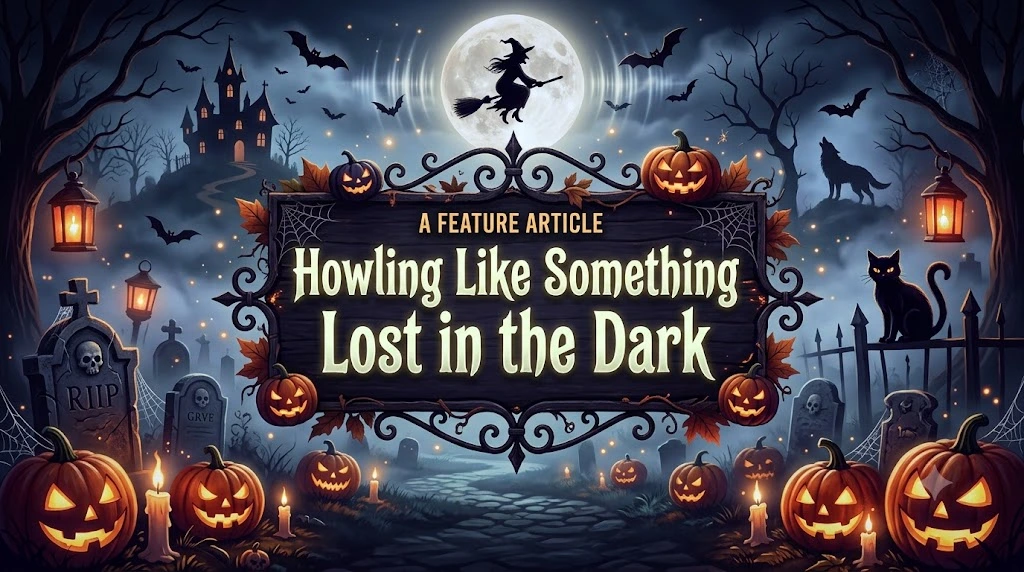
5. Howling Like Something Lost in the Dark
Meaning:
This simile describes a mournful, unsettling sound, comparing it to a cry that suggests something is wandering, searching, or suffering just out of sight.
Usage Insight:
Use this simile for ambient sound in outdoor or wilderness scenes, especially when you want the reader to sense danger without seeing its source.
Example Sentences:
- The wind howled like something lost in the dark, rattling the shutters until dawn.
- Somewhere beyond the treeline, a sound howled like something lost in the dark, and no one wanted to guess what it was.
6. Pale as a Ghost Caught Mid-Sentence
Meaning:
This simile describes sudden shock or fear reflected in a person’s face, comparing their paleness to a spirit interrupted before it could finish speaking.
Usage Insight:
This simile works well for quick reaction shots in dialogue, giving readers an immediate, visual sense of a character’s fear without slowing the pacing.
Example Sentences:
- When she saw the figure in the mirror, she went pale as a ghost caught mid-sentence.
- He turned pale as a ghost caught mid-sentence the moment he read the note left on his pillow.
7. Crawling Like Shadows Across the Attic Floor
Meaning:
This simile describes slow, creeping movement that feels deliberate and threatening, comparing it to shadows spreading silently across an unlit space.
Usage Insight:
This works especially well for building suspense over several sentences, letting the reader feel that something is approaching before it’s fully revealed.
Example Sentences:
- The fog crawled like shadows across the attic floor, swallowing the streetlights one by one.
- Doubt crawled like shadows across the attic floor of her mind as she waited for the footsteps to stop.
8. Sharp as a Witch’s Cackle in an Empty House
Meaning:
This simile describes a sudden, jarring sound that cuts through silence, comparing it to a witch’s laughter echoing where no laughter should exist.
Usage Insight:
Use this simile for jump-scare moments or sudden noises that break a tense silence, making it especially effective in horror scenes with sharp pacing shifts.
Example Sentences:
- The floorboard snapped sharp as a witch’s cackle in an empty house, and everyone froze at once.
- Her scream came sharp as a witch’s cackle in an empty house, echoing long after the lights came back on.
9. Empty as a Scarecrow’s Hollow Stare
Meaning:
This simile describes a haunting, lifeless emptiness, comparing something eerie to a scarecrow’s unblinking, unnatural gaze across an abandoned field.
Usage Insight:
This simile works well for describing unsettling faces, dolls, or figures that seem almost human but clearly are not, adding an uncanny quality to a scene.
Example Sentences:
- The old doll’s eyes were empty as a scarecrow’s hollow stare, following her no matter where she stood.
- His expression went empty as a scarecrow’s hollow stare the moment the lights flickered off.
10. Rustling Like Dead Leaves Whispering a Warning
Meaning
This simile describes a soft, ominous sound, comparing it to dry leaves that seem to murmur a message just out of understanding.
Usage Insight:
This works best in outdoor autumn scenes, where subtle sound cues can build dread without revealing exactly what’s causing it.
Example Sentences:
- The trees rustled like dead leaves whispering a warning as they stepped deeper into the orchard.
- A strange unease rustled like dead leaves whispering a warning through the group, though no one said a word.
11. Looming Like a Shadow Cast by a Dying Streetlamp
Meaning:
This simile describes a large, threatening presence, comparing it to a shadow that stretches unnaturally long beneath flickering, failing light.
Usage Insight:
Use this simile for describing approaching danger or an imposing figure, particularly in scenes set on quiet streets or in dimly lit spaces.
Example Sentences:
- The abandoned house loomed like a shadow cast by a dying streetlamp at the end of the road.
- His silence loomed like a shadow cast by a dying streetlamp, heavier than anything he could have said.
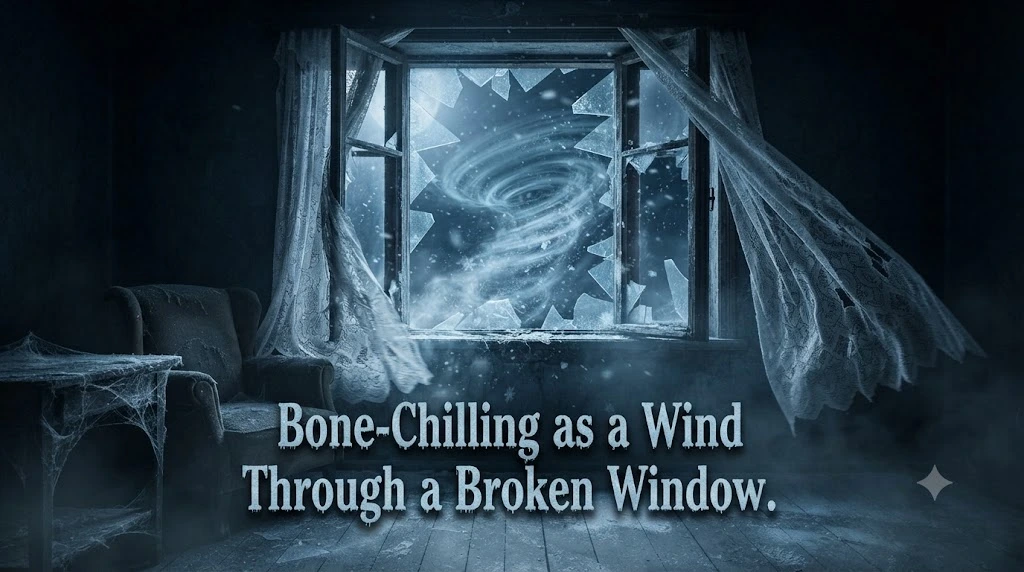
12. Bone-Chilling as a Wind Through a Broken Window
Meaning:
This simile describes an intense, penetrating fear or cold, comparing it to a draft slipping through shattered glass into an otherwise sealed room.
Usage Insight:
This simile works well for moments of sudden vulnerability, especially when a character realizes a space they thought was safe has been compromised.
Example Sentences:
- Her scream was bone-chilling as a wind through a broken window, cutting through the silence of the house.
- The realization hit him bone-chilling as a wind through a broken window: he was no longer alone.
13. Flickering Like a Candle in a Haunted Hall
Meaning:
This simile describes something unstable or fading, comparing it to a weak flame struggling to survive in a space thought to be occupied by something unseen.
Usage Insight:
Use this simile for lighting effects or a character’s fading composure, especially in scenes building toward a climax where control is slipping away.
Example Sentences:
- The lantern flickered like a candle in a haunted hall as the temperature in the room dropped without warning.
- Her courage flickered like a candle in a haunted hall the deeper they walked into the tunnel.
14. Ghostly as Mist Rising Off a Forgotten Grave
Meaning:
This simile describes a pale, drifting, otherworldly quality, comparing it to mist that seems to rise deliberately from long-neglected ground.
Usage Insight:
This simile works especially well for atmospheric description in opening or transitional scenes, setting a haunting tone before the main action begins.
Example Sentences:
- Fog drifted across the cemetery, ghostly as mist rising off a forgotten grave.
- Her voice, when she finally spoke, sounded ghostly as mist rising off a forgotten grave, barely more than a breath.
15. Watching Like Eyes Hidden in a Jack-o’-Lantern’s Grin
Meaning:
This simile describes an unsettling feeling of being observed, comparing it to the carved, unblinking gaze of a jack-o’-lantern that seems to follow you in the dark.
Usage Insight:
This works well for building paranoia in a character, especially in scenes where they sense a presence they cannot see or confirm.
Example Sentences:
- All night, she felt something watching like eyes hidden in a jack-o’-lantern’s grin from the edge of the porch.
- The empty windows of the old house seemed to be watching like eyes hidden in a jack-o’-lantern’s grin as they walked past.
How to Use Similes Effectively in Writing
Similes are most powerful when chosen with intention rather than scattered throughout a piece for decoration. Here’s how to use them well across different types of writing:
- poems: Let one striking simile carry the mood of a stanza rather than layering several together. Match the comparison’s tone and rhythm to the eerie, atmospheric quality of the poem as a whole.
- In stories: Use similes to build suspense gradually, letting sensory comparisons — sound, cold, shadow — hint at danger before it’s fully revealed.
- essays: Similes can make abstract ideas about fear or folklore easier to grasp, but they should remain clear and purposeful, especially in analytical writing about horror as a genre.
- In songs: Spooky similes work beautifully in lyrics because they’re memorable and easy to visualize in a single line. Choose comparisons vivid enough to linger after the song ends.
- creative descriptions: Avoid overused Halloween clichés when you can, and don’t hesitate to invent your own eerie comparisons drawn from nature, weather, or everyday objects transformed by darkness.
- General rule: Similes should deepen atmosphere and imagery, not replace genuine tension-building. One vivid, well-placed simile will always outperform several crowded into a single paragraph.
FAQs
1. What are the best spooky Halloween similes?
Some of the most effective spooky Halloween similes include “silent as a graveyard at midnight,” “cold as a tombstone in December,” and “ghostly as mist rising off a forgotten grave.” These work well because they turn abstract fear into vivid, sensory imagery readers can picture instantly.
2. What is the difference between a simile and a metaphor?
A simile compares two things using “like” or “as,” such as “pale as a ghost caught mid-sentence,” while a metaphor states that one thing directly is another, such as “she was a ghost caught mid-sentence.” Both create strong imagery, but similes make the comparison more explicit, which often makes them easier for readers to follow.
3. Why are nature similes so effective for spooky or Halloween writing?
Nature similes work well for spooky writing because natural elements like fog, wind, bare trees, and darkness already carry unsettling associations for most readers. These comparisons tap into instincts shaped by centuries of storytelling, making fear feel immediate and believable rather than forced.
4. Can similes be used in academic or formal writing?
Yes, similes can be used in academic writing when they help clarify a concept or illustrate an argument, but they should be used sparingly and with precision. Highly dramatic or poetic similes, like many Halloween-themed comparisons, are generally better suited to creative writing than formal essays or research papers.
5. How can I create my own original spooky similes?
Start by identifying the specific sensation you want to evoke, whether it’s cold, silence, or the feeling of being watched, then think of an eerie object, sound, or natural event that shares that same quality. Reading widely across horror literature and folklore is one of the best ways to train yourself to notice fresh, unsettling comparisons.
Conclusion
Spooky Halloween similes do more than decorate a sentence — they let readers feel dread the way a character feels it, through creaking doors, drifting fog, and shadows that seem to move on their own. By drawing on vivid imagery, especially the eerie, unpredictable power of nature after dark, these comparisons turn a simple scene into something readers won’t forget long after the candles burn out. Whether you’re writing a chilling short story, a haunting poem, a Halloween-themed essay, or the lyrics to a spooky song, a well-chosen simile adds clarity, imagery, and atmosphere that plain description alone can never achieve.