
Learning to write well often starts with learning how to compare things in creative, memorable ways, and that’s exactly what similes teach students to do. A simile is a figure of speech that compares two different things using “like” or “as,” turning plain descriptions into vivid, easy-to-picture images. Similes are one of the first tools students learn in figurative language because they make writing more expressive, engaging, and fun to read, without requiring complicated grammar or vocabulary.
Teachers often introduce similes using trees, since trees are simple, familiar, and rich with meaning that students can instantly picture and understand. A tree standing tall through a storm becomes an easy way to teach strength and resilience, while its slow, steady growth over many years helps explain patience and personal development. Trees also carry a quiet sense of wisdom, since older trees have “seen” more seasons, storms, and change, much like elders who offer guidance from experience.
Beyond trees, similes help students connect emotions, personality traits, and everyday experiences to images they already know, making abstract ideas far easier to grasp and remember. In this guide, you’ll find 15 clear, classroom-friendly similes, each explained simply with its meaning, when to use it, and natural example sentences to help students write with more confidence and creativity.
What Is a Simile?
A simile is a figure of speech that compares two different things using the words “like” or “as,” pointing out something they have in common in order to create a clear picture in the reader’s mind. Instead of just stating a fact, a simile helps readers see an idea by connecting it to something familiar.
Strong example:
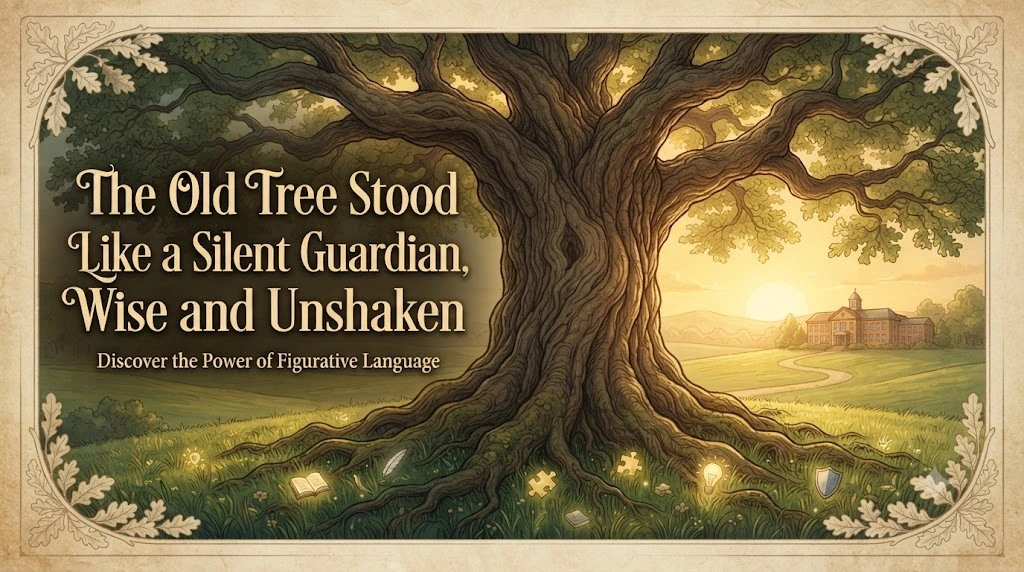
“The old oak tree stood like a silent guardian, watching over the schoolyard for a hundred years.”
This sentence turns a simple tree into something meaningful and memorable, showing students exactly how a well-placed simile can make ordinary writing feel alive.
1. As Brave as a Lion
Meaning:
This simile describes someone who shows great courage, especially in the face of danger, fear, or a difficult challenge.
Usage Insight:
This is a great starter simile for younger students because lions are widely recognized as symbols of bravery, making the comparison instantly clear and easy to apply in short stories or character descriptions.
Example Sentences:
- Even though he was scared of the dark, Sam walked into the basement as brave as a lion to find his little sister.
- The firefighter ran into the burning building as brave as a lion, thinking only of the people trapped inside.
2. As Busy as a Bee
Meaning:
This simile describes someone who is working hard, staying constantly active, or managing many tasks at once.
Usage Insight:
This simile works well in descriptive essays or classroom writing about daily routines, chores, or teamwork, since bees are a familiar symbol of nonstop, purposeful activity.
Example Sentences:
- During exam week, the students were as busy as bees, moving from the library to study groups without a moment to rest.
- Her mother was as busy as a bee on Sunday mornings, cooking breakfast while packing lunches and answering phone calls.
3. As Quiet as a Mouse
Meaning:
This simile describes someone or something that is extremely silent, careful, or trying not to be noticed.
Usage Insight:
This is an excellent simile for narrative writing, especially in scenes involving sneaking, hiding, or avoiding attention, since mice are commonly associated with tiny, unnoticed movements.
Example Sentences:
- She tiptoed past her sleeping brother’s room, as quiet as a mouse, careful not to wake him before sunrise.
- The new student sat in the back of the classroom, as quiet as a mouse, too nervous to speak on his first day.
4. Life Is Like a Rollercoaster
Meaning:
This simile compares life’s unpredictable ups and downs to the sudden highs, drops, and turns of a rollercoaster ride.
Usage Insight:
This works especially well in personal essays or reflective writing assignments, since it helps students express complex emotional experiences using an image almost everyone can relate to.
Example Sentences:
- Her first year of high school was like a rollercoaster, full of exciting friendships and stressful exams all at once.
- Learning to skateboard felt like a rollercoaster, with small victories followed by sudden, frustrating falls.
5. Her Smile Was Like Sunshine
Meaning:
This simile describes a smile that brings warmth, happiness, or comfort to the people around it, much like sunlight brightens a room or a day.
Usage Insight:
This simile is ideal for descriptive writing about characters or people, especially in creative stories where a warm, likable personality needs to be shown rather than simply told.
Example Sentences:
- Whenever Grandma walked into the room, her smile was like sunshine, instantly making everyone feel welcome.
- Even on his worst days, his best friend’s smile was like sunshine, somehow making things feel a little better.
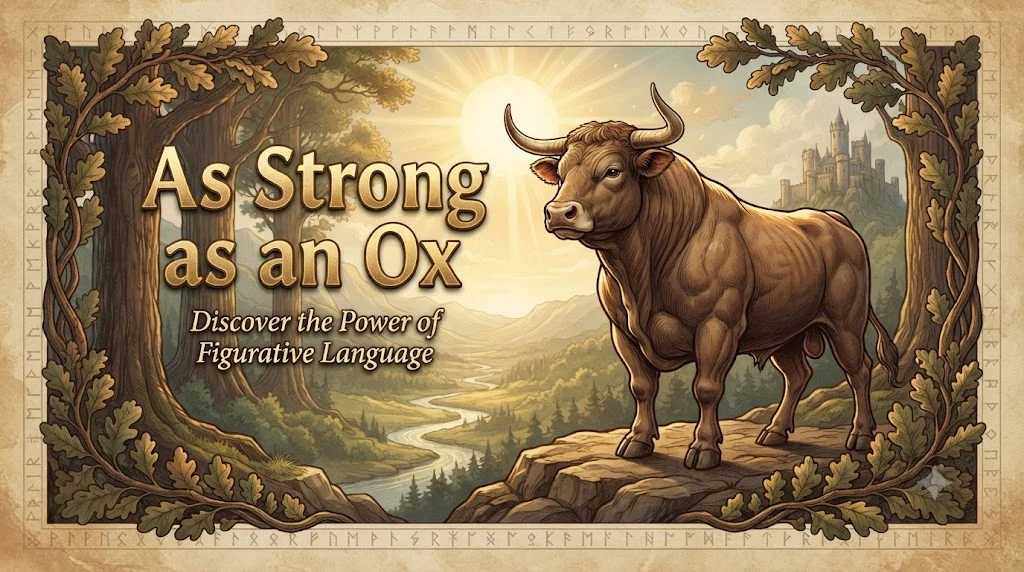
6. As Strong as an Ox
Meaning:
This simile describes someone with impressive physical strength, often used to highlight power, endurance, or the ability to handle tough tasks.
Usage Insight:
This is a useful simile in descriptive writing about characters, sports, or physical challenges, since oxen are widely recognized symbols of raw strength and hard work.
Example Sentences:
- Even after carrying boxes up three flights of stairs, he was as strong as an ox and barely out of breath.
- The wrestler lifted his opponent with ease, as strong as an ox in front of the cheering crowd.
7. His Mind Was Like a Sponge, Soaking Up Knowledge
Meaning:
This simile describes someone who learns quickly and easily, absorbing new information the way a sponge absorbs water.
Usage Insight:
This simile is especially effective in essays or stories about learning, curiosity, or academic growth, making it a favorite among teachers describing eager students.
Example Sentences:
- During science class, Mia’s mind was like a sponge, soaking up knowledge about the solar system within minutes.
- The young apprentice’s mind was like a sponge, soaking up knowledge from every lesson his mentor offered.
8. Time Flew Like an Arrow
Meaning:
This simile describes how quickly time seems to pass, especially during enjoyable or busy moments.
Usage Insight:
This works well in narrative or reflective writing, particularly when describing summer vacations, exciting events, or the sudden realization that a long period has passed unnoticed.
Example Sentences:
- Once summer camp began, time flew like an arrow, and before they knew it, the final day had arrived.
- Studying with friends made the hours feel shorter, as if time flew like an arrow through the library.
9. As Cool as a Cucumber
Meaning:
This simile describes someone who stays calm, relaxed, and composed, even in stressful or high-pressure situations.
Usage Insight:
This simile is useful in character descriptions or narrative writing, especially when portraying someone who handles pressure differently than those around them, such as during exams or emergencies.
Example Sentences:
- While everyone else panicked before the final exam, Priya stayed as cool as a cucumber, reviewing her notes calmly.
- Despite the chaos backstage, the lead actor remained as cool as a cucumber moments before the curtain rose.
10. The Classroom Was as Silent as a Graveyard
Meaning:
This simile describes an unusually deep, almost eerie silence, often used to emphasize how still or tense a moment feels.
Usage Insight:
This works well in creative writing or storytelling to build atmosphere, particularly in scenes involving anticipation, nervousness, or unexpected quiet after noise.
Example Sentences:
- The moment the teacher announced a pop quiz, the classroom was as silent as a graveyard.
- After the loud assembly ended, the hallway was as silent as a graveyard, empty and still.
11. Her Voice Was Like Velvet
Meaning:
This simile describes a voice that is smooth, soft, and pleasant to listen to, often evoking a calming or soothing effect.
Usage Insight:
This simile works especially well in creative writing or character descriptions, particularly for narrators, singers, or comforting figures within a story.
Example Sentences:
- The bedtime story felt even more magical because her voice was like velvet, soft and soothing in the quiet room.
- His voice was like velvet during the announcement, calm enough to settle the nervous crowd instantly.
12. As Stubborn as a Mule
Meaning:
This simile describes someone who refuses to change their mind or behavior, even when reasonably asked to do so.
Usage Insight:
This simile is useful in narrative writing to add humor or realistic character traits, especially in stories involving disagreements, arguments, or strong-willed personalities.
Example Sentences:
- No matter how many times his friends explained the rules, he remained as stubborn as a mule about playing his own way.
- She was as stubborn as a mule when it came to finishing the puzzle without any help.
13. The Old Tree Stood Like a Silent Guardian, Wise and Unshaken
Meaning:
This simile compares an old, sturdy tree to a protective figure, symbolizing strength, patience, and quiet wisdom gained over time.
Usage Insight:
This simile works beautifully in descriptive or reflective writing, particularly in essays or stories exploring themes of history, memory, or nature’s quiet resilience.
Example Sentences:
- Every autumn, the old tree stood like a silent guardian, wise and unshaken, watching new students walk beneath its branches.
- Long after the storm passed, the ancient tree stood like a silent guardian, wise and unshaken, at the edge of the field.
14. As Free as a Bird
Meaning:
This simile describes a feeling of freedom, lightness, or release from pressure, responsibility, or restriction.
Usage Insight:
This simile is ideal for personal essays or creative writing about vacations, achievements, or moments of relief, since birds are a universal symbol of freedom and open space.
Example Sentences:
- The moment her final exam ended, she felt as free as a bird, walking out into the sunshine without a single worry.
- After returning the last library book, he felt as free as a bird, finally finished with the semester’s assignments.
15. Her Eyes Sparkled Like Stars
Meaning:
This simile describes eyes that are bright, lively, and full of excitement, wonder, or happiness.
Usage Insight:
This simile is commonly used in creative or descriptive writing to convey strong emotion without directly stating it, allowing readers to infer joy or excitement through imagery.
Example Sentences:
- When she opened her birthday gift, her eyes sparkled like stars, lighting up the entire room.
- His eyes sparkled like stars the moment he saw the acceptance letter from his dream school.
How to Use Similes Effectively in Writing
Similes are a simple but powerful tool that students can use to make almost any type of writing more vivid and engaging. Here are practical tips for different formats:
Poems:
Choose similes that create strong, clear images, since poetry often relies on a few powerful comparisons rather than long explanations. A single well-chosen simile can make an entire poem more memorable.
In Stories:
Use similes to show character traits and emotions instead of simply stating them. Describing someone as “brave as a lion” or “as stubborn as a mule” tells readers about personality in a natural, engaging way.
Essays:
Similes work best when used sparingly to highlight a key idea, particularly in introductions or conclusions, where a strong comparison can leave a lasting impression on the reader.
In Songs:
Simple, rhythmic similes are especially effective in songwriting, since they need to be understood quickly and often repeated, making short, familiar comparisons the most memorable choice.
Creative Descriptions:
Draw comparisons from nature, animals, and everyday objects, since these images are familiar to most readers and make abstract feelings or traits much easier to picture.
As a general rule, students should avoid overusing similes in a single piece of writing. One or two well-placed comparisons are almost always more effective than filling a paragraph with too many at once.
FAQs About Simile Examples for Students
1. What are some easy simile examples for students to learn first?
Simple, well-known similes like “as brave as a lion,” “as busy as a bee,” and “as quiet as a mouse” are great starting points for students, since they use familiar comparisons that are easy to understand and remember.
2. What is the difference between a simile and a metaphor?
A simile makes a comparison using “like” or “as” (for example, “her smile was like sunshine”), while a metaphor states that one thing is another without using those words (for example, “her smile was sunshine”). Similes are usually easier for beginners because the comparison is stated directly.
3. Why do teachers often use nature similes to teach figurative language?
Nature similes, especially those involving trees, animals, and weather, are effective teaching tools because they use familiar, everyday images that make abstract ideas like strength, patience, or freedom much easier for students to visualize and understand.
4. Can similes be used in academic writing, not just creative writing?
Yes, similes can be used in academic writing, particularly in introductions or conclusions, as long as they are used sparingly and help clarify an idea rather than replacing clear, factual explanation.
5. How do similes help improve a student’s writing skills?
Similes help students move beyond basic descriptions by teaching them to compare ideas, notice details, and express emotions or traits more vividly, which strengthens both creative and analytical writing over time.
Conclusion
The best simile examples for students do more than fill a vocabulary list—they teach young writers how to observe the world closely and express ideas with clarity, imagination, and emotional depth. By comparing bravery to a lion, patience to an old tree, or freedom to a bird in flight, students learn to turn simple observations into memorable, meaningful writing. These 15 examples offer an easy, encouraging starting point for anyone learning figurative language, whether for a classroom assignment, a creative story, or a poem written just for fun. As students practice noticing similarities between everyday things, their writing naturally becomes richer, more expressive, and more enjoyable to read. With a little practice, similes can help every student write not just correctly, but beautifully.