
Friendship is one of the most powerful and comforting bonds we experience in life, yet its depth can be hard to put into plain words. A simile is a figure of speech that compares two different things using “like” or “as,” helping writers turn a feeling as abstract as friendship into something vivid, relatable, and easy to picture. Similes matter in figurative language because they allow readers to feel an idea rather than simply understand it, transforming ordinary sentences into images that stay with us.
Trees, in particular, are among the most powerful symbols we have for the qualities that define real friendship—strength, growth, resilience, wisdom, and quiet emotional support. Just as a tree’s roots spread deep and unseen beneath the soil, true friendships often grow stronger through invisible, everyday moments of trust. A tree bends in storms without breaking, much like a loyal friend who stays steady through life’s hardest seasons.
Trees also offer shade, shelter, and stability, mirroring the comfort and protection that close friends provide. In this guide, you’ll discover 15 original, beautifully explained similes for friendship, many inspired by nature, each with a clear meaning, practical usage insight, and natural example sentences you can use in your own writing.
What Is a Simile?
A simile is a figure of speech that directly compares two different things using the words “like” or “as,” drawing attention to a shared quality between them in order to create a vivid picture in the reader’s mind. Rather than simply stating a fact, a simile invites readers to see something familiar so they can understand a feeling or idea more deeply.
Strong example:
“Their friendship was like an old oak tree, its roots so deep that no storm could ever tear it down.”
In one sentence, an abstract idea—loyalty over time—becomes something readers can practically touch and see. That is the quiet power of a well-crafted simile.
1. Friendship Is Like a Tree, Rooted Deep and Growing Stronger With Time
Meaning:
This simile captures how true friendships, much like trees, don’t appear overnight but grow gradually, developing deeper roots of trust and understanding with every passing year.
Usage Insight:
This works especially well in reflective essays or stories about long-term friendships, since it emphasizes patience and gradual growth rather than sudden closeness.
Example Sentences:
- Even after twenty years apart, their friendship was like a tree, rooted deep and growing stronger with time, unshaken by distance.
- She realized that real friendship is like a tree, rooted deep and growing stronger with time, not something that blooms overnight.
2. A True Friend Is Like a Sturdy Oak, Standing Firm Through Every Storm
Meaning:
This simile describes a friend who remains dependable and unwavering during difficult times, offering strength and stability when life gets hard.
Usage Insight:
Use this comparison in narrative writing or personal tributes about loyalty, especially when describing someone who has supported another person through crisis or hardship.
Example Sentences:
- When her marriage fell apart, Maria was like a sturdy oak, standing firm through every storm, never once wavering in her support.
- A true friend is like a sturdy oak, standing firm through every storm, offering shelter when everything else feels uncertain.
3. Friendship Is Like Sunlight, Warming You Even on the Coldest Days
Meaning:
This simile reflects how the presence of a good friend can lift someone’s mood and bring comfort, even during emotionally difficult or lonely periods.
Usage Insight:
This simile shines in emotional or heartfelt writing, such as personal essays, greeting cards, or reflective letters, since sunlight naturally evokes warmth, hope, and gentle comfort.
Example Sentences:
- Her weekly phone calls were like sunlight, warming him even on the coldest days of his recovery.
- Friendship is like sunlight, warming you even on the coldest days, reminding you that you’re never truly alone.
4. A Good Friend Is Like a Lighthouse, Guiding You Safely Through Dark Times
Meaning:
This simile portrays a friend who offers clarity, direction, and reassurance during confusing or troubled moments, much like a lighthouse guiding ships safely to shore.
Usage Insight:
This comparison works beautifully in stories or essays about mentorship and guidance within friendship, particularly when someone helps another person navigate a major life decision.
Example Sentences:
- During his darkest year, his best friend was like a lighthouse, guiding him safely through dark times he couldn’t navigate alone.
- A good friend is like a lighthouse, guiding you safely through dark times, even when you can’t see the shore yourself.
5. Friendship Is Like a River, Ever-Flowing and Connecting Distant Places
Meaning:
This simile suggests that true friendship continues to move and adapt over time, staying connected across distance, change, and the passing of years.
Usage Insight:
This is ideal for writing about long-distance friendships or reunions after years apart, since rivers naturally symbolize continuity and connection despite physical separation.
Example Sentences:
- Even living on opposite sides of the world, their bond was like a river, ever-flowing and connecting distant places.
- Friendship is like a river, ever-flowing and connecting distant places, no matter how many miles stretch between two people.
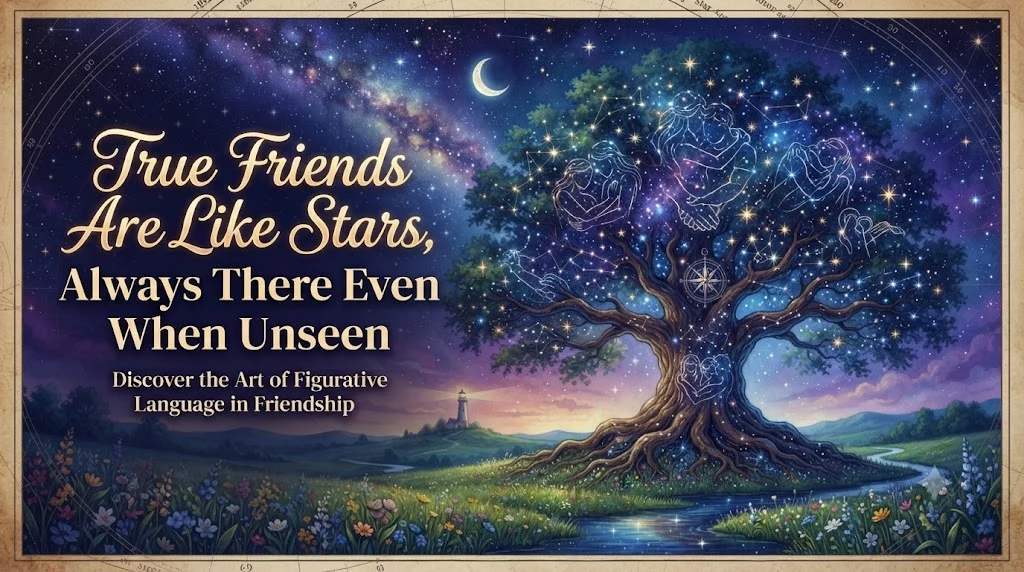
6. True Friends Are Like Stars, Always There Even When Unseen
Meaning:
This simile expresses the idea that genuine friends remain present and supportive in spirit, even when they aren’t physically nearby or visible in daily life.
Usage Insight:
This works especially well in poetry or reflective writing about friends who live far away or who are no longer in daily contact but remain emotionally close.
Example Sentences:
- Though they hadn’t spoken in months, she knew her old friends were like stars, always there even when unseen.
- True friends are like stars, always there even when unseen, quietly shining behind the clouds of busy life.
7. Friendship Is Like a Garden, Blossoming When Nurtured With Care
Meaning:
This simile compares friendship to a garden that requires attention, effort, and consistency in order to grow and remain healthy over time.
Usage Insight:
Use this comparison in advice-driven writing or personal essays about maintaining relationships, since it reinforces the idea that friendship needs active care rather than passive existence.
Example Sentences:
- With regular calls and honest conversations, their friendship was like a garden, blossoming when nurtured with care.
- Friendship is like a garden, blossoming when nurtured with care, and withering quietly when it’s left forgotten.
8. A Loyal Friend Is Like an Anchor, Keeping You Steady in Rough Seas
Meaning:
This simile describes a friend who provides emotional stability and grounding during chaotic or overwhelming periods of life.
Usage Insight:
This comparison is effective in stories or essays about resilience, particularly when describing a friend who helps someone stay calm and grounded during a personal crisis.
Example Sentences:
- When everything in his life felt uncertain, his roommate was like an anchor, keeping him steady in rough seas.
- A loyal friend is like an anchor, keeping you steady in rough seas, even when you feel like you’re drifting.
9. Friendship Is Like a Mirror, Reflecting Your True Self
Meaning:
This simile suggests that close friends often show us who we really are, offering honest reflection, gentle feedback, and self-awareness we might not find alone.
Usage Insight:
This works well in introspective or character-driven writing, particularly when a friendship helps a character understand themselves more clearly.
Example Sentences:
- Her best friend was like a mirror, reflecting her true self back to her whenever she lost sight of who she was.
- Friendship is like a mirror, reflecting your true self, sometimes showing you truths you weren’t ready to see.
10. A Close Friend Is Like a Warm Blanket, Comforting on Cold Nights
Meaning:
This simile captures the emotional comfort and safety that a close friend provides, especially during moments of sadness, loneliness, or vulnerability.
Usage Insight:
This comparison is particularly effective in heartfelt or sentimental writing, such as personal essays, cards, or tributes, since it evokes gentle, physical warmth alongside emotional comfort.
Example Sentences:
- After the funeral, her closest friend stayed by her side like a warm blanket, comforting on cold nights she couldn’t face alone.
- A close friend is like a warm blanket, comforting on cold nights when nothing else seems to ease the chill.
11. Friendship Is Like a Bridge, Connecting Two Different Worlds
Meaning:
This simile illustrates how friendship can unite people from different backgrounds, cultures, or life experiences, creating understanding where differences once existed.
Usage Insight:
Use this comparison in essays or stories exploring diverse or unlikely friendships, since it highlights connection built despite contrast rather than similarity.
Example Sentences:
- Growing up in different countries, their friendship was like a bridge, connecting two different worlds neither had known before.
- Friendship is like a bridge, connecting two different worlds, allowing understanding to travel freely between them.
12. Old Friends Are Like Fine Wine, Growing Richer With Age
Meaning:
This simile reflects how long-standing friendships often deepen and improve over the years, becoming more meaningful and valuable with time.
Usage Insight:
This comparison works especially well in nostalgic or celebratory writing, such as anniversary speeches or reunion stories, since it frames time as an asset rather than a challenge.
Example Sentences:
- Thirty years later, their bond proved that old friends are like fine wine, growing richer with age.
- At the reunion, it was clear that old friends are like fine wine, growing richer with age, their laughter as easy as ever.
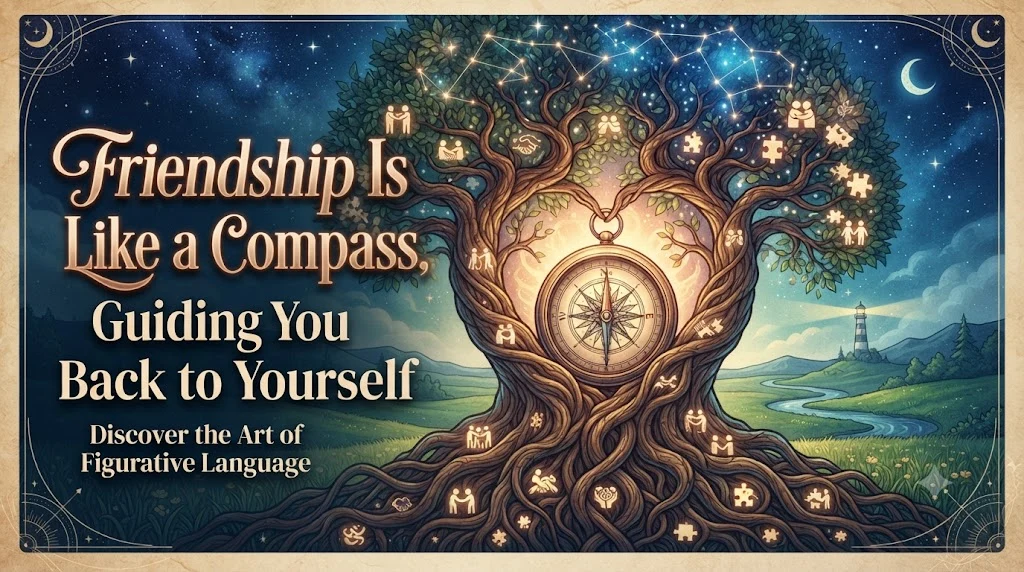
13. Friendship Is Like a Compass, Guiding You Back to Yourself
Meaning:
This simile suggests that true friends help us stay true to our values and identity, especially when life feels confusing or overwhelming.
Usage Insight:
This is effective in reflective essays or personal growth narratives, particularly when a friendship plays a role in helping someone rediscover their sense of direction or purpose.
Example Sentences:
- Whenever she felt lost after the move, talking to her childhood friend was like a compass, guiding her back to herself.
- Friendship is like a compass, guiding you back to yourself, even when everything else feels unfamiliar.
14. A True Friend Is Like a Shelter, Protecting You From Life’s Storms
Meaning:
This simile describes a friend who offers emotional protection and safety during difficult or turbulent times, much like physical shelter protects against harsh weather.
Usage Insight:
This comparison is powerful in emotional storytelling or essays about support systems, especially when describing someone who helped another person through a period of crisis.
Example Sentences:
- During the hardest year of her life, her sister’s friendship was like a shelter, protecting her from life’s storms.
- A true friend is like a shelter, protecting you from life’s storms, offering safety when everything else feels exposed.
15. Friendship Is Like a Puzzle Piece, Fitting Perfectly Into Your Life
Meaning:
This simile expresses how the right friend seems to naturally complement a person’s life, filling a space that feels uniquely suited to them.
Usage Insight:
This works well in lighthearted or celebratory writing about meeting a friend who instantly feels like a natural fit, particularly in personal stories or social media captions.
Example Sentences:
- From the moment they met in college, she felt like a puzzle piece, fitting perfectly into his life in ways he hadn’t expected.
- Friendship is like a puzzle piece, fitting perfectly into your life, completing a picture you didn’t know was unfinished.
How to Use Similes Effectively in Writing
Similes can bring warmth, imagery, and emotional depth to nearly any piece of writing, but using them thoughtfully makes all the difference. Here are practical tips for different formats:
Poems
: Choose similes that create strong sensory imagery, since poetry relies on compressed, emotionally rich comparisons. A single vivid simile about friendship can carry the emotional weight of an entire verse.
In Stories:
Use similes to reveal character relationships rather than just describing them. Comparing a friend to “a lighthouse” or “an anchor” tells readers about the emotional role that person plays, not just their personality.
Essays:
Similes work best when used sparingly to reinforce a central idea, especially in introductions or conclusions, where a strong comparison can make an argument about friendship more memorable and persuasive.
In Songs:
Simple, rhythmic similes tend to resonate most with listeners, so favor comparisons that are easy to picture instantly, since songs move quickly and leave little room for complex imagery.
Creative Descriptions:
Draw from nature, everyday objects, and universal experiences, since these comparisons feel familiar and grounded, making emotional ideas like friendship easier to visualize and connect with.
As a general rule, avoid overloading your writing with too many similes at once. One or two carefully chosen comparisons will always leave a stronger impression than a dozen scattered across a page.
FAQs About Similes for Friendship
1. What are the best similes for friendship?
Some of the best similes for friendship compare it to trees, sunlight, rivers, and anchors, because these natural images capture the strength, warmth, and steadiness that define real, lasting friendships.
2. What is the difference between a simile and a metaphor?
A simile makes a comparison using “like” or “as” (for example, “friendship is like a tree”), while a metaphor states that one thing is another without using those words (for example, “friendship is a tree”). Similes are slightly more explicit, while metaphors often feel more immersive and direct.
3. Why do writers use nature similes to describe friendship?
Nature similes work well for friendship because natural elements—trees, rivers, sunlight, and gardens—embody growth, resilience, and connection, qualities that closely mirror the emotional experience of true friendship.
4. Can similes be used in academic writing about relationships?
Yes, similes can be used in academic writing, particularly in introductions, reflective sections, or conclusions, as long as they are used sparingly and support clarity rather than replacing precise, evidence-based analysis.
5. How do similes improve creative writing about friendship?
Similes improve creative writing by turning an abstract emotional bond into something readers can visualize and feel, making stories, poems, and essays about friendship more vivid, relatable, and memorable.
Conclusion
The best similes for friendship do more than decorate a sentence—they help readers feel the warmth, strength, and quiet loyalty that define our closest relationships. By comparing friendship to trees, sunlight, rivers, anchors, and gardens, writers can turn an everyday emotional experience into something vivid, meaningful, and deeply human. These comparisons add clarity, imagery, and emotional depth to language, transforming simple descriptions into moments readers genuinely connect with. Whether you’re writing a poem, a personal essay, or a heartfelt letter to someone who matters, remember that the right simile doesn’t just describe friendship—it helps readers feel it. Keep these 15 comparisons close as you write, and let them remind you that true friendship, like a well-rooted tree, only grows stronger with time.