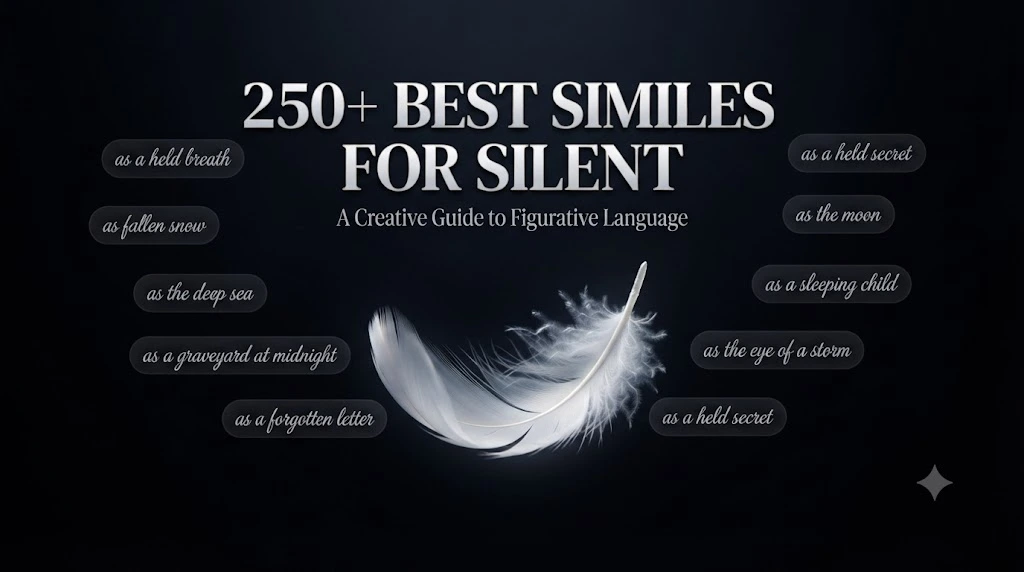
Silence is one of the hardest things to describe in words, yet writers have always found beautiful ways to capture it through comparison. A simile is a figure of speech that compares two unlike things using “like” or “as,” helping readers feel an idea rather than just read it. Similes are an essential tool in figurative language because they turn abstract feelings into vivid, relatable images.
When a writer says something is “silent as a held breath,” the reader doesn’t just understand silence, they feel the tension inside it. Nature similes work especially well here, since the natural world—snow, oceans, moonlight, empty forests—already carries a quiet, timeless energy that mirrors human emotion.
Silence itself is a powerful symbol: it can represent peace, fear, grief, mystery, or deep reflection, depending on how it’s framed. Great similes in literature use this kind of quiet imagery to slow the reader down and create atmosphere. In this article, you’ll discover 15 of the best similes for silent, complete with meanings, usage insights, and example sentences to elevate your own writing.
What Is a Simile?
A simile is a comparison between two different things, usually joined by “like” or “as,” used to make writing more vivid and expressive. Instead of simply stating a fact, a simile helps the reader visualize or emotionally connect with an idea. For example, saying “the room was as silent as a graveyard at midnight” instantly creates a mood of stillness and unease, far more powerful than simply saying “the room was quiet.”
Silent as a Graveyard at Midnight
Meaning:
This simile compares quietness to the eerie, motionless stillness of a graveyard late at night, evoking a sense of solemnity or fear.
Usage Insight:
It works best in suspense, horror, or dramatic writing where the writer wants to build tension or unease rather than peaceful calm.
Example Sentences:
- The old hallway was silent as a graveyard at midnight, and every creak of the floorboards echoed like a warning.
- After the argument ended, the apartment fell silent as a graveyard at midnight, heavy with things left unsaid.
Silent as Fallen Snow
Meaning:
This simile compares silence to freshly fallen snow, which muffles sound and blankets the world in soft stillness.
Usage Insight:
It’s ideal for peaceful, reflective, or poetic writing, especially in winter scenes or moments of calm introspection.
Example Sentences:
- The village lay silent as fallen snow, its streets untouched and its windows glowing faintly gold.
- Her thoughts grew silent as fallen snow, quiet and clear after weeks of noisy worry.
Silent as a Held Breath
Meaning:
This simile captures the tense, suspended quality of silence, like the moment right before something is about to happen.
Usage Insight:
It’s perfect for scenes of anticipation, suspense, or emotional climax, where stillness signals that something important is coming.
Example Sentences:
- The courtroom went silent as a held breath the instant the judge began to speak.
- Silent as a held breath, the two of them stood inches apart, neither willing to say the words first.
Silent as a Locked Room
Meaning:
This simile suggests a silence that feels sealed off, private, and impenetrable, as though nothing can enter or escape it.
Usage Insight:
It works well when describing emotional distance, secrecy, or someone withdrawing into themselves.
Example Sentences:
- His mind had become silent as a locked room, guarding memories he refused to revisit.
- Even surrounded by friends, she felt silent as a locked room, unreachable and alone.
Silent as the Deep Sea

Meaning:
This simile compares silence to the vast, dark quiet found far beneath the ocean’s surface, suggesting depth, mystery, and enormity.
Usage Insight:
It suits descriptions of profound emotion, vast landscapes, or moments that feel larger than words can express.
Example Sentences:
- The ancient library was silent as the deep sea, its shelves holding centuries of untouched knowledge.
- Grief settled over him silent as the deep sea, pressing down with a weight he couldn’t name.
Silent as a Sleeping Child
Meaning:
This simile evokes a gentle, innocent, and peaceful kind of quiet, free from worry or disturbance.
Usage Insight:
It’s best suited for tender, warm, or nostalgic writing, especially scenes involving comfort, safety, or domestic life.
Example Sentences:
- The house grew silent as a sleeping child once the last light was switched off.
- Snow fell over the town, silent as a sleeping child, wrapping every rooftop in soft white.
Silent as an Abandoned House
Meaning:
This simile suggests a hollow, forgotten stillness, the kind of silence left behind when life has moved on.
Usage Insight:
It works well in melancholic or reflective writing, particularly when describing loss, memory, or things left behind.
Example Sentences:
- The old family farm stood silent as an abandoned house, its fields empty and its gate rusted shut.
- Their friendship had gone silent as an abandoned house, familiar yet strangely hollow now.
Silent as the Moon
Meaning:
This simile compares quietness to the moon’s distant, watchful stillness, suggesting calm, mystery, and quiet observation.
Usage Insight:
It’s effective in poetic or atmospheric writing, especially night scenes or moments of quiet reflection.
Example Sentences:
- The lake was silent as the moon, mirroring the sky without a single ripple to break the stillness.
- She listened silent as the moon, watching him speak without offering a single word in return.
Silent as a Monk in Prayer
Meaning:
This simile compares silence to the disciplined, focused stillness of someone deep in meditation or prayer.
Usage Insight:
It works best when describing intentional, reverent, or thoughtful silence rather than emptiness or fear.
Example Sentences:
- The classroom fell silent as a monk in prayer the moment the teacher began reading the final chapter.
- He sat silent as a monk in prayer, letting the weight of her words settle before responding.
Silent as a Shadow
Meaning:
This simile suggests a silence that is present but unnoticed, moving quietly without drawing attention.
Usage Insight:
It’s ideal for describing stealth, subtlety, or someone who observes without being seen or heard.
Example Sentences:
- The cat crossed the room silent as a shadow, never disturbing a single object in its path.
- He slipped out of the meeting silent as a shadow, leaving before anyone noticed he was gone.
Silent as a Held Secret
Meaning:
This simile compares silence to something deliberately hidden, suggesting restraint, discretion, or unspoken truth.
Usage Insight:
It’s effective in character-driven writing, especially when a character is withholding emotion or information.
Example Sentences:
- She kept her feelings silent as a held secret, afraid that saying them aloud would make them real.
- The office stayed silent as a held secret after the announcement, everyone unsure of what to say.
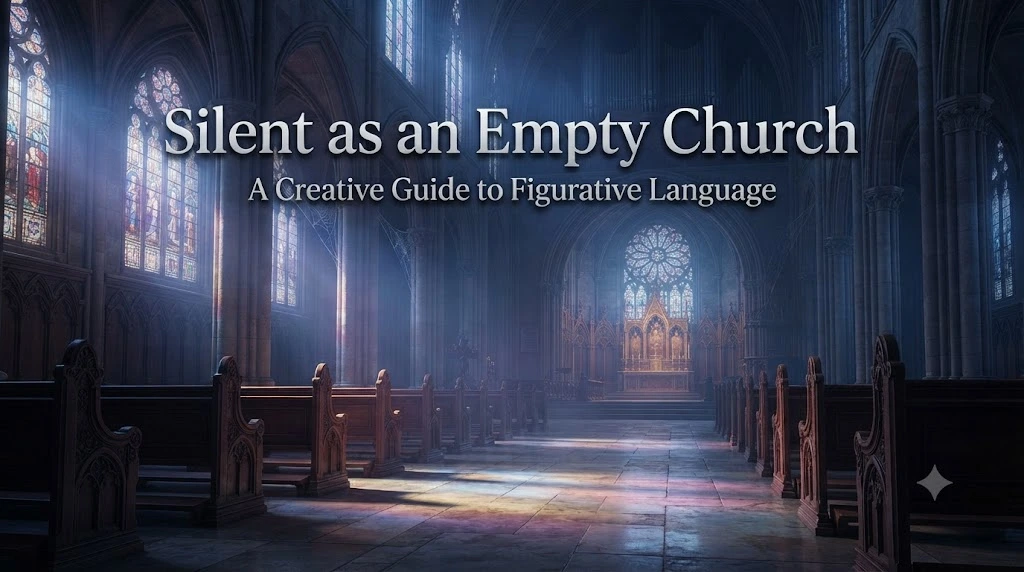
Silent as an Empty Church
Meaning:
This simile evokes a solemn, sacred kind of quiet, filled with reverence rather than emptiness.
Usage Insight:
It works well in emotionally weighty scenes, particularly those involving reflection, loss, or spiritual searching.
Example Sentences:
- The waiting room was silent as an empty church, every visitor lost in private thought.
- After the funeral, the house remained silent as an empty church for days.
Silent as the Eye of a Storm
Meaning:
This simile compares silence to the calm center of a storm, suggesting a fragile, temporary stillness surrounded by chaos.
Usage Insight:
It’s best used to build dramatic tension, hinting that the quiet won’t last and something intense is near.
Example Sentences:
- The negotiations grew silent as the eye of a storm, both sides bracing for what would come next.
- Their home felt silent as the eye of a storm in the hours before the difficult news arrived.
Silent as a Photograph
Meaning:
This simile suggests a silence that is frozen and unchanging, like a single captured moment in time.
Usage Insight:
It’s effective for nostalgic or memory-driven writing, particularly when describing something preserved but no longer alive.
Example Sentences:
- The childhood bedroom remained silent as a photograph, untouched since the day she left for college.
- His memory of that summer stayed silent as a photograph, vivid but forever still.
Silent as a Forgotten Letter
Meaning:
This simile compares silence to words that were never sent or spoken, carrying meaning that remains unheard.
Usage Insight:
It’s ideal for expressing regret, missed connection, or emotions left unresolved between people.
Example Sentences:
- Their unfinished conversation sat silent as a forgotten letter, full of things neither had the courage to say.
- The old diary lay silent as a forgotten letter, its pages holding secrets no one would ever read.
How to Use Similes Effectively in Writing
Similes can transform flat description into vivid imagery, but only when used with intention. Here are some practical tips for using similes for silent—and similes in general—across different types of writing:
poems:
- Choose similes that match the poem’s emotional tone. A gentle poem about peace calls for “silent as fallen snow,” while a poem about tension might use “silent as a held breath.”
In stories:
- Use similes to reveal character emotion without stating it directly. Instead of writing “she was nervous,” show it through “the room went silent as a held breath around her.”
essays:
- Use similes sparingly and purposefully to clarify complex ideas or add stylistic flair, especially in reflective or narrative essays.
In songs:
- Choose short, rhythmic similes that flow naturally when sung aloud, since lyrical similes need to sound as good as they read.
creative descriptions:
- Match the simile to the setting’s mood—use nature similes for organic, atmospheric scenes, and human-centered similes for emotional or personal moments.
- General rule:
- Avoid overusing similes in a single paragraph. One well-placed comparison is often more powerful than several stacked together.
FAQs About Similes for Silent
1. What are the best similes for silent?
Some of the best similes for silent include “silent as fallen snow,” “silent as a held breath,” “silent as the deep sea,” and “silent as a graveyard at midnight.” Each one creates a different mood, from peaceful to tense to mysterious.
2. What is the difference between a simile and a metaphor?
A simile compares two things using “like” or “as” (e.g., “silent as the moon”), while a metaphor states that one thing is another without using comparison words (e.g., “the room was a tomb of silence”). Similes are generally softer and more descriptive, while metaphors are more direct and symbolic.
3. Why are nature similes so effective for describing silence?
Nature similes work well because natural elements like snow, oceans, and moonlight already carry a quiet, timeless quality that mirrors human emotion, making comparisons feel authentic and relatable.
4. Can similes be used in academic writing?
Yes, similes can be used in academic writing, particularly in reflective, narrative, or descriptive essays, but they should be used sparingly and appropriately to maintain a professional tone.
5. How do similes improve creative writing?
Similes improve creative writing by turning abstract ideas into vivid, sensory images, helping readers feel emotions and atmosphere rather than simply reading facts.
Conclusion
Silence may be quiet, but describing it well doesn’t have to be plain or forgettable. The best similes for silent give writers a way to capture stillness in all its emotional shades, from peaceful and comforting to tense and mysterious. By comparing silence to snow, shadows, held breaths, or empty churches, these similes add clarity, imagery, and emotional depth that flat description simply can’t achieve. Whether you’re writing poetry, fiction, essays, or song lyrics, choosing the right simile can transform a quiet moment into an unforgettable one. The next time you want to describe silence, reach for one of these comparisons and let your words speak volumes—even in stillness.