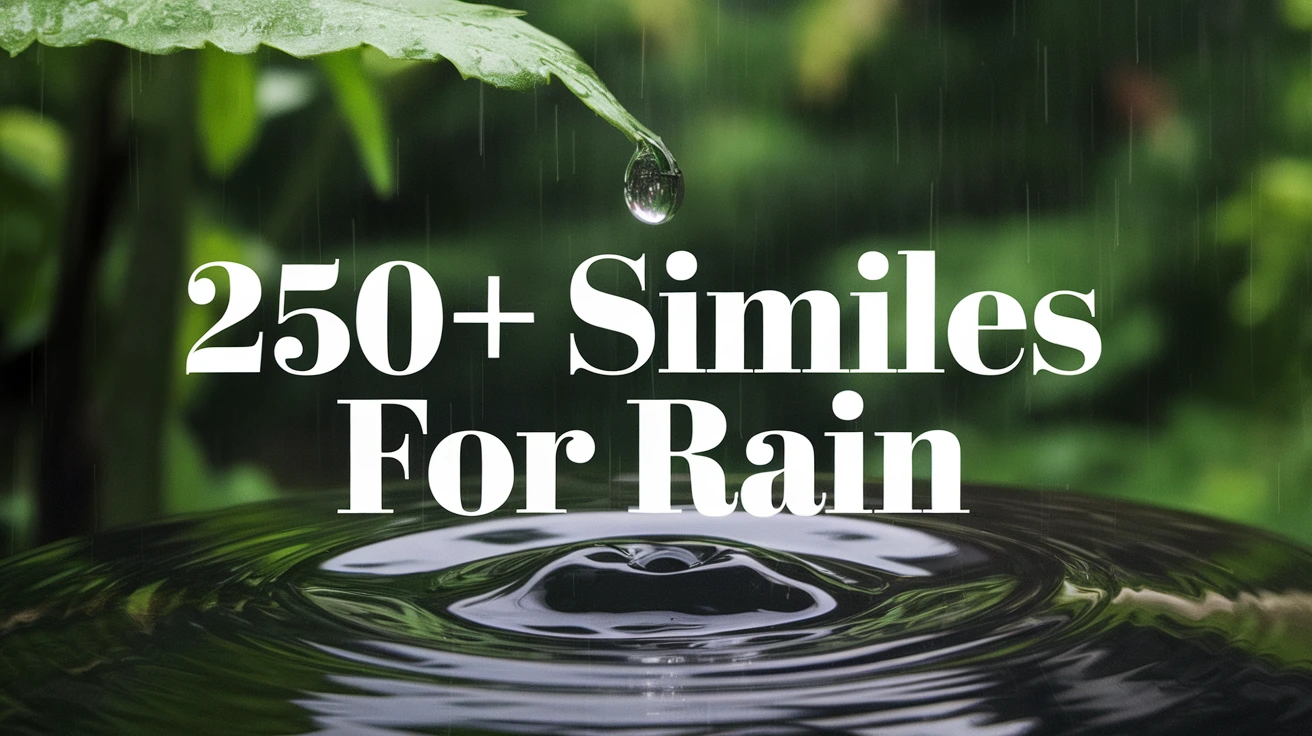
Rain has inspired poets, storytellers, and writers for centuries. Whether it falls gently on a quiet garden or crashes against rooftops during a storm, rain creates powerful images and emotions. Writers often use similes to describe rain because they help transform ordinary observations into vivid and memorable comparisons. Similes are an important part of figurative language because they compare one thing to another using the words like or as.
These comparisons help readers visualize scenes more clearly and connect with the emotions behind them. Similes in literature frequently use rain to symbolize renewal, sadness, hope, peace, growth, and change. Nature provides endless inspiration for these creative comparisons, and trees often stand at the center of rainy landscapes.
Trees symbolize strength, growth, resilience, wisdom, and human emotion, making them powerful images in both literature and everyday writing. In this article, you will discover original similes for rain, complete with meanings, usage insights, and examples that can enhance your creative writing, poetry, essays, and descriptions.
What Is a Simile?
A simile is a figure of speech that compares two different things using the words like or as. Writers use similes to make descriptions more vivid, engaging, and relatable.
Example:
The rain fell like silver threads from the sky.
This comparison helps readers picture the appearance and movement of the rain more clearly.
Like Silver Threads Falling from the Sky
Meaning
Describes rain that appears thin, delicate, and beautiful.
Usage Insight
Works best when describing light or steady rainfall in poetic writing.
Examples
- The rain drifted like silver threads falling from the sky.
- Outside the window, the shower looked like silver threads falling from the sky.
As Gentle as a Mother’s Touch
Meaning
Represents soft, comforting rain.
Usage Insight
Ideal for peaceful and emotional descriptions.
Examples
- The rain was as gentle as a mother’s touch.
- Soft drops landed on the leaves as gentle as a mother’s touch.
Like Tears Sliding Down a Windowpane
Meaning
Suggests sadness, reflection, or emotional depth.
Usage Insight
Useful for melancholy scenes and reflective writing.
Examples
- The rain moved like tears sliding down a windowpane.
- Tiny streams ran down the glass like tears sliding down a windowpane.
As Steady as a Drummer’s Beat
Meaning
Describes consistent and rhythmic rainfall.
Usage Insight
Perfect for portraying continuous rain.
Examples
- The rain fell as steady as a drummer’s beat.
- All night long, the shower remained as steady as a drummer’s beat.
Like Pearls Scattered Across the Earth

Meaning
Represents sparkling raindrops.
Usage Insight
Excellent for visual and descriptive writing.
Examples
- The raindrops lay like pearls scattered across the earth.
- The grass shimmered with water like pearls scattered across the earth.
As Refreshing as a Cool Drink on a Hot Day
Meaning
Describes rain that brings relief and renewal.
Usage Insight
Works well in summer rain descriptions.
Examples
- The rain felt as refreshing as a cool drink on a hot day.
- After weeks of heat, the storm arrived as refreshing as a cool drink on a hot day.
Like a Blanket Covering the World
Meaning
Suggests rain that envelops everything.
Usage Insight
Useful for describing widespread rainfall.
Examples
- The rain spread like a blanket covering the world.
- Gray clouds released water like a blanket covering the world.
As Soft as a Whisper in the Dark
Meaning
Represents very light and quiet rain.
Usage Insight
Ideal for peaceful nighttime scenes.
Examples
- The rain was as soft as a whisper in the dark.
- Tiny droplets touched the roof as soft as a whisper in the dark.
Like Applause on a Rooftop
Meaning
Describes rain tapping rhythmically against surfaces.
Usage Insight
Perfect for lively and sensory descriptions.
Examples
- The rain sounded like applause on a rooftop.
- The storm greeted the house like applause on a rooftop.
As Endless as a Flowing River
Meaning
Represents long-lasting rainfall.
Usage Insight
Useful for emphasizing duration.
Examples
- The rain seemed as endless as a flowing river.
- For hours, the shower continued as endless as a flowing river.
Like Crystal Beads from the Clouds
Meaning
Describes clear and sparkling raindrops.
Usage Insight
Works well in elegant and visual writing.
Examples
- The rain fell like crystal beads from the clouds.
- Sunlight caught the droplets like crystal beads from the clouds.
As Wild as Horses Crossing a Plain

Meaning
Represents heavy, energetic rain.
Usage Insight
Ideal for storm descriptions.
Examples
- The rain arrived as wild as horses crossing a plain.
- Wind and water raced together as wild as horses crossing a plain.
Like Music Playing Through the Trees
Meaning
Suggests soothing and rhythmic rainfall.
Usage Insight
Perfect for nature-inspired writing.
Examples
- The rain sounded like music playing through the trees.
- Every branch echoed like music playing through the trees.
As Pure as Morning Dew
Meaning
Represents freshness and cleanliness.
Usage Insight
Useful when describing renewing rain.
Examples
- The rain felt as pure as morning dew.
- The garden sparkled after the shower, as pure as morning dew.
Like a Painter Brushing Color Across a Canvas
Meaning
Suggests rain transforming landscapes.
Usage Insight
Excellent for creative and artistic descriptions.
Examples
- The rain moved like a painter brushing color across a canvas.
- The storm changed the countryside like a painter brushing color across a canvas.
How to Use Similes Effectively in Writing
Using similes effectively can make descriptions of rain more vivid and memorable.
- Choose comparisons that match the mood of the scene.
- Draw inspiration from nature for authentic imagery.
- Use similes sparingly to maintain their impact.
- Match the comparison to the intensity of the rainfall.
- Create original comparisons whenever possible.
- Use sensory details to strengthen imagery.
- Read similes aloud to ensure they sound natural.
- Avoid clichés that readers have seen too often.
- Use similes to deepen emotional meaning.
- Connect rain imagery with themes such as growth, renewal, or reflection.
- Incorporate figurative language naturally into your writing.
- Use similes in poems to enhance rhythm and beauty.
- Include them in stories to create atmosphere.
- Apply them in essays when they clarify an idea.
- Focus on clarity and creativity equally.
FAQs
What are similes for rain?
Similes for rain are comparisons that use like or as to describe rainfall, raindrops, storms, or rainy scenes in a vivid and creative way.
What is an example of a simile for rain?
A common example is: The rain fell like silver threads from the sky.
Why do writers use similes for rain?
Writers use similes to create stronger imagery, evoke emotions, and help readers visualize rainy scenes more clearly.
What is the difference between a simile and a metaphor?
A simile uses like or as to make a comparison, while a metaphor directly states that one thing is another.
Can similes for rain be used in academic writing?
Yes. When used appropriately, similes can help explain ideas and make writing more engaging and understandable.
Conclusion
Similes for rain help writers transform ordinary weather descriptions into vivid and emotionally rich imagery. By comparing rain to silver threads, crystal beads, music, or a comforting touch, writers can create scenes that readers can easily picture and feel. These figurative language examples add beauty, clarity, and depth to poems, stories, essays, and creative descriptions.
Whether rain symbolizes renewal, reflection, peace, or power, the right simile can bring those emotions to life. As you experiment with these comparisons, you will discover new ways to make your writing more expressive and memorable. The best similes for rain do more than describe weather—they create experiences that stay with readers long after the final sentence.