
Every life includes its share of problems, and finding fresh, honest ways to describe them can make writing feel more relatable and real. A simile is a figure of speech that compares two unlike things using “like” or “as,” helping writers turn an everyday struggle into something readers can vividly picture and emotionally connect with. Similes matter in figurative language because they take a frustrating or overwhelming experience and ground it in a familiar image the reader already understands.
When a writer compares a problem to “weeds in a garden,” the reader doesn’t just understand difficulty, they sense how persistent and exhausting that difficulty can feel. Nature similes are especially useful for describing problems, since natural challenges—weeds, storms, tangled roots, crashing waves—already mirror the frustrating, repetitive nature of everyday struggles. In the same way that trees are often used to symbolize strength, growth, resilience, wisdom, and human emotion, other elements of nature are used to represent the messy, persistent, and sometimes overwhelming nature of problems we all face.
Great similes in literature use this kind of grounded imagery to make struggles feel honest and relatable rather than simply stated. In this article, you’ll discover 15 of the best similes for problems, complete with meanings, usage insights, and example sentences to elevate your own writing.
What Is a Simile?
A simile is a comparison between two different things, usually joined by “like” or “as,” used to make writing more vivid and expressive. Instead of simply stating a fact, a simile helps the reader visualize or emotionally connect with an idea. For example, saying “the situation was as tangled as a ball of yarn after a cat’s played with it” instantly creates a vivid picture of frustrating complexity, far more powerful than simply saying “the situation was complicated.”
Problems as Tangled as a Ball of Yarn After a Cat’s Played With It
Meaning:
This simile compares a problem to a hopelessly knotted mess, suggesting confusion and difficulty finding a clear starting point to fix it.
Usage Insight:
It works best when describing situations that feel overwhelming due to too many small, interconnected details.
Example Sentences:
- The budget report was as tangled as a ball of yarn after a cat’s played with it, with numbers that didn’t match across departments.
- Their misunderstanding grew as tangled as a ball of yarn after a cat’s played with it, each explanation only adding another knot.
Problems as Persistent as Weeds in a Garden
Meaning:
This simile compares a problem to weeds that keep returning no matter how often they’re removed, suggesting frustration and repeated effort.
Usage Insight:
It’s ideal for describing recurring issues that never seem to be permanently solved.
Example Sentences:
- The software bugs were as persistent as weeds in a garden, reappearing every time the team thought they’d fixed them.
- Her health issues felt as persistent as weeds in a garden, requiring constant attention no matter how well she managed them.
Problems as Heavy as Boulders Blocking a Mountain Path
Meaning:
This simile compares a problem to a large, immovable obstacle, suggesting difficulty progressing until the issue is fully addressed.
Usage Insight:
It works well when describing significant challenges that halt progress entirely until resolved.
Example Sentences:
- The legal dispute sat as heavy as a boulder blocking a mountain path, stopping the project from moving forward.
- Her fear of failure felt as heavy as a boulder blocking a mountain path, keeping her from applying for the promotion.
Problems as Slippery as Ice on a Winter Road
Meaning:
This simile compares a problem to a dangerous, unpredictable situation where careful handling is required to avoid making things worse.
Usage Insight:
It’s effective when describing delicate situations that require caution, especially in negotiations or sensitive relationships.
Example Sentences:
- The conversation with his business partner felt as slippery as ice on a winter road, one wrong word away from disaster.
- Handling the family dispute was as slippery as ice on a winter road, requiring careful, deliberate steps.
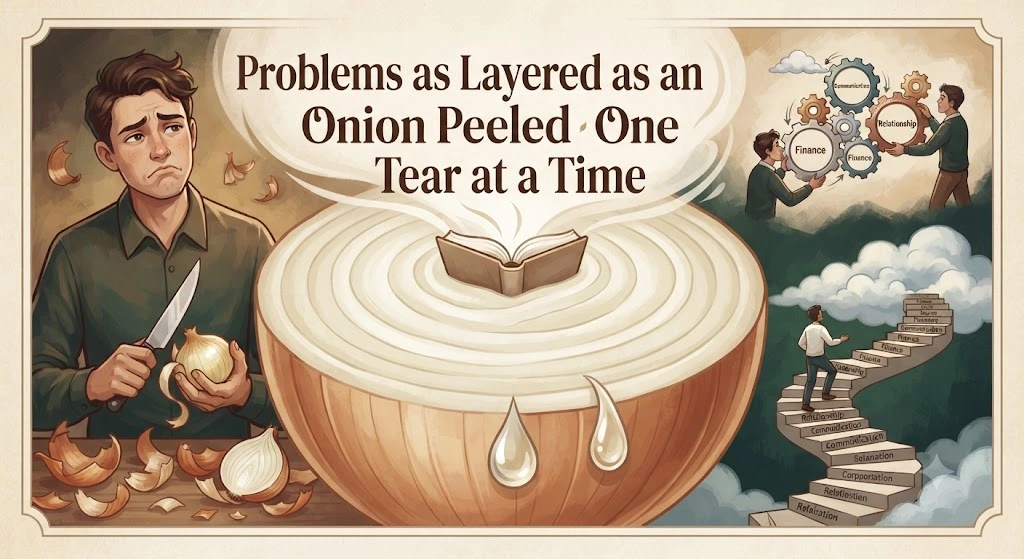
Problems as Layered as an Onion Peeled One Tear at a Time
Meaning:
This simile compares a problem to something with multiple hidden layers, suggesting that solving it requires addressing several underlying issues, often painfully.
Usage Insight:
It works well when describing complex emotional or systemic problems that reveal deeper issues the more they’re examined.
Example Sentences:
- Her grief was as layered as an onion peeled one tear at a time, each stage revealing another difficult emotion.
- The company’s decline was as layered as an onion peeled one tear at a time, with each investigation uncovering a new cause.
Problems as Stubborn as a Stain That Won’t Wash Out
Meaning:
This simile compares a problem to something deeply set that resists easy correction, suggesting persistence despite repeated attempts to fix it.
Usage Insight:
It’s ideal for describing issues that leave a lasting impact even after efforts to resolve them.
Example Sentences:
- The rumor proved as stubborn as a stain that won’t wash out, following him long after the truth came to light.
- Their disagreement remained as stubborn as a stain that won’t wash out, resurfacing every time the topic came up.
Problems as Unpredictable as Weather in Early Spring
Meaning:
This simile compares a problem to something that changes suddenly and without warning, suggesting instability and difficulty planning ahead.
Usage Insight:
It works well when describing situations that shift quickly, requiring constant adaptation.
Example Sentences:
- The market conditions were as unpredictable as weather in early spring, shifting from stable to volatile within days.
- Her son’s mood swings felt as unpredictable as weather in early spring, changing before she could adjust to the last one.
Problems as Deep as Cracks Spreading Across Old Pavement
Meaning:
This simile compares a problem to gradual, structural damage that worsens over time if left unaddressed.
Usage Insight:
It’s effective when describing long-term neglect that has allowed a smaller issue to grow into something more serious.
Example Sentences:
- The company’s internal communication issues ran as deep as cracks spreading across old pavement, ignored for years.
- Their friendship’s problems were as deep as cracks spreading across old pavement, growing wider with every unresolved argument.
Problems as Loud as an Alarm That Won’t Stop Ringing
Meaning:
This simile compares a problem to something impossible to ignore, suggesting urgency and constant, unavoidable attention.
Usage Insight:
It works well when describing pressing issues that demand immediate action.
Example Sentences:
- The safety violations were as loud as an alarm that won’t stop ringing, impossible for management to overlook any longer.
- Her anxiety about the exam was as loud as an alarm that won’t stop ringing, distracting her from everything else.
Problems as Tangled as Roots Beneath a Sidewalk
Meaning:
This simile compares a problem to hidden, interconnected issues beneath the surface that are only discovered once something breaks.
Usage Insight:
It’s ideal for describing problems whose true scale isn’t visible until deeper investigation reveals it.
Example Sentences:
- The company’s financial troubles were as tangled as roots beneath a sidewalk, invisible until the audit uncovered them.
- Their family conflict was as tangled as roots beneath a sidewalk, far more complicated than anyone had realized.
Problems as Relentless as Waves Crashing Against a Shore
Meaning:
This simile compares a problem to repeated, unending pressure, suggesting exhaustion from facing the same difficulty again and again.
Usage Insight:
It works well when describing ongoing struggles that require sustained resilience.
Example Sentences:
- The customer complaints came in as relentless as waves crashing against a shore, one after another without pause.
- Her financial struggles felt as relentless as waves crashing against a shore, each solved problem replaced by a new one.
Problems as Maze-Like as a Corn Field in Autumn

Meaning:
This simile compares a problem to a confusing structure with many paths and few clear answers, suggesting disorientation and trial and error.
Usage Insight:
It’s effective when describing bureaucratic processes or complicated systems that are difficult to navigate.
Example Sentences:
- Applying for the visa felt as maze-like as a corn field in autumn, each form leading to another unexpected requirement.
- The company’s approval process was as maze-like as a corn field in autumn, confusing even for experienced employees.
Problems as Sharp as Thorns Hidden Beneath Rose Petals
Meaning:
This simile compares a problem to a hidden danger disguised by something appealing or pleasant, suggesting deception or unexpected difficulty.
Usage Insight:
It works well when describing situations that appear simple or attractive at first but reveal hidden complications later.
Example Sentences:
- The investment opportunity turned out to be as sharp as thorns hidden beneath rose petals, appealing until the fine print revealed the risks.
- Their new partnership was as sharp as thorns hidden beneath rose petals, promising until the first disagreement exposed deeper issues.
Problems as Multiplying as Rabbits in an Open Field
Meaning:
This simile compares a problem to something that grows rapidly and uncontrollably, suggesting that small issues can quickly become overwhelming.
Usage Insight:
It’s ideal for describing situations where one unresolved issue leads to several new ones.
Example Sentences:
- The technical glitches were as multiplying as rabbits in an open field, each fix seeming to create two new bugs.
- Her to-do list felt as multiplying as rabbits in an open field, growing faster than she could check items off.
Problems as Heavy as a Storm Cloud That Won’t Pass
Meaning:
This simile compares a problem to a lingering, oppressive presence that casts a shadow over everything else, suggesting emotional weight and persistence.
Usage Insight:
It works well when describing ongoing stress or worry that affects someone’s overall mood and outlook.
Example Sentences:
- The uncertainty about her diagnosis felt as heavy as a storm cloud that won’t pass, coloring every part of her day.
- Financial worries hung over the family as heavy as a storm cloud that won’t pass, impossible to ignore even during happy moments.
How to Use Similes Effectively in Writing
Similes can transform flat description into vivid imagery, but only when used with intention. Here are some practical tips for using similes for problems—and similes in general—across different types of writing:
- poems: Choose similes that match the poem’s emotional tone. A poem about ongoing struggle calls for “as heavy as a storm cloud that won’t pass,” while a poem about confusion might use “as tangled as a ball of yarn after a cat’s played with it.”
- In stories: Use similes to show a character’s frustration without stating it directly. Instead of writing “the situation was difficult,” show it through “the situation was as slippery as ice on a winter road.”
- essays: Use similes sparingly and purposefully to clarify complex issues, especially in analytical, reflective, or persuasive writing.
- In songs: Choose short, rhythmic similes that flow naturally when sung aloud, since lyrical similes need to sound as good as they read.
- creative descriptions: Match the simile to the type of problem—use gradual, natural similes for long-term struggles, and sudden, forceful similes for urgent or unexpected challenges.
- General rule: Avoid overusing similes in a single paragraph. One well-placed comparison is often more powerful than several stacked together.
FAQs
1. What are the best similes for problems?
Some of the best similes for problems include “as tangled as a ball of yarn after a cat’s played with it,” “as persistent as weeds in a garden,” and “as heavy as a storm cloud that won’t pass.” Each one highlights a different quality of difficulty, from confusion to persistence to emotional weight.
2. What is the difference between a simile and a metaphor?
A simile compares two things using “like” or “as” (e.g., “as relentless as waves crashing against a shore”), while a metaphor states that one thing is another without using comparison words (e.g., “the problem was a wave crashing against the shore”). Similes are generally softer and more descriptive, while metaphors are more direct and symbolic.
3. Why are nature similes so effective for describing problems?
Nature similes work well because natural challenges like weeds, cracks, and storms already reflect the frustrating, repetitive qualities of real-life problems, making the comparison easy to visualize and relate to.
4. Can similes be used in academic writing?
Yes, similes can be used in academic writing, particularly in reflective, analytical, or narrative writing, but they should be used sparingly and appropriately to maintain a professional tone.
5. How do similes improve creative writing?
Similes improve creative writing by turning abstract frustrations into vivid, relatable images, helping readers feel the weight of a problem rather than simply reading about it.
Conclusion
Problems are a natural part of life, but describing them well can make writing feel more honest, relatable, and human. The best similes for problems help capture that shared experience, comparing struggles to tangled yarn, persistent weeds, and storm clouds that refuse to pass. By grounding difficulties in these vivid, familiar images, writers add clarity, imagery, and emotional depth that plain description simply can’t achieve. Whether you’re writing poetry, fiction, essays, or song lyrics, choosing the right simile can turn a simple mention of struggle into something readers truly connect with. The next time you need to describe a problem in your writing, reach for one of these comparisons and let your words capture just how real that challenge feels.