
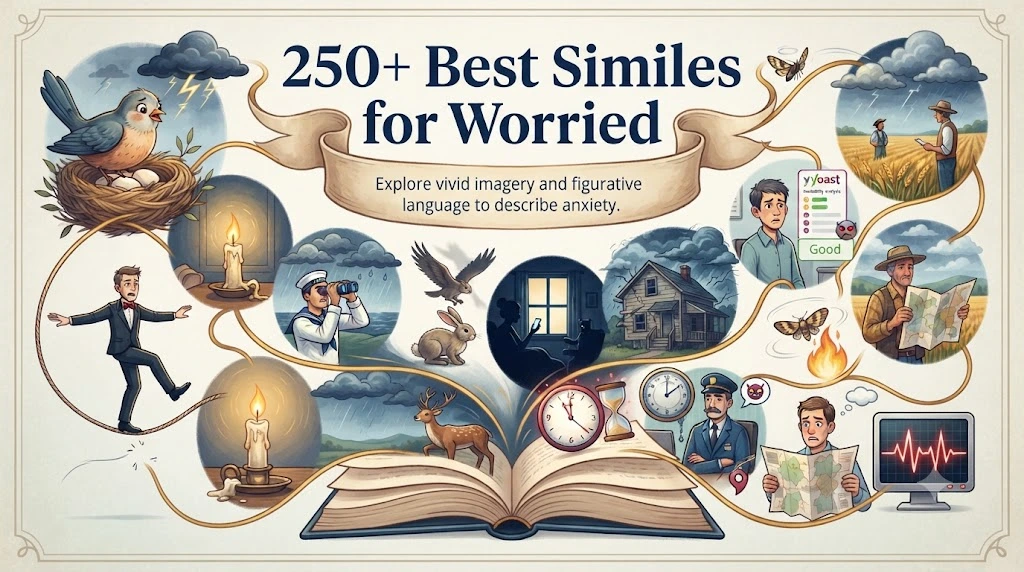
Worry has a way of settling quietly into the mind and refusing to leave, and describing that restless, uneasy feeling takes more than simply saying someone was “worried.” A simile is a figure of speech that compares two unlike things using “like” or “as,” helping writers turn an internal, often invisible emotion into something readers can vividly picture and feel alongside the character. Similes matter in figurative language because they connect abstract anxiety to familiar, tangible images that instantly communicate tension and unease.
When a writer compares someone’s worry to “a mother bird watching a storm roll in,” the reader doesn’t just understand nervousness, they feel the protective fear behind it. Nature similes are especially effective here, since natural signs of unease—storm clouds gathering, animals sensing danger, flickering flames—already mirror the restless energy of worry itself. In the same way that trees are often used to symbolize strength, growth, resilience, wisdom, and human emotion, other elements of nature are used to capture the fragile, anxious feeling of uncertainty before something difficult happens.
Great similes in literature use this kind of tense, sensory imagery to make emotional moments feel immediate and deeply human. In this article, you’ll discover 15 of the best similes for worried, complete with meanings, usage insights, and example sentences to elevate your own writing.
What Is a Simile?
A simile is a comparison between two different things, usually joined by “like” or “as,” used to make writing more vivid and expressive. Instead of simply stating a fact, a simile helps the reader visualize or emotionally connect with an idea. For example, saying “she was worried as a mother bird watching a storm roll in” instantly creates a sense of protective, anxious tension, far more powerful than simply saying “she was very worried.”
Worried as a Mother Bird Watching a Storm Roll In
Meaning:
This simile compares worry to a parent’s instinctive concern for safety when danger approaches, suggesting protective anxiety focused on someone vulnerable.
Usage Insight:
It works best when describing a caregiver’s worry, particularly parents anxious about their children’s wellbeing.
Example Sentences:
- She stood at the window worried as a mother bird watching a storm roll in, waiting for her son’s car to appear.
- His voice grew worried as a mother bird watching a storm roll in when he heard his daughter had missed her flight.
Worried as a Tightrope Walker Missing His Balance
Meaning:
This simile compares worry to the sudden, sharp fear of losing control in a high-stakes situation, suggesting vulnerability and instability.
Usage Insight:
It’s ideal for describing anxiety tied to performance pressure or moments where a small mistake could have serious consequences.
Example Sentences:
- He felt worried as a tightrope walker missing his balance the moment he realized he’d forgotten his notes before the presentation.
- Her hands trembled, worried as a tightrope walker missing his balance, as she waited to hear if the deal had fallen through.
Worried as a Candle Flickering in a Drafty Room
Meaning:
This simile compares worry to a fragile, unsteady state easily disturbed by outside forces, suggesting vulnerability and quiet unease.
Usage Insight:
It works well when describing subtle, internal anxiety that isn’t openly expressed but is clearly present beneath the surface.
Example Sentences:
- Her confidence felt worried as a candle flickering in a drafty room throughout the entire interview.
- He remained worried as a candle flickering in a drafty room, unsettled by the uncertainty surrounding his job.
Worried as a Sailor Watching Dark Clouds Gather
Meaning:
This simile compares worry to the anticipation of trouble ahead, suggesting a sense of caution built from experience and awareness of danger.
Usage Insight:
It’s effective when describing anxiety based on early warning signs of a larger problem.
Example Sentences:
- The manager grew worried as a sailor watching dark clouds gather as sales numbers began slipping each week.
- She felt worried as a sailor watching dark clouds gather when her partner started avoiding difficult conversations.
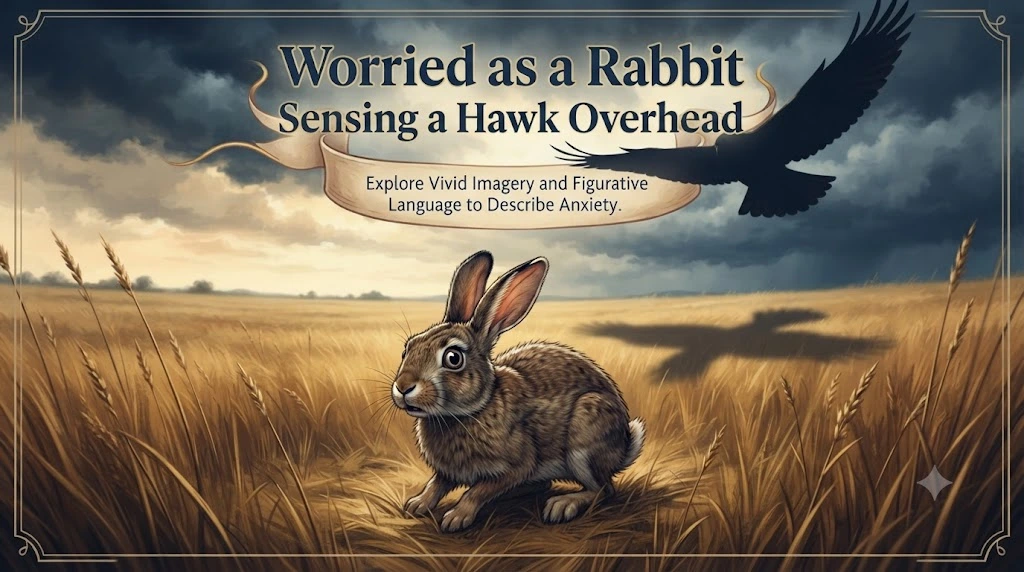
Worried as a Rabbit Sensing a Hawk Overhead
Meaning:
This simile compares worry to a sudden, instinctive fear response, suggesting heightened alertness and vulnerability to an unseen threat.
Usage Insight:
It works well when describing sharp, immediate anxiety triggered by a specific warning sign or feeling of being watched or judged.
Example Sentences:
- He went quiet, worried as a rabbit sensing a hawk overhead, the moment his name was mentioned in the meeting.
- She felt worried as a rabbit sensing a hawk overhead whenever her phone rang late at night.
Worried as a Parent Waiting by the Phone at Midnight
Meaning:
This simile compares worry to the tense, sleepless anxiety of waiting for news about someone’s safety, suggesting deep emotional investment.
Usage Insight:
It’s ideal for describing prolonged, personal worry tied to someone’s wellbeing rather than a general concern.
Example Sentences:
- She sat worried as a parent waiting by the phone at midnight, refreshing her messages every few minutes.
- His mind stayed worried as a parent waiting by the phone at midnight until he finally heard that the surgery had gone well.
Worried as a House Creaking in a Windstorm
Meaning:
This simile compares worry to a persistent, unsettling feeling that something might give way under pressure, suggesting fragility and tension.
Usage Insight:
It works well when describing anxiety about a relationship, situation, or structure that feels unstable but hasn’t yet collapsed.
Example Sentences:
- Their marriage felt worried as a house creaking in a windstorm, holding together but clearly under strain.
- He remained worried as a house creaking in a windstorm about the company’s finances, sensing trouble before the numbers confirmed it.
Worried as a Clock Ticking Toward a Deadline
Meaning:
This simile compares worry to mounting pressure caused by limited time, suggesting urgency and the fear of running out of options.
Usage Insight:
It’s effective when describing time-sensitive anxiety, particularly in professional or academic settings.
Example Sentences:
- She grew worried as a clock ticking toward a deadline with only a few hours left to finish the proposal.
- His stress felt worried as a clock ticking toward a deadline as the court date approached.
Worried as a Deer Frozen at the Sound of a Snapping Branch
Meaning:
This simile compares worry to sudden alertness caused by an unexpected sound or sign of danger, suggesting hesitation and fear of the unknown.
Usage Insight:
It works well when describing a moment of sharp, immediate anxiety triggered by an unclear or ambiguous warning.
Example Sentences:
- He froze, worried as a deer frozen at the sound of a snapping branch, the instant he heard his boss call his name.
- She stood worried as a deer frozen at the sound of a snapping branch when the doctor’s office called back so quickly.
Worried as a Ship Captain Watching the Barometer Drop
Meaning:
This simile compares worry to a professional’s informed concern based on clear warning signs, suggesting experience combined with growing unease.
Usage Insight:
It’s ideal for describing anxiety rooted in expertise or responsibility, particularly leadership roles during uncertain situations.
Example Sentences:
- The CFO grew worried as a ship captain watching the barometer drop as the market indicators continued to shift.
- She remained worried as a ship captain watching the barometer drop, aware of problems long before her team noticed them.
Worried as a Patient Waiting for Test Results
Meaning:
This simile compares worry to the tense uncertainty of awaiting important news, suggesting helplessness and anticipation.
Usage Insight:
It works well when describing anxiety tied to outcomes beyond someone’s control, especially health, legal, or academic situations.
Example Sentences:
- He felt worried as a patient waiting for test results throughout the entire college admissions process.
- She sat worried as a patient waiting for test results while the jury deliberated.
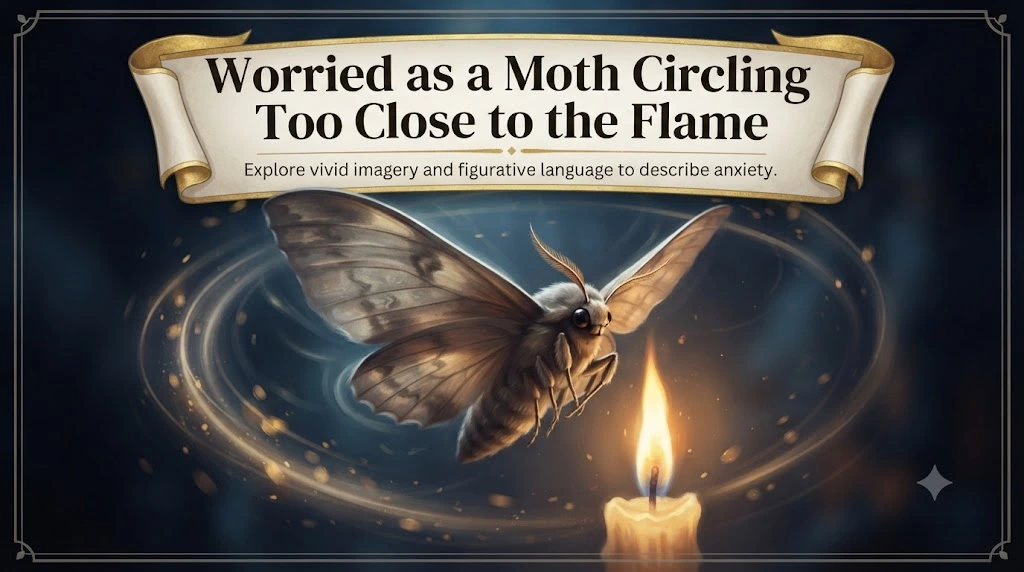
Worried as a Moth Circling Too Close to the Flame
Meaning:
This simile compares worry to anxious fascination with something risky, suggesting awareness of danger paired with an inability to fully step away.
Usage Insight:
It’s effective when describing anxiety tied to a tempting but potentially harmful decision or relationship.
Example Sentences:
- She felt worried as a moth circling too close to the flame every time she considered returning to the failed business venture.
- His mind stayed worried as a moth circling too close to the flame as he reread her old messages.
Worried as a Farmer Watching Storm Clouds Over a Ripening Field
Meaning:
This simile compares worry to the fear of losing something valuable that has taken a long time to build, suggesting high stakes and vulnerability.
Usage Insight:
It works well when describing anxiety about losing progress on a long-term goal or investment.
Example Sentences:
- She grew worried as a farmer watching storm clouds over a ripening field as the merger negotiations dragged on.
- He remained worried as a farmer watching storm clouds over a ripening field, hoping years of hard work wouldn’t unravel overnight.
Worried as a Traveler Lost Without a Map
Meaning:
This simile compares worry to disorientation and uncertainty about the right path forward, suggesting confusion and a lack of clear direction.
Usage Insight:
It’s ideal for describing anxiety tied to major life decisions or unclear next steps.
Example Sentences:
- After the layoff, she felt worried as a traveler lost without a map, unsure which direction to take next.
- He remained worried as a traveler lost without a map throughout the uncertain first months of starting his own business.
Worried as a Heartbeat Racing Before a Big Announcement
Meaning:
This simile compares worry to the physical, involuntary response of anticipation, suggesting nervous energy building toward a significant moment.
Usage Insight:
It works well when describing short bursts of intense anxiety tied to a specific upcoming event.
Example Sentences:
- She felt worried as a heartbeat racing before a big announcement while waiting for the results to be read aloud.
- His thoughts stayed worried as a heartbeat racing before a big announcement in the minutes before the interview began.
How to Use Similes Effectively in Writing
Similes can transform flat description into vivid imagery, but only when used with intention. Here are some practical tips for using similes for worried—and similes in general—across different types of writing:
- poems: Choose similes that match the poem’s emotional tone. A poem about quiet unease calls for “worried as a candle flickering in a drafty room,” while a poem about urgent fear might use “worried as a heartbeat racing before a big announcement.”
- In stories: Use similes to reveal a character’s inner anxiety without stating it directly. Instead of writing “she felt nervous,” show it through “she stood worried as a deer frozen at the sound of a snapping branch.”
- essays: Use similes sparingly and purposefully to add emotional depth, especially in reflective or narrative writing about uncertainty or decision-making.
- In songs: Choose short, rhythmic similes that flow naturally when sung aloud, since lyrical similes need to sound as good as they read.
- creative descriptions: Match the simile to the type of worry—use slow, building similes for long-term anxiety, and sudden, sharp similes for immediate fear or alarm.
- General rule: Avoid overusing similes in a single paragraph. One well-placed comparison is often more powerful than several stacked together.
FAQs About Similes for Worried
1. What are the best similes for worried?
Some of the best similes for worried include “worried as a mother bird watching a storm roll in,” “worried as a clock ticking toward a deadline,” and “worried as a patient waiting for test results.” Each one captures a different type of anxiety, from protective concern to time pressure to helpless anticipation.
2. What is the difference between a simile and a metaphor?
A simile compares two things using “like” or “as” (e.g., “worried as a house creaking in a windstorm”), while a metaphor states that one thing is another without using comparison words (e.g., “her worry was a house creaking in the wind”). Similes are generally softer and more descriptive, while metaphors are more direct and symbolic.
3. Why are nature similes so effective for describing worry?
Nature similes work well because natural warning signs like storm clouds, sensitive animals, and unstable structures already reflect the tense, anticipatory quality of worry, making the comparison easy to visualize and emotionally relate to.
4. Can similes be used in academic writing?
Yes, similes can be used in academic writing, particularly in reflective, narrative, or descriptive writing about emotion or decision-making, but they should be used sparingly and appropriately to maintain a professional tone.
5. How do similes improve creative writing?
Similes improve creative writing by turning abstract emotions like worry into vivid, sensory images, helping readers feel a character’s anxiety rather than simply reading about it.
Conclusion
Worry is a quiet but powerful emotion, often felt more than it’s spoken, which is exactly why finding the right words to describe it matters so much. The best similes for worried help capture that restless, anxious energy, comparing it to storm clouds gathering, candles flickering, and hearts racing before a big moment. By grounding worry in these vivid, relatable images, writers add clarity, imagery, and emotional depth that plain description simply can’t achieve. Whether you’re writing poetry, fiction, essays, or song lyrics, choosing the right simile can turn a simple mention of anxiety into something readers truly feel alongside your character. The next time you want to describe worry in your writing, reach for one of these comparisons and let your words hold all the tension that real uncertainty brings.