Everyone knows the feeling of an awkward moment—that mix of embarrassment, discomfort, and the urge to disappear entirely. A simile is a figure of speech that compares two unlike things using “like” or “as,” helping writers turn that universal, cringe-worthy feeling into something readers instantly recognize and relate to. Similes matter in figurative language because they take a fleeting social discomfort and give it a vivid, memorable image that captures exactly how it feels.
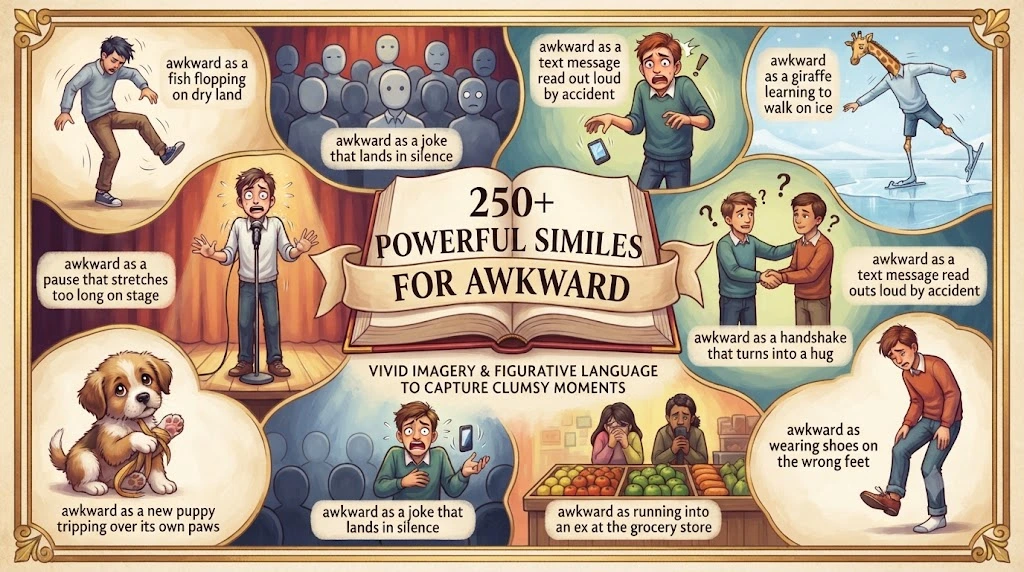
When a writer compares an awkward moment to “a fish flopping on dry land,” the reader doesn’t just understand discomfort, they picture the flailing, helpless energy behind it. Nature similes work surprisingly well here, since animals caught in unnatural situations—fish out of water, newborn animals learning to move—perfectly mirror the clumsy, out-of-place feeling awkwardness brings. In the same way that trees are often used to symbolize strength, growth, resilience, wisdom, and human emotion, lighter and more playful natural comparisons are used to capture the universally human experience of feeling out of place or unsure of oneself.
Great similes in literature use this kind of relatable, often humorous imagery to make characters feel authentic and human rather than perfectly composed. In this article, you’ll discover 15 powerful similes for awkward, complete with meanings, usage insights, and example sentences to elevate your own writing.
What Is a Simile?
A simile is a comparison between two different things, usually joined by “like” or “as,” used to make writing more vivid and expressive. Instead of simply stating a fact, a simile helps the reader visualize or emotionally connect with an idea. For example, saying “he felt awkward as a fish flopping on dry land” instantly creates a vivid, relatable image of clumsy discomfort, far more powerful than simply saying “he felt awkward.”
Awkward as a Fish Flopping on Dry Land
Meaning:
This simile compares awkwardness to the helpless, uncoordinated movement of a fish out of water, suggesting someone completely out of their element.
Usage Insight:
It works best when describing physical or social clumsiness, especially in unfamiliar or high-pressure situations.
Example Sentences:
- He felt awkward as a fish flopping on dry land during his first week at the new office, unsure where anything was kept.
- She stumbled through her introduction awkward as a fish flopping on dry land, forgetting half of what she’d rehearsed.
Awkward as a Giraffe Learning to Walk on Ice
Meaning:
This simile compares awkwardness to an ungainly, unstable attempt at movement, suggesting exaggerated clumsiness in an unfamiliar situation.
Usage Insight:
It’s ideal for describing physical awkwardness, particularly in situations involving coordination, like dancing or sports.
Example Sentences:
- He moved across the dance floor awkward as a giraffe learning to walk on ice, unsure of where to put his feet.
- Her first attempt at ice skating was awkward as a giraffe learning to walk on ice, arms flailing with every wobble.
Awkward as a Joke That Lands in Silence
Meaning:
This simile compares awkwardness to the discomfort following a failed attempt at humor, suggesting embarrassment and social tension.
Usage Insight:
It works well when describing moments of social miscommunication or failed attempts to connect with others.
Example Sentences:
- His comment during the meeting was awkward as a joke that lands in silence, met with nothing but blank stares.
- The whole exchange felt awkward as a joke that lands in silence, neither of them sure how to move past it.
Awkward as Two Strangers Sharing an Umbrella
Meaning:
This simile compares awkwardness to forced closeness between people who don’t know each other well, suggesting discomfort caused by unfamiliarity.
Usage Insight:
It’s effective when describing tension in new relationships or unavoidable proximity with someone unfamiliar.
Example Sentences:
- Their first date felt awkward as two strangers sharing an umbrella, both trying to fill the silence.
- Sitting next to his new coworker on the flight was awkward as two strangers sharing an umbrella, neither sure what to say.
Awkward as a Foot Caught in a Bear Trap of Small Talk
Meaning:
This simile compares awkwardness to feeling stuck in a conversation with no easy way out, suggesting discomfort and a desire to escape.
Usage Insight:
It works well when describing forced or superficial conversations that feel difficult to end gracefully.
Example Sentences:
- He felt awkward as a foot caught in a bear trap of small talk while waiting for the elevator with his boss.
- The conversation at the party grew awkward as a foot caught in a bear trap of small talk, circling the same topics again and again.
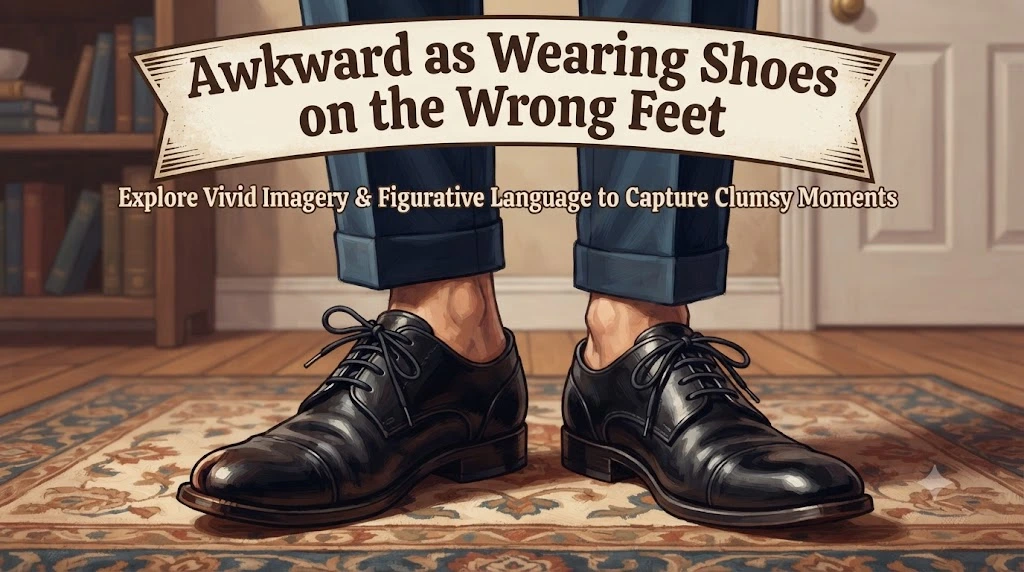
Awkward as Wearing Shoes on the Wrong Feet
Meaning:
This simile compares awkwardness to a small but noticeable mistake that throws off an entire situation, suggesting discomfort caused by something slightly out of place.
Usage Insight:
It’s ideal for describing minor social missteps that create lingering discomfort, even if no one openly points them out.
Example Sentences:
- She felt awkward as wearing shoes on the wrong feet after realizing she’d called her new boss by the wrong name.
- The whole presentation felt awkward as wearing shoes on the wrong feet once he noticed his slides were out of order.
Awkward as a Handshake That Turns into a Hug
Meaning:
This simile compares awkwardness to a mismatched social greeting, suggesting confusion over expected etiquette in the moment.
Usage Insight:
It works well when describing social confusion between people unsure of how formal or familiar to be with each other.
Example Sentences:
- Their goodbye was awkward as a handshake that turns into a hug, neither of them certain how the evening should end.
- The introduction felt awkward as a handshake that turns into a hug, both of them laughing it off afterward.
Awkward as a New Puppy Tripping Over Its Own Paws
Meaning:
This simile compares awkwardness to the innocent, uncoordinated clumsiness of a young animal still learning to control its own body.
Usage Insight:
It’s effective when describing endearing or good-natured awkwardness, especially in younger or inexperienced characters.
Example Sentences:
- He answered questions during the interview awkward as a new puppy tripping over its own paws, eager but clearly nervous.
- Her first day of student teaching was awkward as a new puppy tripping over its own paws, full of small, forgivable mistakes.
Awkward as a Photo Taken Mid-Blink
Meaning:
This simile compares awkwardness to an unflattering, poorly timed moment captured and impossible to take back, suggesting embarrassment over something unavoidable.
Usage Insight:
It works well when describing moments where timing or circumstance creates unintentional embarrassment.
Example Sentences:
- His response to the question was awkward as a photo taken mid-blink, said before he’d had time to think it through.
- The whole encounter felt awkward as a photo taken mid-blink, over before either of them could recover gracefully.
Awkward as a Dance Move Learned a Beat Too Late
Meaning:
This simile compares awkwardness to being slightly out of sync with everyone else, suggesting a small but noticeable delay that draws attention.
Usage Insight:
It’s ideal for describing social timing mistakes, such as laughing after everyone else or responding a moment too late.
Example Sentences:
- His laugh came awkward as a dance move learned a beat too late, just after the joke had already landed.
- She replied awkward as a dance move learned a beat too late, the conversation having already moved on without her.
Awkward as Forgetting Someone’s Name Mid-Introduction
Meaning:
This simile compares awkwardness to a sudden, embarrassing lapse in memory during a socially important moment, suggesting panic and self-consciousness.
Usage Insight:
It works well when describing situations involving sudden, visible mistakes in front of others.
Example Sentences:
- The meeting grew awkward as forgetting someone’s name mid-introduction when he blanked in front of the entire board.
- She felt awkward as forgetting someone’s name mid-introduction, stumbling over her words as everyone waited.
Awkward as a Pause That Stretches Too Long on Stage
Meaning:
This simile compares awkwardness to uncomfortable silence during a public moment, suggesting tension and heightened self-awareness.
Usage Insight:
It’s effective when describing public speaking mistakes or moments where silence feels especially noticeable.
Example Sentences:
- The interview grew awkward as a pause that stretches too long on stage after she forgot her next point.
- His hesitation felt awkward as a pause that stretches too long on stage, the whole room waiting for him to continue.
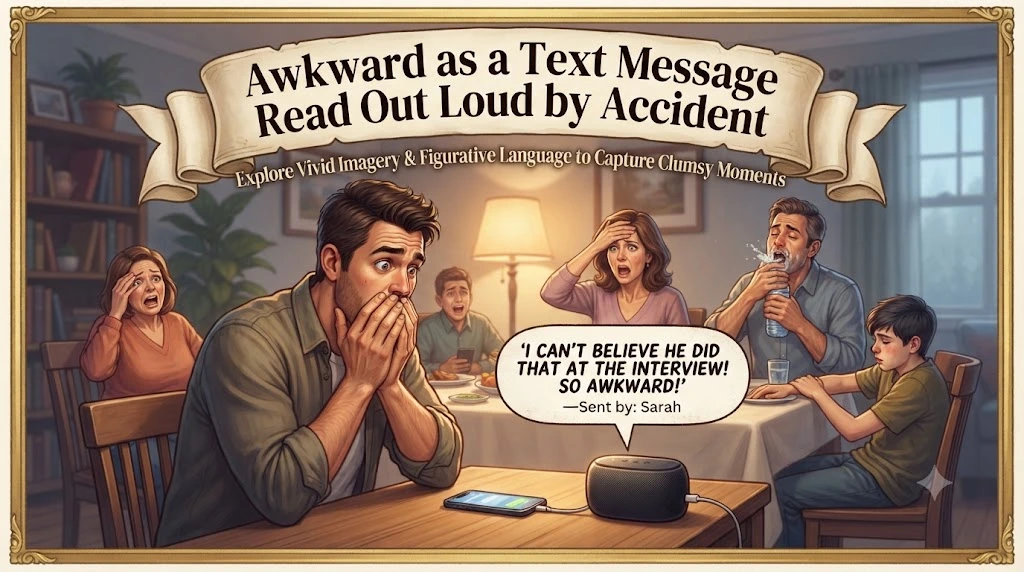
Awkward as a Text Message Read Out Loud by Accident
Meaning:
This simile compares awkwardness to an unintended exposure of private or embarrassing information, suggesting sudden, uncontrollable discomfort.
Usage Insight:
It works well when describing moments of accidental exposure or unintended honesty.
Example Sentences:
- The whole office felt awkward as a text message read out loud by accident after the email was sent to the wrong group.
- Their conversation turned awkward as a text message read out loud by accident when she realized he’d overheard everything.
Awkward as a Chair That Wobbles at a Formal Dinner
Meaning:
This simile compares awkwardness to a small imperfection disrupting an otherwise polished setting, suggesting discomfort caused by something minor but noticeable.
Usage Insight:
It’s ideal for describing situations where a small flaw draws unwanted attention in an otherwise formal or important moment.
Example Sentences:
- His stumble over his vows felt awkward as a chair that wobbles at a formal dinner, small but impossible to ignore.
- The whole ceremony grew awkward as a chair that wobbles at a formal dinner once the microphone started cutting out.
Awkward as Running into an Ex at the Grocery Store
Meaning:
This simile compares awkwardness to an unexpected, unwanted encounter that forces an uncomfortable interaction, suggesting tension and a desire to avoid the moment entirely.
Usage Insight:
It works well when describing sudden, unplanned social discomfort involving unresolved history between two people.
Example Sentences:
- Seeing her old boss at the conference was awkward as running into an ex at the grocery store, filled with forced small talk.
- Their reunion felt awkward as running into an ex at the grocery store, both of them unsure whether to smile or walk away.
How to Use Similes Effectively in Writing
Similes can transform flat description into vivid imagery, but only when used with intention. Here are some practical tips for using similes for awkward—and similes in general—across different types of writing:
- In poems: Choose similes that match the poem’s emotional tone. A lighthearted poem calls for “awkward as a new puppy tripping over its own paws,” while a poem about tension might use “awkward as a pause that stretches too long on stage.”
- stories: Use similes to show a character’s discomfort without stating it directly. Instead of writing “he felt awkward,” show it through “he stood awkward as a fish flopping on dry land.”
- In essays: Use similes sparingly and purposefully to add humor or relatability, especially in personal or reflective writing.
- songs: Choose short, rhythmic similes that flow naturally when sung aloud, since lyrical similes need to sound as good as they read.
- In creative descriptions: Match the simile to the tone of the scene—use playful, animal-based similes for lighthearted awkwardness, and social similes for tension-filled interactions.
- General rule: Avoid overusing similes in a single paragraph. One well-placed comparison is often more powerful than several stacked together.
FAQs About Similes for Awkward
1. What are some powerful similes for awkward?
Some powerful similes for awkward include “awkward as a fish flopping on dry land,” “awkward as a joke that lands in silence,” and “awkward as running into an ex at the grocery store.” Each one captures a different flavor of discomfort, from clumsiness to social tension.
2. What is the difference between a simile and a metaphor?
A simile compares two things using “like” or “as” (e.g., “awkward as a giraffe learning to walk on ice”), while a metaphor states that one thing is another without using comparison words (e.g., “he was a giraffe on ice”). Similes are generally softer and more descriptive, while metaphors are more direct and symbolic.
3. Why are nature similes so effective for describing awkwardness?
Nature similes work well because animals caught in unfamiliar situations—like a fish out of water or a young animal learning to move—already capture that same clumsy, out-of-place energy that defines awkward moments.
4. Can similes be used in academic writing?
Yes, similes can be used in academic writing, particularly in reflective or personal narrative writing, but they should be used sparingly and appropriately to maintain a professional tone.
5. How do similes improve creative writing?
Similes improve creative writing by turning abstract social discomfort into vivid, relatable images, helping readers recognize and even laugh at a character’s awkward moment rather than simply reading about it.
Conclusion
Awkward moments are some of the most relatable experiences in life, and finding the right words to describe them can make writing feel funnier, warmer, and more human. Powerful similes for awkward help capture that universal discomfort, comparing it to fish out of water, wobbling chairs, and jokes met with silence. By grounding awkwardness in these vivid, familiar images, writers add clarity, imagery, and emotional depth that plain description simply can’t achieve. Whether you’re writing poetry, fiction, essays, or song lyrics, choosing the right simile can turn a simple cringe-worthy moment into something readers instantly recognize and enjoy. The next time you want to capture that unmistakable feeling of awkwardness in your writing, reach for one of these comparisons and let your words bring the moment vividly to life.