
Not everything in life moves quickly, and describing that unhurried pace well takes more than simply saying something was “slow.” A simile is a figure of speech that compares two unlike things using “like” or “as,” helping writers turn a simple observation about pace into something readers can vividly picture and feel. Similes matter in figurative language because they connect an abstract sense of time to a familiar, tangible image that makes the pacing feel real and specific.
When a writer compares something to “a glacier inching toward the sea,” the reader doesn’t just understand slowness, they sense its patient, unstoppable persistence. Nature similes are especially fitting here, since the natural world offers countless examples of gradual movement—glaciers, rivers, seasons changing—that mirror the quiet, steady rhythm of slowness in everyday life.
In the same way that trees are often used to symbolize strength, growth, resilience, wisdom, and human emotion, gradual natural processes are used to capture the patient, unhurried quality of slowness itself. Great similes in literature use this kind of gentle, sensory imagery to make pacing feel intentional and meaningful rather than simply stated. In this article, you’ll discover 15 of the best similes for slow, complete with meanings, usage insights, and example sentences to elevate your own writing.
What Is a Simile?
A simile is a comparison between two different things, usually joined by “like” or “as,” used to make writing more vivid and expressive. Instead of simply stating a fact, a simile helps the reader visualize or emotionally connect with an idea.
For example:
saying “the meeting dragged on slow as molasses dripping in winter cold” instantly creates a vivid, relatable image of sluggish pacing, far more powerful than simply saying “the meeting was slow.”
Slow as Molasses Dripping in Winter Cold
Meaning:
This simile compares slowness to the thick, sluggish movement of molasses in cold temperatures, suggesting frustrating, drawn-out pacing.
Usage Insight:
It works best when describing tedious or frustrating delays, particularly in situations that feel unnecessarily prolonged.
Example Sentences:
- The customer service line moved slow as molasses dripping in winter cold, testing everyone’s patience.
- His progress on the report was slow as molasses dripping in winter cold, each sentence taking far longer than expected.
Slow as a Snail Crossing a Garden Path
Meaning:
This simile compares slowness to a small, steady creature’s unhurried pace, suggesting gentle, deliberate movement without urgency.
Usage Insight:
It’s ideal for describing calm, relaxed pacing that isn’t meant to feel frustrating, but simply unhurried.
Example Sentences:
- Their Sunday walk was slow as a snail crossing a garden path, with no particular destination in mind.
- The old man moved slow as a snail crossing a garden path, taking in every detail of the quiet street.
Slow as a Glacier Inching Toward the Sea
Meaning:
This simile compares slowness to a massive, gradual process that takes place over a long period of time, suggesting patience and inevitability.
Usage Insight:
It works well when describing long-term change or progress that unfolds gradually but steadily.
Example Sentences:
- The company’s transformation was slow as a glacier inching toward the sea, but the results were undeniable after several years.
- Her recovery felt slow as a glacier inching toward the sea, small improvements building over many months.
Slow as a Sunday Morning with Nowhere to Be
Meaning:
This simile compares slowness to relaxed, unhurried time free from obligations, suggesting comfort and ease.
Usage Insight:
It’s effective when describing peaceful, restful moments meant to feel calm rather than tedious.
Example Sentences:
- Their vacation mornings were slow as a Sunday morning with nowhere to be, filled with coffee and quiet conversation.
- The retreat’s schedule felt slow as a Sunday morning with nowhere to be, allowing guests to simply relax.
Slow as Honey Poured from a Cold Jar

Meaning:
This simile compares slowness to a thick, gradual flow, suggesting a deliberate, unhurried process rather than sluggishness caused by frustration.
Usage Insight:
It works well when describing careful, methodical progress, particularly in creative or detailed work.
Example Sentences:
- Her painting process was slow as honey poured from a cold jar, each brushstroke placed with care.
- The negotiations moved slow as honey poured from a cold jar, with both sides carefully considering every detail.
Slow as a Tortoise Plodding Toward the Finish Line
Meaning:
This simile compares slowness to steady, persistent movement despite a lack of speed, suggesting eventual success through patience.
Usage Insight:
It’s ideal for describing situations where slow, consistent effort ultimately leads to progress or achievement.
Example Sentences:
- His career growth was slow as a tortoise plodding toward the finish line, but each year brought new opportunities.
- Her weight loss journey felt slow as a tortoise plodding toward the finish line, steady rather than dramatic.
Slow as a River Easing Through a Flat Valley
Meaning:
This simile compares slowness to the calm, unhurried movement of water across gentle terrain, suggesting peaceful, natural pacing.
Usage Insight:
It works well when describing calm transitions or gradual emotional processes.
Example Sentences:
- Their friendship developed slow as a river easing through a flat valley, deepening naturally over time.
- The conversation moved slow as a river easing through a flat valley, unhurried and comfortable.
Slow as a Clock in a Waiting Room
Meaning:
This simile compares slowness to time that seems to drag due to anxiety, boredom, or anticipation, suggesting a frustrating awareness of passing minutes.
Usage Insight:
It’s effective when describing tense or uncomfortable waiting periods.
Example Sentences:
- The hours before her surgery felt slow as a clock in a waiting room, each minute stretching longer than the last.
- Waiting for the exam results was slow as a clock in a waiting room, impossible to ignore no matter how hard she tried.
Slow as Fog Rolling Over a Quiet Field
Meaning:
This simile compares slowness to a gentle, gradual spread that transforms a scene subtly and without urgency, suggesting mystery and calm.
Usage Insight:
It works well when describing gradual emotional or atmospheric shifts, particularly in reflective or poetic writing.
Example Sentences:
- Her sadness settled in slow as fog rolling over a quiet field, quiet but impossible to ignore.
- The change in the town’s mood came slow as fog rolling over a quiet field, subtle until it had fully taken hold.
Slow as a Sunset Stretching Across the Evening Sky
Meaning:
This simile compares slowness to a beautiful, unhurried transition, suggesting that the process itself is worth appreciating rather than rushing.
Usage Insight:
It’s ideal for describing meaningful transitions or endings that deserve patience and reflection.
Example Sentences:
- Their goodbye was slow as a sunset stretching across the evening sky, neither of them wanting the moment to end.
- The final chapter of her career unfolded slow as a sunset stretching across the evening sky, graceful and unhurried.
Slow as a Train Pulling Out of an Old Station
Meaning:
This simile compares slowness to a gradual departure that builds momentum over time, suggesting patience before eventual progress.
Usage Insight:
It works well when describing the beginning stages of change, particularly transitions that start slowly before gaining speed.
Example Sentences:
- The new policy rolled out slow as a train pulling out of an old station, gradually gaining traction across departments.
- Her confidence grew slow as a train pulling out of an old station, steady and increasing with each small success.
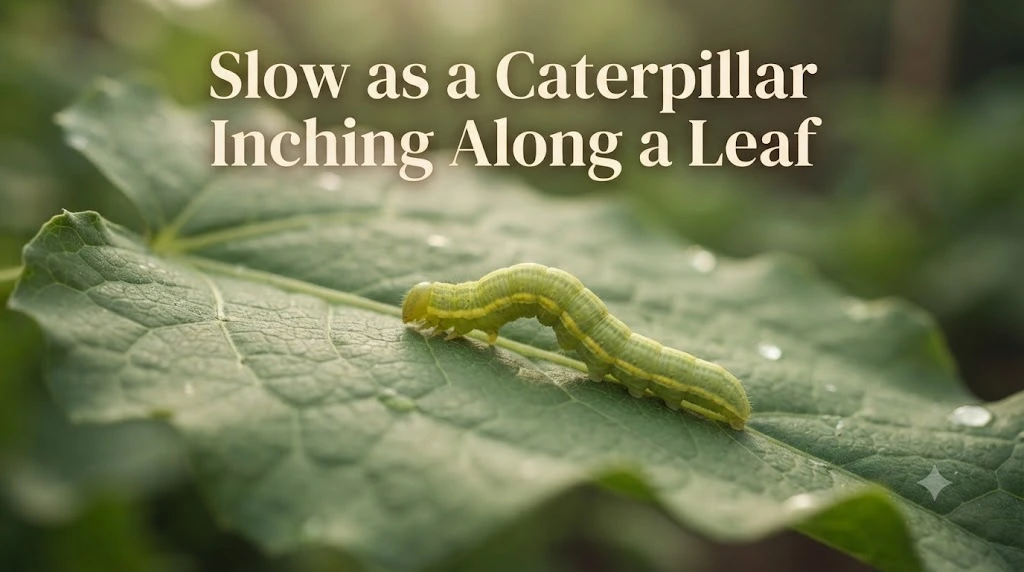
Slow as a Caterpillar Inching Along a Leaf
Meaning:
This simile compares slowness to careful, deliberate movement, suggesting patience and eventual transformation.
Usage Insight:
It’s effective when describing gradual personal growth or development, particularly stories involving change over time.
Example Sentences:
- His progress in therapy was slow as a caterpillar inching along a leaf, but every session brought small breakthroughs.
- Her transition into the new role felt slow as a caterpillar inching along a leaf, steady despite the initial uncertainty.
Slow as an Old Dog Rising from Its Nap
Meaning:
This simile compares slowness to reluctant, gradual movement after rest, suggesting comfort combined with a lack of urgency.
Usage Insight:
It works well when describing relaxed, low-energy moments, particularly scenes involving comfort or leisure.
Example Sentences:
- The town woke up slow as an old dog rising from its nap, quiet even well into the morning.
- He got out of bed slow as an old dog rising from its nap, unwilling to rush the start of his day off.
Slow as a Candle Melting Through a Long Night
Meaning:
This simile compares slowness to gradual, steady change that becomes noticeable only after significant time has passed.
Usage Insight:
It’s ideal for describing quiet, ongoing processes such as emotional healing or long-term personal change.
Example Sentences:
- Her grief eased slow as a candle melting through a long night, softening gradually with each passing month.
- Their trust rebuilt itself slow as a candle melting through a long night, requiring patience from both of them.
Slow as a Season Changing from Summer to Fall
Meaning:
This simile compares slowness to a gradual, natural transition, suggesting inevitability and quiet, gentle change.
Usage Insight:
It works well when describing personal growth, aging, or shifts in circumstances that occur gradually rather than suddenly.
Example Sentences:
- Their relationship shifted slow as a season changing from summer to fall, evolving without either of them fully noticing.
- His outlook on life changed slow as a season changing from summer to fall, shaped gently by years of experience.
How to Use Similes Effectively in Writing
Similes can transform flat description into vivid imagery, but only when used with intention. Here are some practical tips for using similes for slow—and similes in general—across different types of writing:
- poems: Choose similes that match the poem’s emotional tone. A peaceful poem calls for “slow as a Sunday morning with nowhere to be,” while a poem about frustration might use “slow as molasses dripping in winter cold.”
- In stories: Use similes to convey pacing without stating it directly. Instead of writing “time passed slowly,” show it through “the hours moved slow as a clock in a waiting room.”
- essays: Use similes sparingly and purposefully to add descriptive texture, especially in reflective or narrative writing about change or process.
- In songs: Choose short, rhythmic similes that flow naturally when sung aloud, since lyrical similes need to sound as good as they read.
- creative descriptions: Match the simile to the emotional tone—use peaceful, natural similes for calm or restful slowness, and frustrating similes for delays or tedious waiting.
- General rule: Avoid overusing similes in a single paragraph. One well-placed comparison is often more powerful than several stacked together.
FAQs
1. What are the best similes for slow?
Some of the best similes for slow include “slow as a glacier inching toward the sea,” “slow as honey poured from a cold jar,” and “slow as a Sunday morning with nowhere to be.” Each one highlights a different quality of slowness, from gradual persistence to relaxed ease.
2. What is the difference between a simile and a metaphor?
A simile compares two things using “like” or “as” (e.g., “slow as a river easing through a flat valley”), while a metaphor states that one thing is another without using comparison words (e.g., “their friendship was a river easing through a valley”). Similes are generally softer and more descriptive, while metaphors are more direct and symbolic.
3. Why are nature similes so effective for describing slowness?
Nature similes work well because gradual natural processes like glaciers, rivers, and changing seasons already reflect steady, unhurried movement, making them ideal for representing the pacing of slow change or motion.
4. Can similes be used in academic writing?
Yes, similes can be used in academic writing, particularly in reflective, narrative, or descriptive essays, but they should be used sparingly and appropriately to maintain a professional tone.
5. How do similes improve creative writing?
Similes improve creative writing by turning an abstract sense of pacing into vivid, relatable images, helping readers feel the rhythm of a scene rather than simply reading about it.
Conclusion
Slowness isn’t always something to rush past—sometimes it’s worth capturing in all its quiet, unhurried beauty. The best similes for slow help writers do exactly that, comparing gradual pacing to glaciers, honey, sunsets, and seasons changing gently over time. By grounding slowness in these vivid, familiar images, writers add clarity, imagery, and emotional depth that plain description simply can’t achieve. Whether you’re writing poetry, fiction, essays, or song lyrics, choosing the right simile can turn a simple mention of pace into something readers truly feel as they read. The next time you want to describe something slow in your writing, reach for one of these comparisons and let your words settle into that same unhurried rhythm.