
Few colors carry as much emotional and symbolic weight as red, and describing it well takes more than simply naming the shade. A simile is a figure of speech that compares two unlike things using “like” or “as,” helping writers turn a simple color into something readers can vividly see and emotionally feel. Similes matter in figurative language because they connect visual details to deeper meaning, transforming plain description into imagery loaded with mood and intensity.
When a writer compares something to “embers glowing at the heart of a fire,” the reader doesn’t just picture the color red, they sense its warmth and quiet power. Nature similes are especially powerful for describing red, since the natural world offers countless vivid examples—ripe fruit, blooming roses, autumn leaves, and fiery sunsets—that already carry rich emotional associations.
In the same way that trees are often used to symbolize strength, growth, resilience, wisdom, and human emotion, bold natural colors like red are used to express passion, danger, love, and intensity. Great similes in literature use this kind of vivid, colorful imagery to make descriptions feel alive rather than flat or generic. In this article, you’ll discover 15 powerful similes for red, complete with meanings, usage insights, and example sentences to elevate your own writing.
What Is a Simile?
A simile is a comparison between two different things, usually joined by “like” or “as,” used to make writing more vivid and expressive. Instead of simply stating a fact, a simile helps the reader visualize or emotionally connect with an idea.
For example:
saying “her dress was red as a ripe apple plucked from the branch” instantly creates a fresh, vivid image, far more powerful than simply saying “her dress was red.”
Red as a Ripe Apple Plucked from the Branch
Meaning:
This simile compares a shade of red to the fresh, vibrant color of a perfectly ripened apple, suggesting brightness and natural appeal.
Usage Insight:
It works best in warm, wholesome, or nostalgic writing, especially descriptions involving nature, harvest, or simple beauty.
Example Sentences:
- Her cheeks turned red as a ripe apple plucked from the branch after the long walk in the cold.
- The barn door was painted red as a ripe apple plucked from the branch, cheerful against the green fields.
Red as Embers Glowing at the Heart of a Fire
Meaning:
This simile compares red to the deep, warm glow found at the center of a burning fire, suggesting intensity and quiet, contained heat.
Usage Insight:
It’s ideal for describing warm, passionate, or intimate scenes where the color conveys emotional depth rather than sharpness.
Example Sentences:
- The autumn leaves outside the cabin turned red as embers glowing at the heart of a fire.
- Her lips were red as embers glowing at the heart of a fire, catching the candlelight as she spoke.
Red as a Rose Blooming in Early Summer
Meaning:
This simile compares red to the rich, romantic color of a rose in full bloom, suggesting beauty, love, and freshness.
Usage Insight:
It works well in romantic or celebratory writing, particularly scenes involving affection or new beginnings.
Example Sentences:
- The bouquet on the table was red as a rose blooming in early summer, filling the room with color.
- Her gown was red as a rose blooming in early summer, drawing every eye as she entered the hall.
Red as Blood Spilled Fresh Upon Snow
Meaning:
This simile compares red to a stark, striking contrast against a pale background, suggesting intensity, urgency, or danger.
Usage Insight:
It’s effective in dramatic or suspenseful writing, particularly scenes involving conflict, danger, or heightened emotion.
Example Sentences:
- The warning flag was red as blood spilled fresh upon snow, impossible to miss against the white landscape.
- Her scarf stood out red as blood spilled fresh upon snow, the only splash of color in the frozen field.
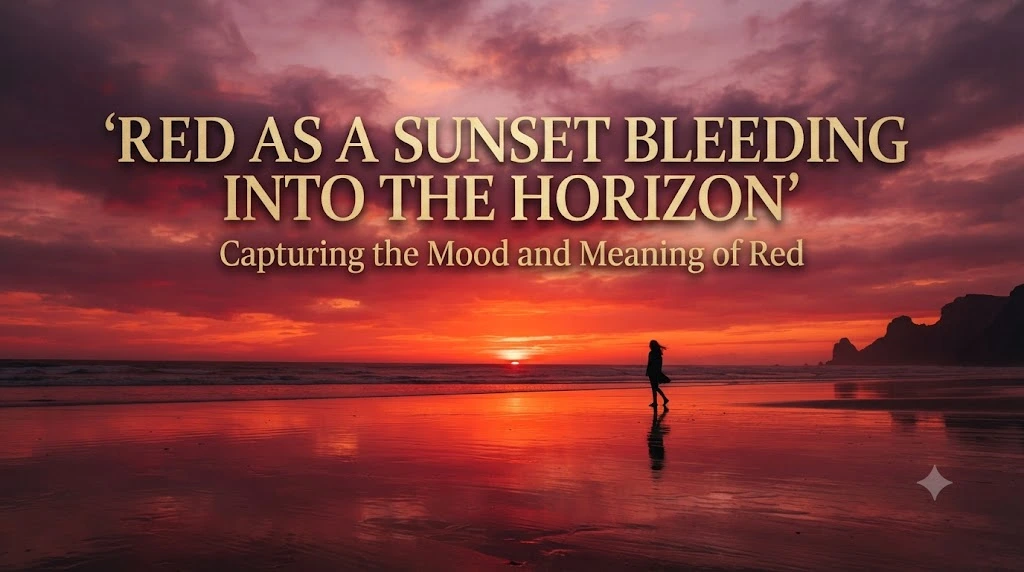
Red as a Sunset Bleeding into the Horizon
Meaning:
This simile compares red to the deep, saturated color of the sky at dusk, suggesting warmth, transition, and emotional depth.
Usage Insight:
It works well in poetic or reflective writing, particularly scenes describing endings, transitions, or quiet beauty.
Example Sentences:
- The maple leaves outside her window turned red as a sunset bleeding into the horizon by mid-October.
- His face flushed red as a sunset bleeding into the horizon after the long run up the hill.
Red as a Cardinal Perched Against Winter Branches
Meaning:
This simile compares red to a bright, striking pop of color against a plain or muted background, suggesting vibrancy and contrast.
Usage Insight:
It’s ideal for describing red details that stand out sharply within a quieter or more subdued setting.
Example Sentences:
- Her red coat stood out red as a cardinal perched against winter branches on the gray, snowy street.
- The mailbox was painted red as a cardinal perched against winter branches, the only bright spot on the quiet road.
Red as a Stop Sign Demanding Attention
Meaning:
This simile compares red to a bold, unmistakable signal meant to grab attention immediately, suggesting urgency and importance.
Usage Insight:
It works well when describing something meant to stand out sharply or serve as a clear warning.
Example Sentences:
- The headline was red as a stop sign demanding attention, impossible for readers to scroll past.
- Her expression turned red as a stop sign demanding attention the moment she saw the mistake in the contract.
Red as Wine Poured into a Crystal Glass
Meaning:
This simile compares red to a deep, rich, sophisticated shade, suggesting elegance and refined beauty.
Usage Insight:
It’s effective in luxurious or romantic writing, particularly evening scenes or descriptions involving celebration.
Example Sentences:
- The velvet curtains were red as wine poured into a crystal glass, framing the stage beautifully.
- Her nails were painted red as wine poured into a crystal glass, catching the light with every gesture.
Red as a Blush Spreading Across Warm Cheeks
Meaning:
This simile compares red to the natural flush of embarrassment or affection, suggesting warmth and emotional vulnerability.
Usage Insight:
It works well when describing subtle emotional reactions, particularly shyness, attraction, or embarrassment.
Example Sentences:
- His face went red as a blush spreading across warm cheeks the moment she complimented him.
- The sky at dawn turned red as a blush spreading across warm cheeks, soft and gentle over the quiet hills.
Red as a Matador’s Cape Catching the Light
Meaning:
This simile compares red to a bold, dramatic, attention-commanding presence, suggesting confidence, energy, and theatrical flair.
Usage Insight:
It’s ideal for describing striking or dramatic red details meant to command a scene.
Example Sentences:
- Her heels were red as a matador’s cape catching the light, impossible to ignore as she crossed the room.
- The sports car gleamed red as a matador’s cape catching the light under the showroom’s bright lamps.
Red as Autumn Leaves Clinging to a Maple Tree
Meaning:
This simile compares red to the warm, earthy tones of fall foliage, suggesting seasonal beauty and gentle transition.
Usage Insight:
It works well in nostalgic or seasonal writing, particularly descriptions of autumn landscapes or changing seasons.
Example Sentences:
- The quilt on the bed was red as autumn leaves clinging to a maple tree, warm and inviting on cold nights.
- Her hair caught the afternoon light red as autumn leaves clinging to a maple tree as she walked through the park.
Red as a Fire Truck Racing Through City Streets

Meaning:
This simile compares red to a bold, urgent, highly visible shade, suggesting speed, alertness, and immediate attention.
Usage Insight:
It’s effective when describing bright, energetic, or fast-moving scenes where red signals urgency or excitement.
Example Sentences:
- The race car sped past red as a fire truck racing through city streets, drawing gasps from the crowd.
- Her sneakers were red as a fire truck racing through city streets, bright against the gray pavement.
Red as a Pepper Fresh from the Garden
Meaning:
This simile compares red to a vivid, natural, sun-ripened color, suggesting freshness and vibrancy.
Usage Insight:
It works well in descriptions of food, gardens, or vibrant natural scenes.
Example Sentences:
- The tomatoes on the vine were red as peppers fresh from the garden, ready to be picked.
- Her sunburned shoulders turned red as a pepper fresh from the garden after the long beach afternoon.
Red as Lipstick Pressed Against Porcelain Skin
Meaning:
This simile compares red to a striking, elegant contrast against pale or smooth surfaces, suggesting boldness and classic beauty.
Usage Insight:
It’s ideal for describing striking visual contrast, particularly in fashion, beauty, or portrait-style descriptions.
Example Sentences:
- Her scarf was red as lipstick pressed against porcelain skin, standing out beautifully against her pale coat.
- The old photograph showed lips red as lipstick pressed against porcelain skin, timeless despite its faded edges.
Red as a Ruby Set Deep in a Golden Ring
Meaning:
This simile compares red to a rich, precious, glowing shade, suggesting rarity, value, and depth.
Usage Insight:
It works well when describing something meant to feel valuable, special, or deeply meaningful.
Example Sentences:
- The wine shimmered red as a ruby set deep in a golden ring as it caught the candlelight.
- Her heart felt red as a ruby set deep in a golden ring, warm and precious in a way she couldn’t fully explain.
How to Use Similes Effectively in Writing
Similes can transform flat description into vivid imagery, but only when used with intention. Here are some practical tips for using similes for red—and similes in general—across different types of writing:
- poems: Choose similes that match the poem’s emotional tone. A romantic poem calls for “red as a rose blooming in early summer,” while a poem about urgency might use “red as a stop sign demanding attention.”
- In stories: Use similes to add sensory detail without overloading description. Instead of writing “the dress was red,” show it through “the dress was red as wine poured into a crystal glass.”
- essays: Use similes sparingly and purposefully to enhance descriptive or narrative writing, especially when color carries symbolic meaning.
- In songs: Choose short, rhythmic similes that flow naturally when sung aloud, since lyrical similes need to sound as good as they read.
- creative descriptions: Match the simile to the mood—use warm, natural similes for gentle or romantic scenes, and bold, urgent similes for dramatic or high-energy moments.
- General rule: Avoid overusing similes in a single paragraph. One well-placed comparison is often more powerful than several stacked together.
FAQs
1. What are some powerful similes for red?
Some powerful similes for red include “red as a ripe apple plucked from the branch,” “red as embers glowing at the heart of a fire,” and “red as a ruby set deep in a golden ring.” Each one captures a different mood, from freshness to warmth to elegance.
2. What is the difference between a simile and a metaphor?
A simile compares two things using “like” or “as” (e.g., “red as a sunset bleeding into the horizon”), while a metaphor states that one thing is another without using comparison words (e.g., “the sky was a red wound at dusk”). Similes are generally softer and more descriptive, while metaphors are more direct and symbolic.
3. Why are nature similes so effective for describing the color red?
Nature similes work well because natural red objects—like ripe fruit, autumn leaves, and blooming roses—already carry familiar emotional associations, making the color easier to visualize and connect with on a deeper level.
4. Can similes be used in academic writing?
Yes, similes can be used in academic writing, particularly in descriptive, narrative, or reflective essays, but they should be used sparingly and appropriately to maintain a professional tone.
5. How do similes improve creative writing?
Similes improve creative writing by turning a simple color description into a vivid, sensory image, helping readers feel the mood and meaning behind the color rather than simply reading about it.
Conclusion
Red is a color rich with meaning, capable of expressing everything from passion and warmth to urgency and danger. Powerful similes for red help capture that range, comparing the color to blooming roses, glowing embers, and rubies set in gold. By grounding red in these vivid, natural images, writers add clarity, imagery, and emotional depth that plain description simply can’t achieve. Whether you’re writing poetry, fiction, essays, or song lyrics, choosing the right simile can turn a simple mention of color into a moment readers can truly see and feel. The next time you want to describe something red in your writing, reach for one of these comparisons and let your words burn just as brightly as the color itself.