Sadness is one of the most universal human emotions, yet it can be difficult to describe in a way that feels vivid and sincere. This is where similes become powerful tools in writing. A simile compares two different things using the words “like” or “as” to create a clear image in the reader’s mind.
Writers use similes to make emotions easier to understand and more memorable. Sadness is often linked to rain, fading light, empty rooms, or falling leaves. These images show feelings of loss and longing. Trees symbolise strength, growth, resilience, wisdom, and human emotion. This is why they often appear in poetry and literature.
Emotional comparisons can make your poem, story, essay, song, or personal reflection deeper and more authentic. This guide looks at strong similes for expressing sadness. It includes meanings, examples, and tips to improve your writing.
What Is a Simile?
A simile is a figure of speech that compares two different things using like or as to create vivid imagery.
Example:
Her heart felt like a leaf drifting away in the wind.
This comparison helps readers imagine sadness as something fragile, lonely, and difficult to hold on to.
Like Rain Falling on an Empty Street
Meaning
This simile describes sadness that feels lonely, quiet, and lingering.
Usage Insight
Use it when writing reflective scenes, emotional essays, or melancholy poetry.
Examples
- After the argument, her thoughts fell like rain on an empty street.
- The silence between them felt like rain falling on an empty street.
As Heavy as a Storm Cloud
Meaning
This comparison emphasises emotional weight and pressure.
Usage Insight
It works well when describing grief, disappointment, or overwhelming emotions.
Examples
- His sadness was as heavy as a storm cloud hanging over the town
- The news settled on her heart as heavily as a storm cloud.
Like a Candle Flickering in the Wind
Meaning
This simile suggests sadness mixed with vulnerability and fading hope.
Usage Insight
Use it for characters who are struggling but not completely defeated.
Examples
- His courage trembled like a candle flickering in the wind
- Her smile appeared like a candle flickering in the wind
As Cold as Winter Rain
Meaning
This comparison expresses emotional emptiness and discomfort.
Usage Insight
Ideal for scenes of loneliness, rejection, or heartbreak.
Examples
- The farewell felt as cold as winter rain
- His voice sounded as cold as winter rain when he said goodbye
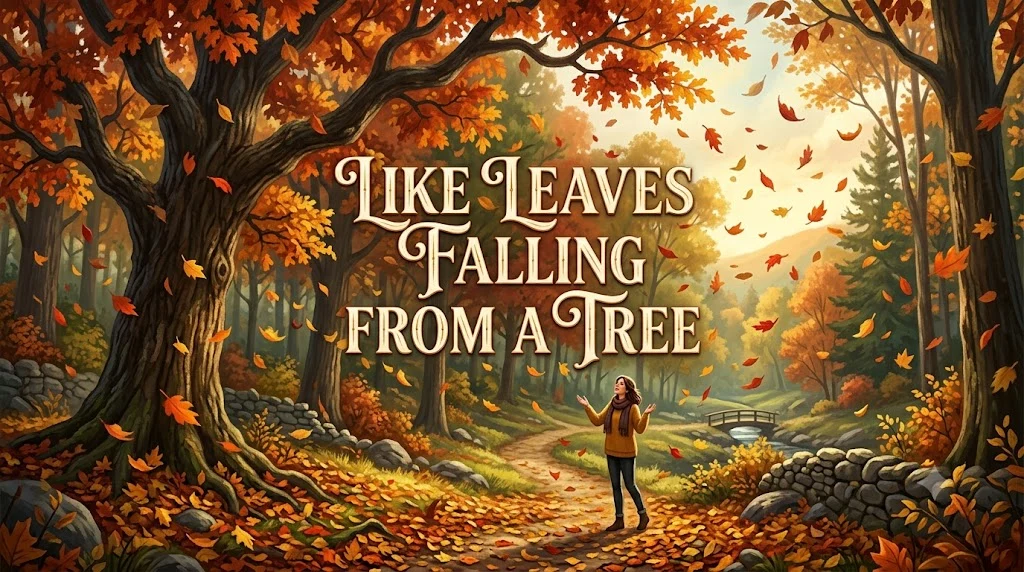
Like Leaves Falling from a Tree
Meaning
This simile symbolises loss, change, and the passing of time.
Usage Insight
Perfect for writing about endings, memories, or growing apart.
Examples
- Her happy memories drifted away like leaves falling from a tree
- Their friendship faded like leaves falling from a tree in autumn
As Quiet as an Abandoned House
Meaning
This simile conveys deep silence and emotional emptiness.
Usage Insight
Use it when describing grief, isolation, or loneliness.
Examples
- After she left, the apartment felt as quiet as an abandoned house
- His heart seemed as quiet as an abandoned house after the loss
Like a River Moving Through the Dark
Meaning
This comparison suggests a sadness that lingers beneath the surface.
Usage Insight
Excellent for introspective writing and emotional storytelling.
Examples
- His grief moved like a river through the dark
- The sorrow inside her flowed like a river through the dark
As Gray as a Clouded Sky
Meaning
This simile reflects dullness, gloom, and emotional fatigue.
Usage Insight
Use it in descriptive passages where sadness affects the mood of a scene.
Examples
- The afternoon felt as grey as a clouded sky
- His expression turned as grey as a clouded sky after the conversation
Like a Song Fading into Silence
Meaning
This comparison captures a sadness that fades slowly but leaves an echo behind.
Usage Insight
Perfect for writing about memories, lost relationships, or nostalgia.
Examples
- Their laughter faded like a song fading into silence
- Her happiness drifted away like a song fading into silence
As Empty as a Deserted Playground
Meaning
This simile emphasises loneliness and the absence of joy.
Usage Insight
Works well in stories about separation, loss, or childhood memories.
Examples
- The house felt as empty as a deserted playground
- Without her friends, the summer seemed as empty as a deserted playground
Like a Bird with Broken Wings
Meaning
This comparison suggests helplessness, pain, and emotional exhaustion.
Usage Insight
Use it when describing characters who feel unable to move forward.
Examples
- After the failure, he felt like a bird with broken wings
- Her confidence hung like a bird with broken wings
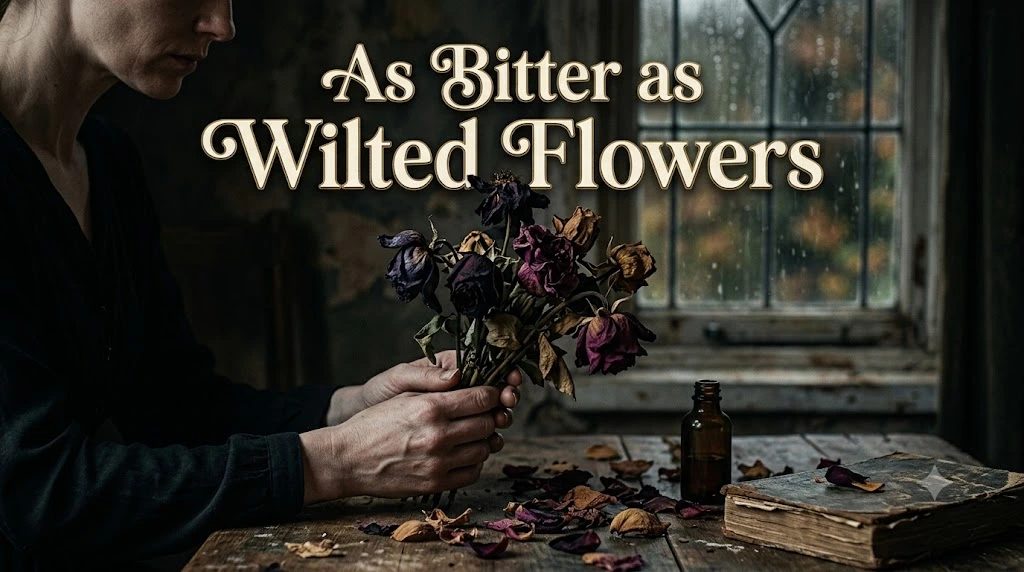
As Bitter as Wilted Flowers
Meaning
This simile combines sadness with disappointment and regret.
Usage Insight
Ideal for emotional essays and reflective writing.
Examples
- The memory tasted as bitter as wilted flowers
- His regret remained as bitter as wilted flowers long after the event
Like Mist Covering a Valley
Meaning
This comparison suggests a sadness that spreads over everything like a gentle fog.
Usage Insight
Use it in atmospheric descriptions and emotional narratives.
Examples
- Sorrow settled over the family like mist covering a valley
- The bad news spread through the room like mist covering a valley
As Fragile as a Fallen Petal
Meaning
This simile expresses delicate emotions and vulnerability.
Usage Insight
Perfect for poems, romantic writing, and tender emotional scenes.
Examples
- Her heart felt as fragile as a fallen petal
- He spoke with great care, aware that her feelings were as fragile as a fallen petal.
Like Twilight Before Nightfall
Meaning
This comparison captures quiet sadness and the sense that something is ending.
Usage Insight
Excellent for reflective conclusions, farewell scenes, and emotional poetry.
Examples
- The evening felt like twilight before nightfall after their final goodbye
- His thoughts drifted like twilight before nightfall as he walked home alone
How to Use Similes Effectively in Writing
Strong similes make emotions easier to see and feel. To use them effectively:
- Choose familiar images such as rain, leaves, rivers, or twilight
- Match the simile to the mood of the scene
- Avoid overusing similes; one vivid comparison is often enough
- Use sensory details alongside similes for stronger imagery
- In poems and songs, select comparisons that create rhythm and emotion
- In stories, let similes reveal a character’s inner feelings
- In essays, use similes with care to enhance clarity in descriptions while avoiding excessive drama.
FAQs
What are powerful similes to express sadness?
Examples include like rain falling on an empty street, as heavy as a storm cloud, leaves falling from a tree, and as quiet as an abandoned house.
What is the difference between a simile and a metaphor?
A simile uses like or as to compare two things, while a metaphor makes a direct comparison without those words.
Simile: Her sadness was like winter rain.
Metaphor: Her sadness was winter rain.
Why are nature similes effective for sadness?
Nature images such as rain, falling leaves, rivers, and twilight are easy to visualise and naturally connect with feelings of loss, change, and reflection.
Can similes improve creative writing?
Yes. Similes add imagery, emotion, and rhythm, making poems, stories, and descriptive passages more engaging and memorable.
Are similes suitable for academic writing?
They can be useful in literary analysis, creative assignments, and descriptive essays, but they should be used sparingly in formal academic writing.
Conclusion
Powerful similes to express sadness help writers transform abstract emotions into vivid, memorable images. Whether sadness falls like rain on an empty street, drifts like leaves from a tree, or settles like mist covering a valley, these comparisons make feelings easier to understand and more emotionally resonant. Similes are valuable tools in figurative language because they add clarity, imagery, and depth without sounding complicated. By choosing natural, meaningful comparisons and using them with restraint, you can strengthen poems, stories, essays, songs, and personal reflections. The best emotional writing does not simply tell readers that someone is sad—it helps them see, hear, and feel that sadness through powerful imagery.