

Sound is an important part of how we experience the world, and describing loud noises effectively can make writing more vivid and engaging. One of the best ways to create memorable descriptions is through similes. Similes compare two different things using the words “like” or “as,” helping readers imagine sounds, emotions, and experiences more clearly
. They are a key part of figurative language because they add imagery, emotion, and depth to writing. Whether you’re writing a story, poem, essay, speech, or song, similes can transform ordinary descriptions into unforgettable scenes. Nature often provides some of the best inspiration for similes, especially when describing powerful sounds.
Trees, for example, symbolize strength, growth, resilience, wisdom, and human emotion, standing firm through storms while responding to the forces around them. In this guide, you’ll discover creative similes for loud, complete with meanings, examples, and practical tips for using them effectively in your writing.
What Is a Simile?
A simile is a figure of speech that compares two unlike things using the words “like” or “as.” Similes help readers understand an idea by relating it to something familiar.
Example:
The crowd was as loud as thunder rolling across the mountains.
This comparison helps readers instantly imagine the intensity and power of the sound.
As Loud as Thunder Crashing Across a Valley
Meaning
Describes an extremely powerful and booming sound.
Usage Insight
Perfect for emphasizing overwhelming noise.
Examples
- The applause was as loud as thunder crashing across a valley.
- The stadium became as loud as thunder crashing across a valley.
Like a Waterfall Roaring After Heavy Rain
Meaning
Represents a continuous and forceful sound.
Usage Insight
Useful for describing constant loud noise.
Examples
- The crowd sounded like a waterfall roaring after heavy rain.
- The factory machinery echoed like a waterfall roaring after heavy rain.
As Loud as a Volcano Breaking the Silence
Meaning
Suggests sudden and dramatic noise.
Usage Insight
Works well for unexpected loud sounds.
Examples
- His shout was as loud as a volcano breaking the silence.
- The explosion was as loud as a volcano breaking the silence.
Like a Hundred Drums Beating Together
Meaning
Describes intense rhythmic noise.
Usage Insight
Ideal for festivals, celebrations, and performances.
Examples
- The parade sounded like a hundred drums beating together.
- The concert felt like a hundred drums beating together.
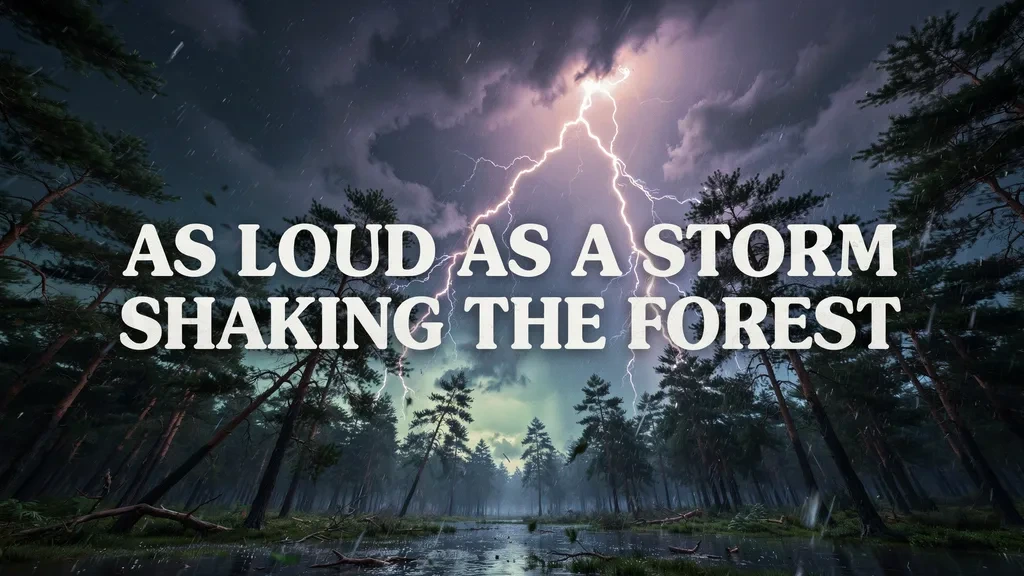
As Loud as a Storm Shaking the Forest
Meaning
Represents overwhelming and powerful sound.
Usage Insight
Excellent for nature-inspired writing.
Examples
- The cheering was as loud as a storm shaking the forest.
- The engine roared as loud as a storm shaking the forest.
Like Waves Crashing Against Rocky Cliffs
Meaning
Suggests repeated and forceful noise.
Usage Insight
Perfect for describing ongoing loud sounds.
Examples
- The crowd’s chants were like waves crashing against rocky cliffs.
- The machinery sounded like waves crashing against rocky cliffs.
As Loud as Fireworks Bursting Overhead
Meaning
Highlights sudden explosive sounds.
Usage Insight
Useful for celebrations and dramatic scenes.
Examples
- The audience erupted as loud as fireworks bursting overhead.
- The door slammed as loud as fireworks bursting overhead.
Like a Train Racing Through a Tunnel
Meaning
Represents fast-moving and powerful noise.
Usage Insight
Works well in action-packed descriptions.
Examples
- The wind sounded like a train racing through a tunnel.
- The motorcycle roared like a train racing through a tunnel.
As Loud as a Lion’s Roar at Dawn
Meaning
Suggests authority and strength.
Usage Insight
Ideal for commanding voices and powerful sounds.
Examples
- His voice was as loud as a lion’s roar at dawn.
- The announcement echoed as loud as a lion’s roar at dawn.
Like Bells Ringing Across a Town Square
Meaning
Describes a clear and attention-grabbing sound.
Usage Insight
Useful for describing sounds that travel far.
Examples
- Her laughter spread like bells ringing across a town square.
- The signal rang out like bells ringing across a town square.
As Loud as the Ocean During a Storm
Meaning
Represents immense and relentless noise.
Usage Insight
Perfect for dramatic and energetic scenes.
Examples
- The arena was as loud as the ocean during a storm.
- The celebration grew as loud as the ocean during a storm.
Like an Avalanche Rushing Down a Mountain

Meaning
Suggests a sudden wave of overwhelming sound.
Usage Insight
Best for describing noise that builds rapidly.
Examples
- The applause arrived like an avalanche rushing down a mountain.
- The laughter spread like an avalanche rushing down a mountain.
As Loud as Wind Whistling Through a Canyon
Meaning
Describes strong, penetrating sound.
Usage Insight
Excellent for natural and atmospheric writing.
Examples
- The whistle was as loud as wind whistling through a canyon.
- The alarm echoed as loud as wind whistling through a canyon.
Like a Forest Filled with Singing Cicadas
Meaning
Represents a constant chorus of sound.
Usage Insight
Great for describing busy and noisy environments.
Examples
- The playground was like a forest filled with singing cicadas.
- The market sounded like a forest filled with singing cicadas.
As Loud as a Rocket Leaving the Earth
Meaning
Suggests extreme volume and power.
Usage Insight
Perfect for emphasizing extraordinary loudness.
Examples
- The engines were as loud as a rocket leaving the Earth.
- The crowd became as loud as a rocket leaving the Earth.
How to Use Similes Effectively in Writing
Similes can make descriptions more vivid and memorable when used carefully.
- Choose comparisons that readers can easily imagine.
- Match the simile to the mood and tone of your writing.
- Use nature similes to create strong sensory imagery.
- Avoid overusing similes in a single passage.
- Create original comparisons whenever possible.
- In poems, similes help create rhythm and emotion.
- In stories, they make scenes more immersive.
- In essays, use similes to clarify complex ideas.
- In songs, similes make lyrics more expressive.
- Always ensure the comparison enhances the meaning.
FAQs
What are similes for loud?
Similes for loud are comparisons that use “like” or “as” to describe powerful, noticeable, or intense sounds.
What is an example of a simile for loud?
An example is: “The crowd was as loud as thunder crashing across a valley.”
What is the difference between a simile and a metaphor?
A simile compares two things using “like” or “as,” while a metaphor makes a direct comparison without those words.
Why are similes important in creative writing?
Similes create vivid imagery, strengthen descriptions, and help readers connect emotionally with the text.
Can similes be used in academic writing?
Yes. Similes can be used carefully to explain concepts and improve understanding when appropriate.
Conclusion
Similes for loud are powerful tools that help writers capture the intensity, energy, and emotion of sound through vivid comparisons. Whether a noise is described as loud as thunder crashing across a valley, like a waterfall roaring after heavy rain, or as loud as a rocket leaving the Earth, these comparisons bring scenes to life and make descriptions more memorable. By using creative and meaningful similes, writers can add clarity, imagery, and emotional depth to poems, stories, essays, songs, and everyday communication. The best similes transform ordinary sounds into unforgettable experiences, allowing readers to hear the scene in their minds. Keep experimenting with new comparisons, and you’ll discover countless ways to make your writing resonate with power and creativity.