

Music has the power to inspire, comfort, energize, and connect people across cultures and generations. Writers often use similes to capture the beauty and emotion of music in ways that readers can easily imagine. Similes compare two different things using the words “like” or “as,” creating vivid mental images and stronger emotional connections.
They are an important part of figurative language because they make descriptions more expressive, memorable, and engaging. Whether you’re writing poetry, fiction, essays, songs, or speeches, similes can help bring the magic of music to life. Nature frequently inspires some of the most beautiful comparisons, making nature similes especially effective in creative writing.
Trees, in particular, symbolize strength, growth, resilience, wisdom, and human emotion, much like music itself, which grows with us throughout life. In this guide, you’ll discover creative similes for music, complete with meanings, examples, and practical tips for using them effectively in your writing.
What Is a Simile?
A simile is a figure of speech that compares two different things using the words “like” or “as.” It helps readers understand a concept by relating it to something familiar.
Example:
The melody flowed like a river through the valley.
This simile helps readers imagine the smooth, continuous movement of the music.
Like a River Flowing Through a Quiet Valley
Meaning
Describes music that moves smoothly and naturally.
Usage Insight
Perfect for calm, soothing melodies.
Examples
- The piano piece flowed like a river through a quiet valley.
- Her voice moved like a river through a quiet valley.
As Gentle as Rain on Autumn Leaves
Meaning
Represents soft and peaceful music.
Usage Insight
Works best when describing relaxing songs.
Examples
- The melody was as gentle as rain on autumn leaves.
- The lullaby sounded as gentle as rain on autumn leaves.
Like Birds Singing at Sunrise
Meaning
Suggests joyful and uplifting music.
Usage Insight
Ideal for cheerful compositions.
Examples
- The choir sounded like birds singing at sunrise.
- The tune felt like birds singing at sunrise.
As Powerful as Thunder Across the Mountains
Meaning
Describes music with great intensity and impact.
Usage Insight
Excellent for dramatic performances.
Examples
- The orchestra was as powerful as thunder across the mountains.
- The final note rang out as powerful as thunder across the mountains.
Like Waves Dancing on a Moonlit Shore
Meaning
Represents rhythmic and graceful music.
Usage Insight
Perfect for describing flowing melodies.
Examples
- The violin solo moved like waves dancing on a moonlit shore.
- The song drifted like waves dancing on a moonlit shore.
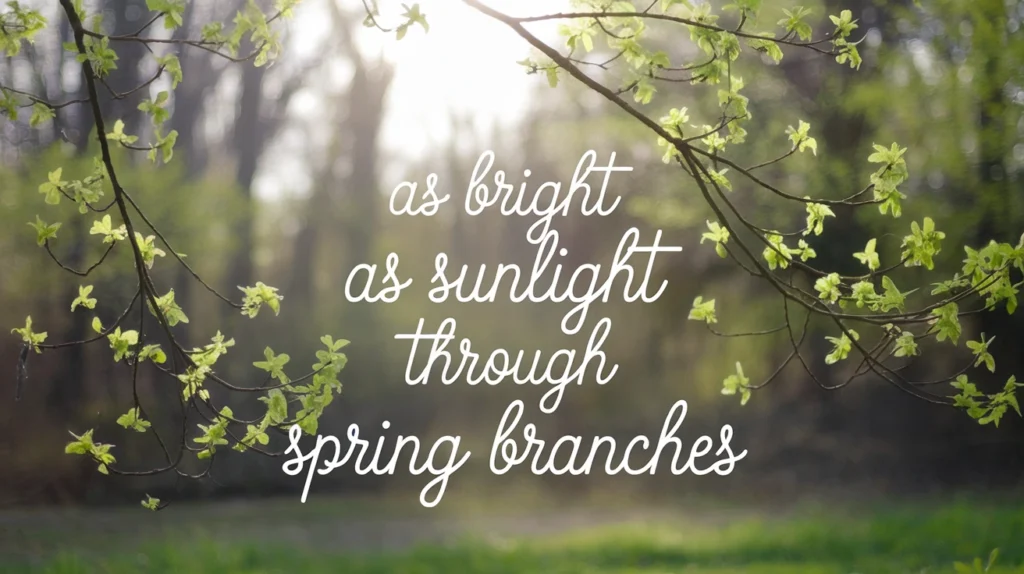
As Bright as Sunlight Through Spring Branches
Meaning
Suggests cheerful and uplifting music.
Usage Insight
Works well for positive and energetic songs.
Examples
- The melody was as bright as sunlight through spring branches.
- Her laughter-filled tune sounded as bright as sunlight through spring branches.
Like Wind Whispering Through a Forest
Meaning
Describes soft and mysterious music.
Usage Insight
Ideal for atmospheric writing.
Examples
- The flute sounded like wind whispering through a forest.
- The soundtrack felt like wind whispering through a forest.
As Sweet as Honey Dripping from a Comb
Meaning
Represents pleasant and beautiful music.
Usage Insight
Useful for describing melodic voices.
Examples
- Her singing was as sweet as honey dripping from a comb.
- The ballad sounded as sweet as honey dripping from a comb.
Like Stars Twinkling in the Night Sky
Meaning
Suggests delicate beauty and wonder.
Usage Insight
Perfect for magical or emotional music.
Examples
- The notes sparkled like stars twinkling in the night sky.
- The melody felt like stars twinkling in the night sky.
As Free as an Eagle Riding the Wind
Meaning
Represents music that feels unrestricted and inspiring.
Usage Insight
Excellent for describing expressive performances.
Examples
- The jazz solo was as free as an eagle riding the wind.
- His improvisation sounded as free as an eagle riding the wind.
Like a Waterfall Cascading Over Rocks
Meaning
Describes continuous and energetic music.
Usage Insight
Works well for fast-paced compositions.
Examples
- The piano notes poured out like a waterfall cascading over rocks.
- The rhythm moved like a waterfall cascading over rocks.
As Warm as a Fire on a Winter Night
Meaning
Represents comforting and emotional music.
Usage Insight
Ideal for heartfelt songs.
Examples
- The acoustic performance felt as warm as a fire on a winter night.
- Her voice was as warm as a fire on a winter night.
Like Fireflies Lighting a Summer Meadow

Meaning
Suggests enchanting and delicate music.
Usage Insight
Perfect for poetic descriptions.
Examples
- The melody shimmered like fireflies lighting a summer meadow.
- The gentle notes floated like fireflies lighting a summer meadow.
As Timeless as an Ancient Oak Tree
Meaning
Represents music that remains meaningful across generations.
Usage Insight
Useful for describing classic works.
Examples
- The composition was as timeless as an ancient oak tree.
- The song felt as timeless as an ancient oak tree.
Like a Rainbow Stretching Across the Horizon
Meaning
Suggests colorful, uplifting, and emotionally rich music.
Usage Insight
Excellent for describing diverse musical expression.
Examples
- The symphony unfolded like a rainbow stretching across the horizon.
- The performance felt like a rainbow stretching across the horizon.
How to Use Similes Effectively in Writing
Similes can make descriptions of music more vivid and memorable when used thoughtfully.
- Choose comparisons that match the mood of the music.
- Use nature similes for rich sensory imagery.
- Avoid overusing similes in a single passage.
- Create original comparisons whenever possible.
- Use similes to highlight emotion and atmosphere.
- In poems, similes can strengthen rhythm and imagery.
- In stories, they help readers hear and feel the music.
- In essays, similes can clarify abstract ideas.
- In songs, similes create memorable lyrics.
- Always ensure the comparison enhances the reader’s understanding.
FAQs
What are similes for music?
Similes for music are comparisons that use “like” or “as” to describe the sound, emotion, rhythm, or beauty of music.
What is an example of a simile for music?
An example is: “The melody flowed like a river through the valley.”
What is the difference between a simile and a metaphor?
A simile compares two things using “like” or “as,” while a metaphor makes a direct comparison without those words.
Why are similes important in creative writing?
Similes create vivid imagery, strengthen emotional impact, and make descriptions more engaging.
Can similes be used in academic writing?
Yes. Similes can be used carefully to explain ideas, illustrate concepts, and improve clarity.
Conclusion
Similes for music are powerful tools that help writers transform sounds and emotions into vivid, memorable imagery. Whether music is described as gentle as rain on autumn leaves, powerful as thunder across the mountains, or like a river flowing through a quiet valley, these comparisons help readers experience the beauty of music more deeply. By using creative and meaningful similes, writers can add clarity, emotion, and richness to poems, stories, essays, songs, and speeches. The best similes make music feel alive on the page, allowing readers to hear melodies through words alone. Keep exploring new comparisons, and you’ll discover endless ways to celebrate the universal language of music through imaginative writing.