Language becomes more powerful when it helps readers understand ideas through vivid and memorable imagery. One of the most effective tools for creating those images is the simile. Similes compare two unlike things using the words “like” or “as,” making descriptions clearer, more engaging, and easier to imagine.
They are an essential part of figurative language because they bring emotions, experiences, and observations to life. Writers, poets, and speakers often use similes to highlight qualities that are difficult to describe directly. Trees are especially powerful symbols in literature because they represent strength, growth, resilience, wisdom, and human emotion.
Just as no two trees grow in exactly the same way, every person, place, and experience has unique characteristics that make it different. In this guide, you’ll discover creative similes for different, complete with meanings, examples, and practical tips for using them effectively in your writing.
What Is a Simile?
A simile is a figure of speech that compares two different things using the words “like” or “as.” It helps readers understand a quality or idea by relating it to something familiar.
Example:
Her perspective was as different as a snowflake among millions.
This simile emphasizes uniqueness and individuality through a vivid comparison.
As Different as a Snowflake in a Blizzard
Meaning
Describes something uniquely distinct despite being surrounded by similar things.
Usage Insight
Perfect for highlighting individuality and originality.
Examples
- Her artistic style was as different as a snowflake in a blizzard.
- His solution was as different as a snowflake in a blizzard.
Like a Palm Tree in a Pine Forest
Meaning
Represents standing out from one’s surroundings.
Usage Insight
Useful for describing noticeable contrasts.
Examples
- His bright outfit was like a palm tree in a pine forest.
- The modern building looked like a palm tree in a pine forest.
As Different as Day and Midnight
Meaning
Emphasizes extreme contrast.
Usage Insight
Ideal for comparing opposite personalities or situations.
Examples
- The two sisters were as different as day and midnight.
- Their opinions were as different as day and midnight.
Like a Rainbow in a Black-and-White Photograph
Meaning
Suggests a striking and unexpected difference.
Usage Insight
Works well when describing something vibrant or unique.
Examples
- Her creativity was like a rainbow in a black-and-white photograph.
- The new design stood out like a rainbow in a black-and-white photograph.
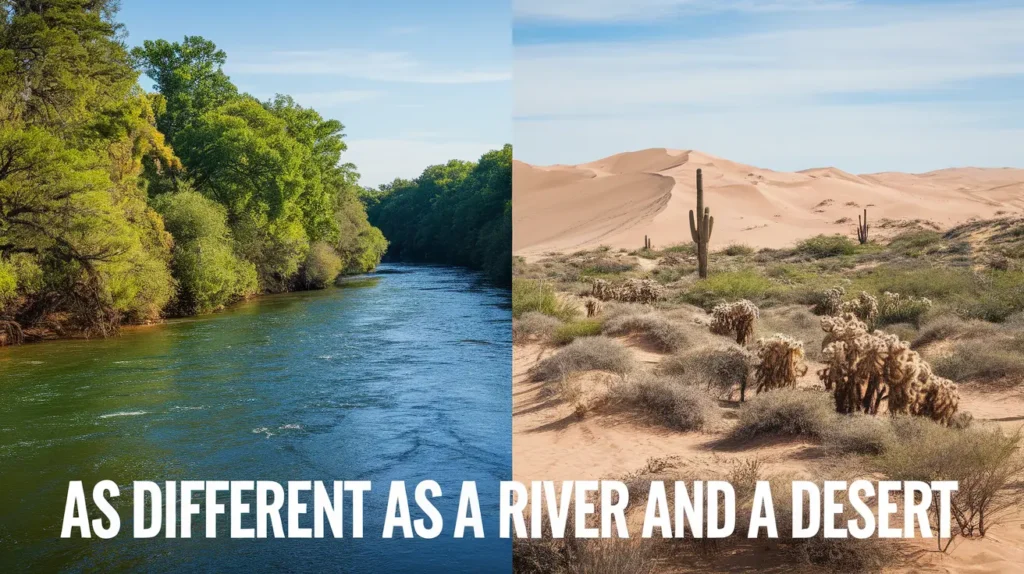
As Different as a River and a Desert
Meaning
Represents complete contrast in nature or character.
Usage Insight
Excellent for comparing lifestyles, ideas, or personalities.
Examples
- Their approaches to leadership were as different as a river and a desert.
- The two novels were as different as a river and a desert.
Like a Star Shining at Noon
Meaning
Describes something unusual and unexpected.
Usage Insight
Perfect for emphasizing rarity.
Examples
- His talent was like a star shining at noon.
- The opportunity appeared like a star shining at noon.
As Different as Spring and Winter
Meaning
Highlights dramatic differences in mood, style, or behavior.
Usage Insight
Useful for emotional and seasonal comparisons.
Examples
- Her attitude today was as different as spring and winter.
- The atmosphere changed as different as spring and winter.
Like a Wildflower in a Formal Garden
Meaning
Represents natural individuality in a structured setting.
Usage Insight
Great for describing originality and authenticity.
Examples
- She was like a wildflower in a formal garden.
- His ideas bloomed like a wildflower in a formal garden.
As Different as Thunder and Silence
Meaning
Emphasizes powerful contrast.
Usage Insight
Best for comparing communication styles or environments.
Examples
- Their personalities were as different as thunder and silence.
- The two experiences felt as different as thunder and silence.
Like a Lighthouse in the Middle of a Forest
Meaning
Describes something unexpected and distinctive.
Usage Insight
Ideal for highlighting uniqueness.
Examples
- The sculpture stood like a lighthouse in the middle of a forest.
- Her perspective was like a lighthouse in the middle of a forest.
As Different as Fire and Ice
Meaning
Represents opposing qualities or characteristics.
Usage Insight
A classic but effective comparison for strong contrasts.
Examples
- The brothers were as different as fire and ice.
- Their leadership styles were as different as fire and ice.
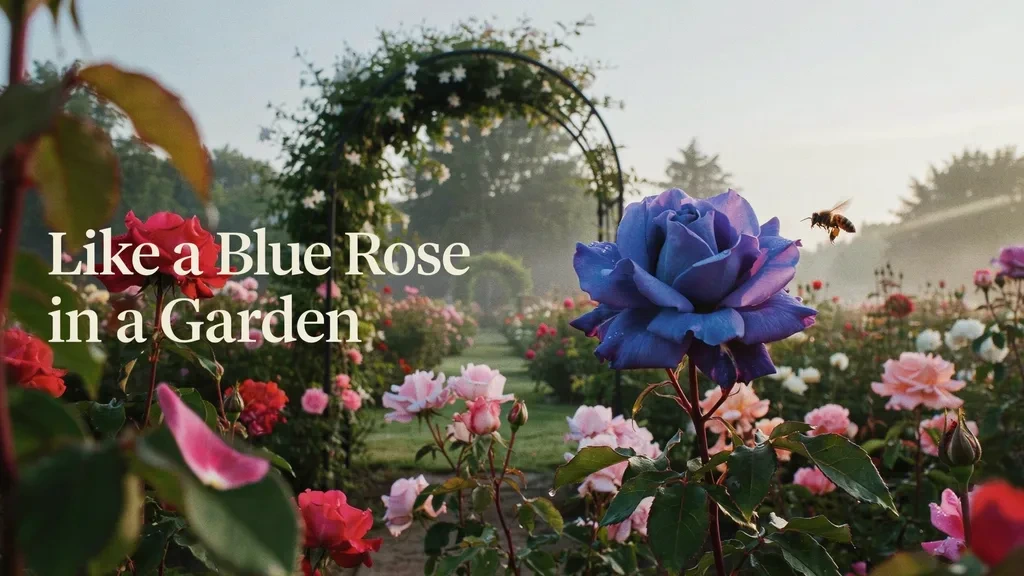
Like a Blue Rose in a Garden
Meaning
Suggests rarity and uniqueness.
Usage Insight
Perfect for describing exceptional qualities.
Examples
- Her voice was like a blue rose in a garden.
- His imagination was like a blue rose in a garden.
As Different as the Ocean and the Sky
Meaning
Highlights two things that may seem connected but are fundamentally distinct.
Usage Insight
Useful for thoughtful and reflective writing.
Examples
- Their goals were as different as the ocean and the sky.
- The two cultures were as different as the ocean and the sky.
Like a Comet Crossing a Familiar Sky
Meaning
Represents something extraordinary appearing among the ordinary.
Usage Insight
Works well for describing remarkable uniqueness.
Examples
- Her arrival was like a comet crossing a familiar sky.
- The innovation appeared like a comet crossing a familiar sky.
As Different as an Eagle and a Goldfish
Meaning
Emphasizes completely unrelated characteristics.
Usage Insight
Excellent for humorous or vivid comparisons.
Examples
- Their hobbies were as different as an eagle and a goldfish.
- The two candidates were as different as an eagle and a goldfish.
How to Use Similes Effectively in Writing
Similes can make writing more vivid and memorable when used thoughtfully.
- Choose comparisons that readers can easily understand.
- Use original similes whenever possible.
- Match the comparison to the tone of your writing.
- Draw inspiration from nature similes for fresh imagery.
- Avoid overusing similes in a single paragraph.
- In poems, similes can create emotion and symbolism.
- In stories, they can enrich settings and characters.
- In essays, use similes carefully to clarify ideas.
- In songs, similes make lyrics more expressive.
- Always ensure the comparison strengthens the meaning.
FAQs
What are similes for different?
Similes for different are comparisons that use “like” or “as” to describe uniqueness, contrast, or individuality.
What is an example of a simile for different?
An example is: “Her perspective was as different as a snowflake in a blizzard.”
What is the difference between a simile and a metaphor?
A simile uses “like” or “as” to compare two things, while a metaphor makes a direct comparison without those words.
Why are similes important in creative writing?
Similes help create vivid imagery, improve understanding, and make writing more engaging.
Can similes be used in academic writing?
Yes. Similes can be used carefully to explain complex ideas and improve clarity.
Conclusion
Similes for different are valuable tools that help writers express uniqueness, contrast, and individuality through vivid comparisons. Whether something is described as different as a snowflake in a blizzard, like a rainbow in a black-and-white photograph, or as different as fire and ice, these comparisons make ideas easier to visualize and understand. By using thoughtful and creative similes, writers can add depth, imagery, and emotional resonance to poems, stories, essays, speeches, and everyday communication. The best similes for different celebrate the beauty of individuality while making language more expressive and memorable. Keep exploring new comparisons, and you’ll discover countless ways to bring uniqueness to life through words.