Autumn has a way of slowing us down and making us notice the small, quiet miracles happening all around us. As leaves drift from branches and the air turns crisp, writers have long searched for the right words to capture this feeling, and similes are one of the most powerful tools for doing exactly that. A simile is a figure of speech that compares two unlike things using “like” or “as,” helping readers see the ordinary world in a fresh and vivid light.
Similes matter in figurative language because they turn abstract feelings into pictures the mind can hold onto, making writing more relatable, emotional, and memorable. Trees, in particular, have always fascinated poets and storytellers, standing as timeless symbols of strength, growth, resilience, wisdom, and deep human emotion. A tree bending in the wind without breaking mirrors our own struggles and quiet endurance, while its changing leaves reflect the passage of time, aging, and transformation.
When autumn arrives, trees become even more symbolic, letting go of what no longer serves them just as we sometimes must release old habits, relationships, or fears. This article brings together fifteen original, nature-inspired similes for autumn, each one designed to help you write with more imagery, emotion, and authenticity.
What Is a Simile?
A simile is a literary device that compares two different things to highlight a shared quality, typically using the words “like” or “as.” Similes in literature help writers paint clearer pictures, evoke emotion, and make comparisons that feel natural rather than forced.
For example:
saying “her laughter was like sunlight breaking through storm clouds” instantly communicates warmth, relief, and unexpected joy without needing extra explanation. This is the essence of figurative language: using comparisons to say more with fewer words, while giving the reader something vivid to picture and feel.
1. Leaves Falling Like Whispered Goodbyes
Meaning:
This simile compares falling autumn leaves to soft, quiet farewells, capturing both the gentleness and the sadness of letting go.
Usage Insight:
This comparison works beautifully in reflective or emotional writing, especially when describing endings, transitions, or nostalgic memories. It suits poetry, personal essays, and narrative fiction where a slower, more contemplative tone is needed.
Example Sentences:
- The maple leaves drifted down like whispered goodbyes, settling softly on the quiet path.
- As October deepened, the orchard let go of its leaves like whispered goodbyes carried on the breeze.
2. The Forest Glowing Like Embers in a Dying Fire
Meaning:
This simile likens the deep reds and oranges of an autumn forest to the warm, flickering glow of a fire slowly burning out.
Usage Insight:
Use this comparison when you want to emphasize both beauty and impermanence, since it suggests warmth alongside a gentle sense of ending. It works especially well in descriptive travel writing or scene-setting passages.
Example Sentences:
- From the hilltop, the forest glowed like embers in a dying fire, holding onto its last bit of warmth.
- The valley below looked like embers in a dying fire, painted in shades of amber and rust.
3. The Wind Moving Through Branches Like a Restless Sigh
Meaning:
This simile compares the sound and motion of autumn wind to a long, weary exhale, giving the season a tired, reflective quality.
Usage Insight:
This works well in atmospheric or emotionally heavy scenes, particularly when a character is processing grief, change, or exhaustion. It’s ideal for slow-paced narrative fiction and mood-driven poetry.
Example Sentences:
- The wind moved through the bare branches like a restless sigh, unable to settle for long.
- Autumn evenings carried a chill that felt like a restless sigh sweeping across the empty fields.
4. Pumpkins Scattered Like Forgotten Treasures
Meaning:
This simile compares pumpkins lying in a field to abandoned or overlooked riches, suggesting hidden value in simple, everyday things.
Usage Insight:
This comparison adds charm and playfulness to descriptive writing, making it perfect for children’s stories, seasonal blog posts, or lighthearted narrative scenes.
Example Sentences:
- The pumpkin patch stretched for acres, its fruit scattered like forgotten treasures waiting to be found.
- Golden pumpkins dotted the hillside like forgotten treasures left behind by giants.
5. Golden Fields Stretching Like a Quilt of Memories
Meaning:
This simile compares harvested autumn fields to a patchwork quilt, evoking warmth, comfort, and nostalgia tied to memory and home.
Usage Insight:
This works especially well in writing about family, heritage, or homecoming, where warmth and sentimentality are the desired tone. It suits memoirs, family sagas, and reflective essays.
Example Sentences:
- The golden fields stretched like a quilt of memories, each patch holding a story from summers past.
- Driving through the countryside, she watched the farmland unfold like a quilt of memories stitched by time.
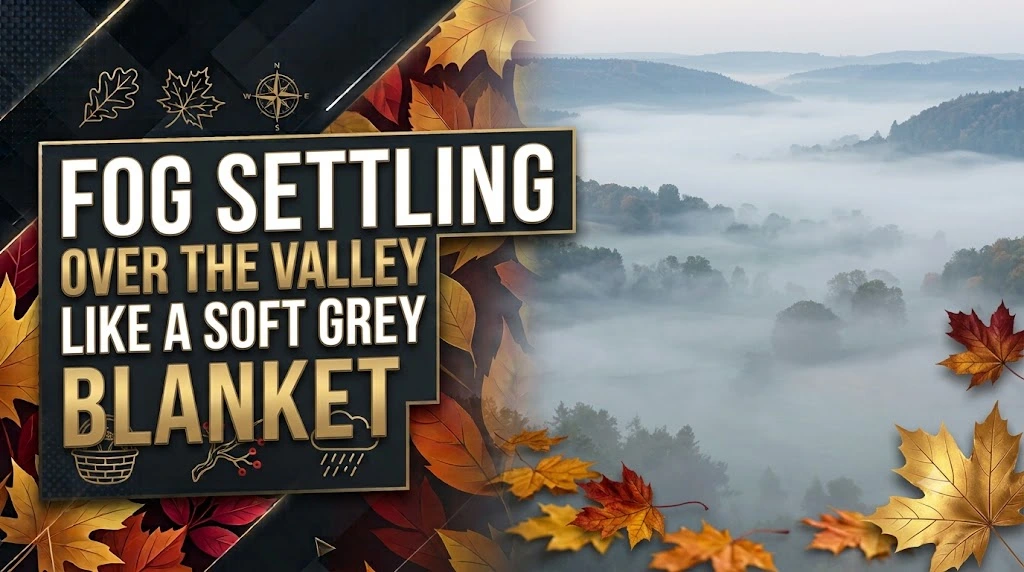
6. Fog Settling Over the Valley Like a Soft Grey Blanket
Meaning:
This simile compares morning autumn fog to a comforting blanket, emphasizing stillness, quiet, and gentle protection.
Usage Insight:
This comparison is ideal for opening scenes or atmospheric descriptions, especially in mystery, literary fiction, or nature writing where calm tension is important.
Example Sentences:
- Fog settled over the valley like a soft grey blanket, muffling every sound before dawn.
- The lake disappeared beneath mist that spread like a soft grey blanket across the water.
7. Bare Trees Standing Like Quiet Guardians of Winter’s Approach
Meaning:
This simile compares leafless autumn trees to watchful protectors, suggesting resilience, patience, and silent strength.
Usage Insight:
This works well when writing about endurance, aging, or steadfastness, particularly in poetry or symbolic fiction that explores themes of survival and wisdom.
Example Sentences:
- The oaks stood bare along the ridge like quiet guardians of winter’s approach.
- Even stripped of their leaves, the old trees looked like quiet guardians of winter’s approach, unshaken by the cold.
8. Crimson Leaves Burning Like Small Flames Against the Sky
Meaning:
This simile compares bright red autumn leaves to tiny flickers of fire, highlighting vividness, intensity, and fleeting beauty.
Usage Insight:
Use this comparison when you want striking, high-energy imagery, especially in descriptive poetry or vivid scene-setting where color and drama matter.
Example Sentences:
- The maple’s crimson leaves burned like small flames against the pale autumn sky.
- One by one, the leaves flared like small flames, briefly lighting up the grey afternoon.
9. Apples Hanging Heavy Like Promises Kept
Meaning:
This simile compares ripe apples weighing down a branch to fulfilled commitments, suggesting reward, patience, and the payoff of hard work.
Usage Insight:
This works nicely in stories about growth, effort, or reward, and is especially fitting for coming-of-age narratives or motivational writing tied to harvest imagery.
Example Sentences:
- The orchard branches sagged with apples hanging heavy like promises kept after a long summer.
- Each apple hung heavy like a promise kept, a quiet reward for months of patient care.
10. Autumn Air Feeling Like a Cool Hand on a Warm Forehead
Meaning:
This simile compares the crisp chill of autumn air to a soothing, caring touch, suggesting relief, comfort, and gentle change.
Usage Insight:
This comparison works well in sensory-rich descriptive passages, particularly when transitioning between seasons or moods within a story, and adds a tender, intimate quality to nature writing.
Example Sentences:
- The autumn air felt like a cool hand on a warm forehead, a welcome relief after summer’s heat.
- Stepping outside, she breathed in air that felt like a cool hand on a warm forehead, calming and clear.
11. The Harvest Moon Hanging Like a Lantern in the Dusk
Meaning:
This simile compares the large, glowing harvest moon to a lantern, emphasizing warmth, guidance, and gentle illumination.
Usage Insight:
This works beautifully in evening or nighttime scenes, particularly in folklore-inspired writing, fantasy fiction, or lyrical descriptions of rural landscapes.
Example Sentences:
- The harvest moon hung low over the fields like a lantern guiding travelers home.
- That night, the moon rose like a lantern in the dusk, casting a warm glow over the barn.
12. Squirrels Darting Like Sparks Across the Yard
Meaning:
This simile compares the quick, erratic movement of squirrels gathering food to small bursts of energy or light, suggesting liveliness and urgency.
Usage Insight:
This comparison adds movement and energy to otherwise still descriptive passages, making it useful in children’s writing, nature journals, or lighthearted scene-setting.
Example Sentences:
- Squirrels darted like sparks across the yard, racing to bury acorns before the frost arrived.
- The garden came alive with squirrels darting like sparks between the fallen leaves.
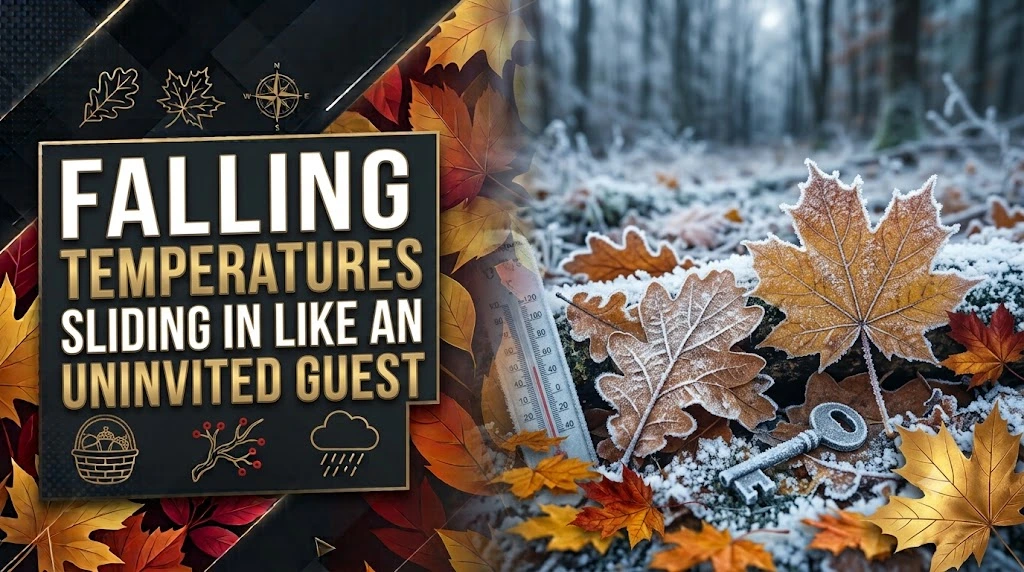
13. Falling Temperatures Sliding In Like an Uninvited Guest
Meaning:
This simile compares the sudden arrival of cold weather to an unexpected visitor, suggesting mild disruption or a shift that demands attention.
Usage Insight:
This works well in conversational or humorous writing, particularly in blog posts, casual essays, or dialogue-driven fiction where a relatable, everyday tone is desired.
Example Sentences:
- The cold slid in like an uninvited guest, catching everyone without their coats.
- By mid-October, the chill arrived like an uninvited guest, lingering longer than expected.
14. Leaves Crunching Underfoot Like Applause on a Quiet Street
Meaning:
This simile compares the sound of dried leaves breaking underfoot to gentle clapping, adding a festive, celebratory quality to an otherwise quiet act.
Usage Insight:
This comparison brings sound-based imagery into writing, making it especially effective in descriptive walking or travel scenes where auditory detail enhances immersion.
Example Sentences:
- Every step sent leaves crunching underfoot like applause on a quiet street.
- The path through the park crackled with leaves crunching like applause, celebrating no one in particular.
15. The Orchard Standing Like an Old Friend Welcoming You Home
Meaning:
This simile compares a familiar autumn orchard to a loyal friend, suggesting comfort, nostalgia, and a sense of belonging.
Usage Insight:
This works well in closing passages, homecoming scenes, or reflective conclusions, and is especially effective in memoirs, family stories, or emotionally resonant essays.
Example Sentences:
- After years away, she found the orchard standing like an old friend welcoming her home.
- The familiar rows of trees greeted him like an old friend, unchanged despite the passing years.
How to Use Similes Effectively in Writing
Similes are powerful, but only when used with intention and restraint. Here are some practical tips for weaving them naturally into different types of writing.
Poems: Focus on sensory detail and emotional resonance rather than clever wordplay alone. A single strong simile placed at the right moment often has more impact than several scattered throughout a stanza.
For Stories: Use similes to reveal character emotion or set the tone of a scene, rather than simply describing physical appearance. A well-placed simile can show what a character feels without stating it outright.
Essays: Similes work best in essays when they clarify a complex or abstract idea by connecting it to something familiar. Avoid overusing them, as academic and semi-formal writing benefits from clarity over ornamentation.
For Songs: Similes in lyrics should be rhythmic and easy to sing, often relying on universal comparisons that listeners can instantly picture and feel, even on a first listen.
Creative Descriptions: Choose comparisons that suit the mood you’re building. A cheerful scene calls for light, playful similes, while a somber scene benefits from quieter, more reflective comparisons.
As a general rule, one meaningful simile is more effective than five ordinary ones. Always ask whether the comparison adds clarity or emotion to the sentence; if it doesn’t, it’s better left out.
FAQs
1. What are beautiful similes for autumn?
Beautiful similes for autumn are comparisons that use “like” or “as” to describe the season’s colors, sounds, and feelings, such as leaves falling like whispered goodbyes or a forest glowing like embers in a dying fire. They help writers capture the emotional and visual richness of fall in a fresh, memorable way.
2. What is the difference between a simile and a metaphor?
A simile compares two things using “like” or “as,” such as “the leaves fell like snow,” while a metaphor states that one thing is another without using comparison words, such as “the leaves were snow.” Both are forms of figurative language, but similes tend to feel slightly softer and more explicit in their comparison.
3. Why are similes important in nature writing?
Similes help nature writing feel vivid and relatable by connecting natural imagery to familiar human experiences and emotions. They make descriptions of trees, weather, and landscapes easier to visualize and emotionally connect with.
4. Can similes be used in academic writing?
Yes, similes can be used in academic writing when they clarify complex ideas, though they should be used sparingly and purposefully. In more formal contexts, similes work best when they aid understanding rather than serve purely decorative purposes.
5. How do I create my own original similes for autumn?
Start by observing a specific autumn detail closely, such as the sound of leaves or the color of the sky, then ask what everyday object or feeling it reminds you of. The best similes often come from unexpected but emotionally accurate comparisons rather than obvious ones.
Conclusion
Autumn gives us a season full of color, motion, and quiet transformation, and similes offer the perfect tool for capturing all of it on the page. These beautiful similes for autumn do more than decorate a sentence; they add clarity, imagery, and emotional depth that pure description often struggles to achieve. Whether you are writing a poem about falling leaves, a story about homecoming, or a simple reflection on the changing season, a well-chosen simile can turn an ordinary observation into something readers feel deeply. Like trees themselves, the best similes grow stronger with time, rooted in genuine observation and reaching toward real emotional truth. Keep noticing the small details around you this fall, and let your comparisons grow as naturally as the season itself.