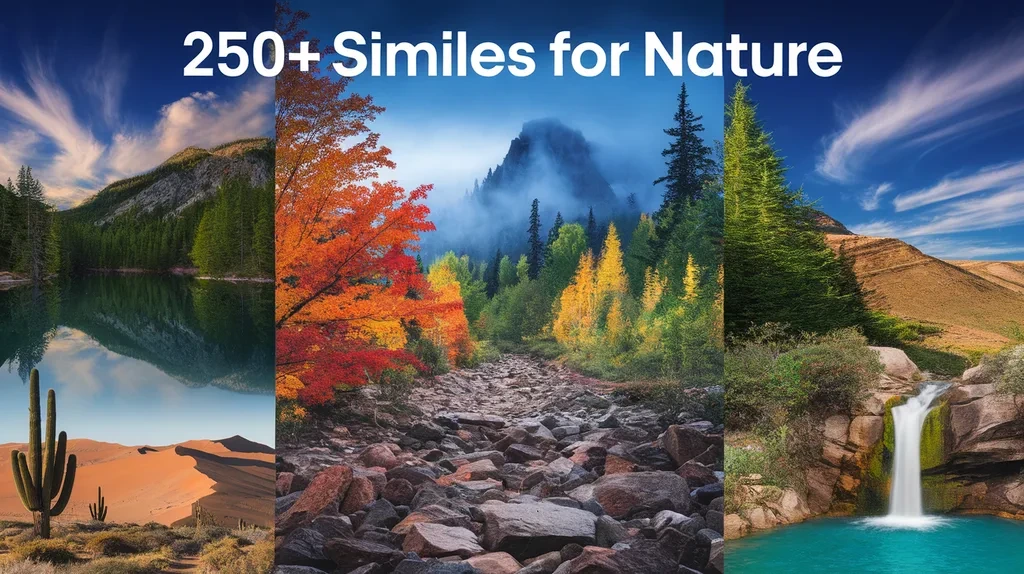
Nature has inspired writers, poets, and storytellers for centuries with its beauty, power, and endless variety. From towering mountains and flowing rivers to blooming flowers and ancient forests, the natural world provides countless images that spark creativity. One of the best ways to describe nature vividly is through similes.
Similes compare two unlike things using the words “like” or “as,” helping readers create strong mental pictures. They are an essential part of figurative language because they make descriptions more expressive, memorable, and emotionally engaging. Similes in literature often use natural elements to communicate emotions, moods, and ideas.
Trees are especially powerful symbols of strength, growth, resilience, wisdom, and human emotion, making them common subjects in nature similes. Whether you are writing poetry, stories, essays, or songs, similes for nature can add depth, beauty, and meaning to your work. In this guide, you’ll discover creative nature similes, complete with meanings, examples, and practical writing tips.
What Is a Simile?
A simile is a figure of speech that compares two different things using the words “like” or “as.” Similes help readers understand an image, emotion, or idea by connecting it to something familiar.
Example:
The lake was as smooth as polished glass.
This simile helps readers clearly imagine the calm surface of the water.
As Calm as a Lake at Sunrise
Meaning
Describes peace, stillness, and tranquility.
Usage Insight
Perfect for creating serene nature scenes.
Examples
- The valley was as calm as a lake at sunrise.
- Her thoughts became as calm as a lake at sunrise.
Like a River Flowing Toward the Sea
Meaning
Represents purpose, movement, and progress.
Usage Insight
Ideal for describing journeys and natural motion.
Examples
- Time moved like a river flowing toward the sea.
- The hikers continued like a river flowing toward the sea.
As Strong as an Ancient Oak
Meaning
Symbolizes strength, resilience, and endurance.
Usage Insight
Useful for describing people, trees, or powerful forces.
Examples
- The old tree stood as strong as an ancient oak.
- Her determination was as strong as an ancient oak.
Like Clouds Drifting Across the Sky
Meaning
Represents freedom, change, and movement.
Usage Insight
Excellent for reflective and poetic writing.
Examples
- His thoughts wandered like clouds drifting across the sky.
- The afternoon passed like clouds drifting across the sky.
As Bright as Sunlight on Snow

Meaning
Describes beauty, clarity, and brilliance.
Usage Insight
Perfect for vivid visual descriptions.
Examples
- The landscape was as bright as sunlight on snow.
- Her smile shone as bright as sunlight on snow.
Like Leaves Dancing in the Breeze
Meaning
Represents gentle movement and joy.
Usage Insight
Ideal for lively nature descriptions.
Examples
- The children laughed like leaves dancing in the breeze.
- The flowers swayed like leaves dancing in the breeze.
As Vast as the Open Ocean
Meaning
Suggests immense size, possibility, or mystery.
Usage Insight
Useful for grand and inspirational writing.
Examples
- The desert stretched as vast as the open ocean.
- His imagination was as vast as the open ocean.
Like Rain Falling on Dry Earth
Meaning
Represents renewal, relief, and growth.
Usage Insight
Excellent for emotional and symbolic writing.
Examples
- Her encouragement felt like rain falling on dry earth.
- The good news arrived like rain falling on dry earth.
As Gentle as Morning Dew
Meaning
Describes softness, kindness, and delicacy.
Usage Insight
Perfect for emotional and descriptive writing.
Examples
- Her voice was as gentle as morning dew.
- The breeze felt as gentle as morning dew.
Like a Mountain Touching the Clouds
Meaning
Represents greatness, ambition, and majesty.
Usage Insight
Ideal for powerful imagery.
Examples
- His achievements stood like a mountain touching the clouds.
- The peak rose like a mountain touching the clouds.
As Colorful as a Wildflower Meadow
Meaning
Suggests beauty, diversity, and vibrancy.
Usage Insight
Useful for visual descriptions.
Examples
- The garden was as colorful as a wildflower meadow.
- Her artwork appeared as colorful as a wildflower meadow.
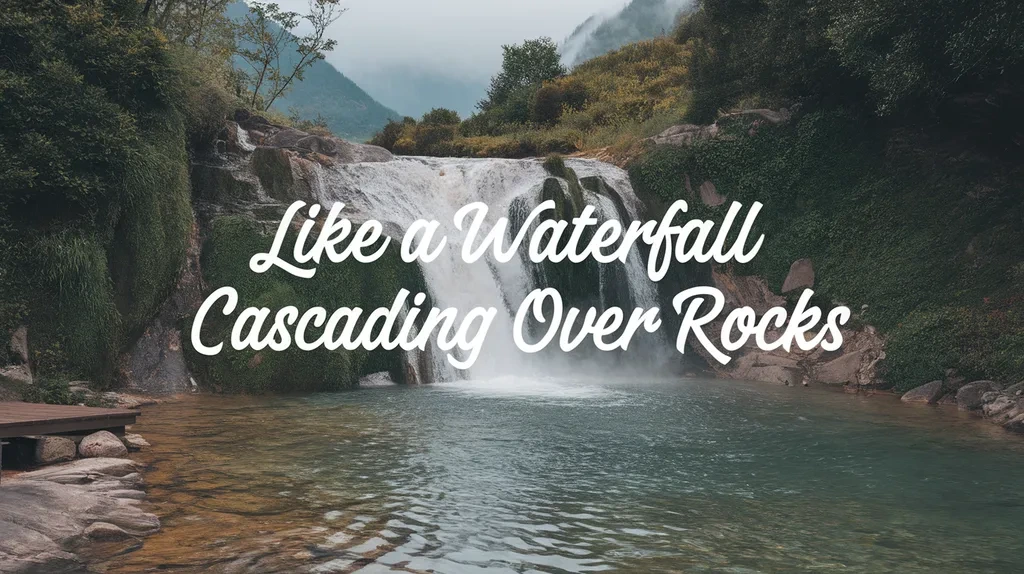
Like a Waterfall Cascading Over Rocks
Meaning
Represents energy, movement, and natural beauty.
Usage Insight
Perfect for dynamic scenes.
Examples
- Her laughter flowed like a waterfall cascading over rocks.
- The music rushed like a waterfall cascading over rocks.
As Quiet as Snow Falling at Night
Meaning
Describes deep silence and peace.
Usage Insight
Excellent for calm and reflective moments.
Examples
- The forest was as quiet as snow falling at night.
- The room became as quiet as snow falling at night.
Like the Moon Reflecting on a River
Meaning
Represents beauty, mystery, and reflection.
Usage Insight
Ideal for poetic and thoughtful writing.
Examples
- Her memories shimmered like the moon reflecting on a river.
- The scene glowed like the moon reflecting on a river.
As Timeless as the Stars Above
Meaning
Suggests permanence, wonder, and endurance.
Usage Insight
Useful for inspirational and literary writing.
Examples
- Their friendship felt as timeless as the stars above.
- The mountains appeared as timeless as the stars above.
How to Use Similes Effectively in Writing
Similes can transform ordinary descriptions into vivid and memorable imagery when used effectively.
- Choose comparisons that readers can easily visualize.
- Use nature similes to create strong sensory details.
- Match the simile to the mood of your writing.
- Avoid overusing similes in every sentence.
- Create original comparisons whenever possible.
- In poems, similes enhance imagery and symbolism.
- In stories, they help build atmosphere and emotion.
- In essays, similes can clarify complex ideas.
- In songs, similes make lyrics more expressive.
- Always ensure the comparison strengthens your message.
FAQs
What are similes for nature?
Similes for nature are comparisons that use “like” or “as” to describe natural elements such as trees, rivers, mountains, flowers, skies, and seasons.
What is an example of a nature simile?
An example is: “The lake was as smooth as polished glass.”
What is the difference between a simile and a metaphor?
A simile uses “like” or “as” to compare two things, while a metaphor makes a direct comparison without those words.
Why are nature similes popular in literature?
Nature similes create vivid imagery and help readers connect emotionally with descriptions and themes.
Can nature similes be used in academic writing?
Yes. When used appropriately, nature similes can clarify ideas and make explanations more engaging.
Conclusion
Similes for nature are among the most powerful tools in figurative language because they transform ordinary descriptions into vivid and memorable experiences. Whether nature is described as calm as a lake at sunrise, strong as an ancient oak, or colorful as a wildflower meadow, these comparisons help readers see, feel, and connect with the world around them. By using thoughtful nature similes, writers can add clarity, imagery, and emotional depth to poems, stories, essays, speeches, and songs. The best similes for nature celebrate the beauty, power, and wisdom found in the natural world. Keep exploring creative comparisons, and you’ll discover endless ways to bring your writing to life through the wonders of nature.