Joy is one of the most uplifting emotions people can experience. It fills life with energy, hope, gratitude, and a sense of wonder. Because joy can be deeply personal and difficult to describe, writers often use similes to bring these feelings to life. Similes compare two unlike things using the words “like” or “as,” helping readers visualize emotions through familiar images.
They are an important part of figurative language because they add color, clarity, and emotional depth to writing. Similes in literature are commonly used to express happiness, excitement, and celebration in memorable ways. Nature provides endless inspiration for joyful comparisons, from sunshine and flowers to birds and flowing rivers.
Trees, in particular, symbolize strength, growth, resilience, wisdom, and human emotion, reminding us that joy often grows from life’s challenges and experiences. In this guide, you’ll discover creative similes for joy, complete with meanings, examples, and practical writing tips to enrich your poems, stories, essays, and creative descriptions.
What Is a Simile?
A simile is a figure of speech that compares two different things using the words “like” or “as.” Similes help readers understand emotions, actions, and experiences by connecting them to familiar images.
Example:
She was as joyful as a bird greeting the sunrise.
This simile creates a vivid picture of happiness and enthusiasm.
As Joyful as a Bird Greeting the Sunrise
Meaning
Represents pure happiness and excitement.
Usage Insight
Perfect for describing cheerful people and uplifting moments.
Examples
- She was as joyful as a bird greeting the sunrise on her wedding day.
- The children looked as joyful as birds greeting the sunrise.
Like Sunshine Breaking Through Clouds
Meaning
Suggests sudden happiness after a difficult period.
Usage Insight
Ideal for moments of relief and hope.
Examples
- The good news arrived like sunshine breaking through clouds.
- Her smile felt like sunshine breaking through clouds.
As Bright as a Field of Wildflowers
Meaning
Represents vibrant and visible joy.
Usage Insight
Useful for colorful and positive descriptions.
Examples
- Her personality was as bright as a field of wildflowers.
- The celebration felt as bright as a field of wildflowers.
Like a River Dancing Over Stones
Meaning
Describes lively and energetic happiness.
Usage Insight
Perfect for playful and carefree emotions.
Examples
- His laughter flowed like a river dancing over stones.
- The children ran like a river dancing over stones.
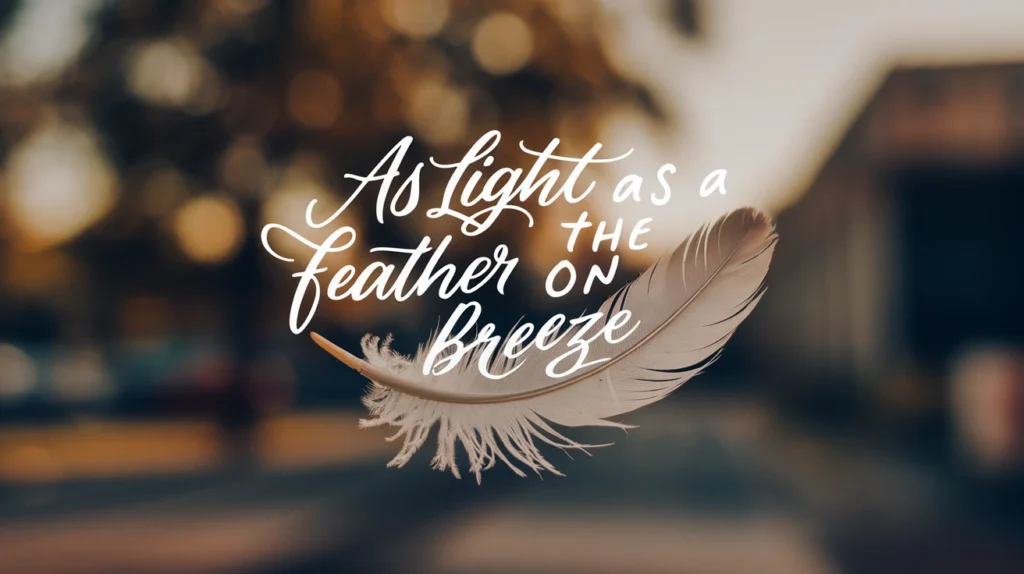
As Light as a Feather on the Breeze
Meaning
Represents freedom, happiness, and emotional ease.
Usage Insight
Ideal for describing peaceful joy.
Examples
- She felt as light as a feather on the breeze after the exam.
- His heart seemed as light as a feather on the breeze.
Like Blossoms Opening in Spring
Meaning
Suggests growing happiness and emotional renewal.
Usage Insight
Excellent for describing positive transformation.
Examples
- Her confidence bloomed like blossoms opening in spring.
- Joy spread through the family like blossoms opening in spring.
As Warm as Sunlight on a Summer Morning
Meaning
Represents comforting and genuine happiness.
Usage Insight
Perfect for emotional and heartfelt writing.
Examples
- Her kindness felt as warm as sunlight on a summer morning.
- The reunion was as warm as sunlight on a summer morning.
Like Butterflies Floating Through a Garden
Meaning
Describes gentle excitement and delight.
Usage Insight
Useful for joyful and whimsical scenes.
Examples
- Her happiness fluttered like butterflies floating through a garden.
- The atmosphere felt like butterflies floating through a garden.
As Refreshing as Rain After a Drought
Meaning
Represents long-awaited joy and relief.
Usage Insight
Ideal for emotional breakthroughs.
Examples
- The victory was as refreshing as rain after a drought.
- His laughter felt as refreshing as rain after a drought.
Like a Rainbow After a Storm
Meaning
Suggests joy following hardship or struggle.
Usage Insight
Perfect for inspirational writing.
Examples
- Their success came like a rainbow after a storm.
- Hope returned like a rainbow after a storm.
As Free as a Hawk Riding the Wind
Meaning
Represents joyful freedom and confidence.
Usage Insight
Useful for themes of independence.
Examples
- She felt as free as a hawk riding the wind.
- The traveler appeared as free as a hawk riding the wind.
Like Music Echoing Through a Valley

Meaning
Describes joy that spreads to others.
Usage Insight
Excellent for community and celebration scenes.
Examples
- Her laughter echoed like music through a valley.
- Happiness spread like music echoing through a valley.
As Colorful as Autumn Leaves in Sunshine
Meaning
Represents rich and vibrant happiness.
Usage Insight
Ideal for vivid descriptions.
Examples
- The festival was as colorful as autumn leaves in sunshine.
- Their memories remained as colorful as autumn leaves in sunshine.
Like Stars Appearing in a Clear Night Sky
Meaning
Suggests moments of wonder and delight.
Usage Insight
Perfect for magical and memorable experiences.
Examples
- Joy appeared like stars in a clear night sky.
- Her eyes sparkled like stars appearing in a clear night sky.
As Steady as a Tree Growing Toward the Sun
Meaning
Represents lasting and meaningful joy.
Usage Insight
Useful for describing deep contentment.
Examples
- His happiness was as steady as a tree growing toward the sun.
- Their friendship felt as steady as a tree growing toward the sun.
How to Use Similes Effectively in Writing
Similes can make descriptions of joy more vivid and emotionally engaging.
- Choose comparisons that reflect positive emotions.
- Use nature similes to create memorable imagery.
- Match the simile to the intensity of the joy.
- Avoid overusing common clichés.
- Create fresh and original comparisons whenever possible.
- In poems, similes enhance imagery and emotional expression.
- In stories, they help readers connect with characters.
- In essays, similes can clarify emotions and ideas.
- In songs, similes make lyrics more memorable.
- Always ensure the comparison supports the message.
FAQs
What are similes for joy?
Similes for joy are comparisons that use “like” or “as” to describe happiness, delight, excitement, and emotional fulfillment.
What is an example of a simile for joy?
An example is: “She was as joyful as a bird greeting the sunrise.”
What is the difference between a simile and a metaphor?
A simile compares two things using “like” or “as,” while a metaphor makes a direct comparison without those words.
Why are similes important in creative writing?
Similes create vivid imagery, strengthen emotional impact, and help readers visualize experiences more clearly.
Can similes be used in academic writing?
Yes. Similes can be used carefully to explain ideas and concepts in a clear and engaging way.
Conclusion
Similes for joy are powerful figurative language examples that help writers express happiness, delight, and emotional fulfillment through vivid comparisons. Whether joy is described as sunshine breaking through clouds, a rainbow after a storm, or a bird greeting the sunrise, these similes create memorable imagery that resonates with readers. By using thoughtful and creative comparisons, writers can add clarity, beauty, and emotional depth to poems, stories, essays, speeches, and songs. The best similes for joy celebrate life’s brightest moments while reminding us of the hope, gratitude, and wonder that happiness brings. Keep exploring new comparisons, and you’ll discover endless ways to make your writing more expressive and inspiring.