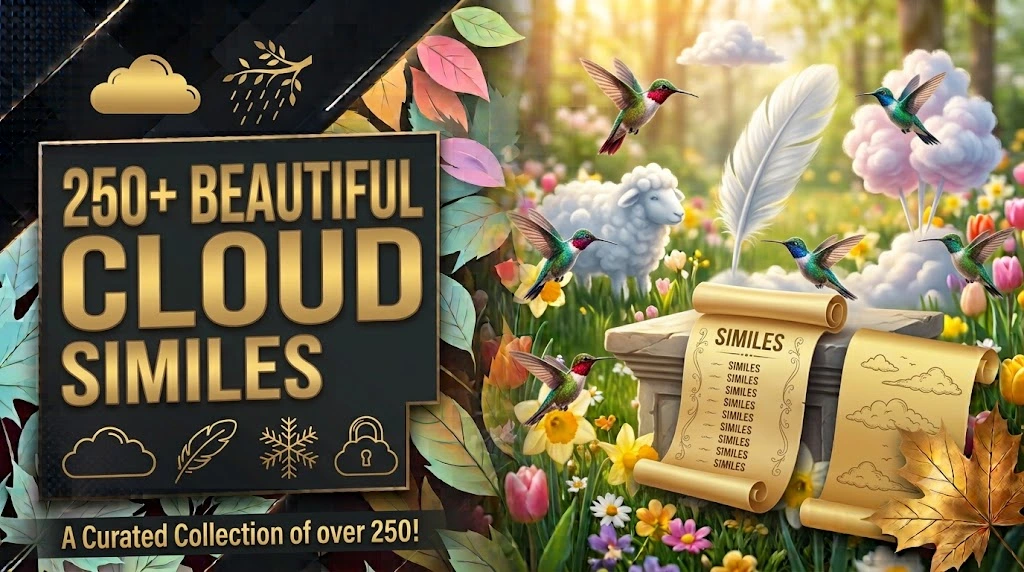
Looking up at the sky is always fascinating. Clouds drift and change. This often inspires writers to use similes to share their feelings. These are strong tools in figurative language. A simile compares two different things, often using “like” or “as.” It helps readers form clearer images of ideas and experience them with greater depth.
Similes breathe life into writing. They take abstract ideas, like wonder or stillness, and turn them into images that the mind can grasp. Writers use these comparisons to capture the beauty of the sky. For instance, one might describe a cloud drifting in a blue sky as having the patience of a monk. In contrast, a storm cloud on the horizon can look like a dark wall of doubt, reflecting an upcoming change in mood. These comparisons help readers see and feel the atmosphere of a story.
Clouds change shape in a rapid manner. They remind us that everything is temporary. We should let things flow in their natural course, like our thoughts and feelings. In this article, you’ll discover fifteen uniquesimiles. Each one aims to make your writing more vivid, emotional, and lifelike.
What Is a Simile?
A simile is a way to compare two different things. It uses “like” or “as” to show a shared quality. Similes in literature help writers make images clearer and more memorable. They connect an idea to something familiar and easy to picture.
For example:
The phrase “the clouds moved like slow ships sailing across a calm sea” conveys a serene, tranquil beauty. It creates a vivid image of open space. The main goal of figurative language is to convey deeper meanings and emotions through a few carefully selected words.
1. Clouds Drifting Like Slow Ships Across a Calm Sea
Meaning:
This simile likens clouds drifting in the sky to ships gliding on calm water. It hints at patience, grace, and gentle movement.
Usage Insight:
This comparison shines in calm, reflective moments. It works well in poetry or descriptive fiction that needs a calm, gentle tone.
Example Sentences:
- All afternoon, the clouds drifted like slow ships across a calm sea, in no hurry to reach the horizon.
- She lay in the grass and watched the clouds drift like slow ships, each one carrying its own quiet journey.
2. Storm Clouds Gathering Like Worried Thoughts Before a Difficult Decision
Meaning:
This simile likens dark storm clouds to anxious thoughts. It hints at tension, uncertainty, and growing pressure.
Usage Insight:
Use this comparison in emotional moments. It can hint at conflict or inner struggle in a story or personal essay.
Example Sentences:
- Storm clouds gathered on the horizon like worried thoughts before a difficult decision.
- The sky darkened fast. Clouds gathered like anxious thoughts she couldn’t ignore anymore.
3. Wisps of Cloud Trailing Like Threads Pulled Loose from a Sweater
Meaning:
This simile likens thin, scattered clouds to loose threads coming from fabric. It hints at delicacy, softness, and a gentle disarray.
Usage Insight:
This is great for light, playful descriptions. It shines in kids’ writing and gentle nature poetry, where softness and imagination count.
Example Sentences:
- Wisps of cloud trailed across the sky like threads pulled loose from a sweater.
- Above the mountains, thin clouds unraveled like loose threads, drifting in the wind.
4. A Cloudbank Rolling In Like a Curtain Closing on a Stage
Meaning:
This simile likens a thick wall of cloud in the sky to a stage curtain falling. It hints at an ending, a transition, or a dramatic change.
Usage Insight:
This comparison works well for scene transitions or endings. It’s great for fiction, screenwriting, or dramatic essays.
Example Sentences:
- The cloudbank rolled in like a curtain closing on a stage, hiding the sun completely.
- Grey clouds rushed to cover the valley, like a curtain dropping at the end of a show.
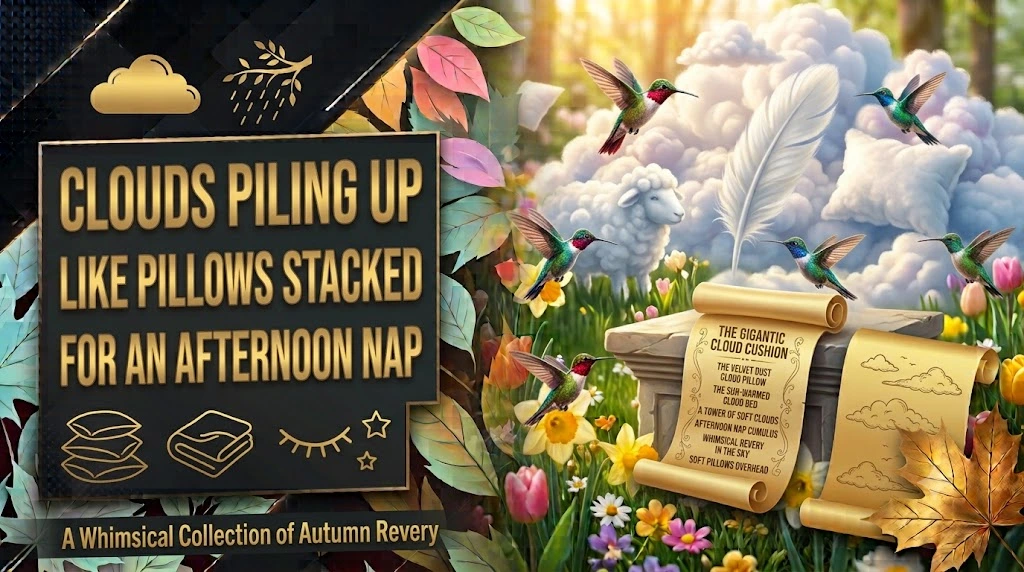
5. Clouds Piling Up Like Pillows Stacked for an Afternoon Nap
Meaning:
This simile likens fluffy, layered clouds to soft pillows. It suggests comfort, softness, and a dreamy, restful feel.
Usage Insight:
This fits well in gentle, cozy descriptions. It works especially in children’s stories or relaxed, sensory-rich scenes about lazy afternoons.
Example Sentences:
- The clouds piled up like pillows stacked for an afternoon nap, soft and inviting against the blue sky.
- Above the meadow, clouds gathered like pillows waiting for someone to lie down and dream.
6. Thin clouds stretch like ribbons tied to the wind.
Meaning:
This simile compares long, wispy clouds to ribbons. They are carried with a sense of lightness, freedom, and graceful movement.
Usage Insight:
Use this comparison for calm, open skies, especially in travel writing or poetry about freedom and openness.
Example Sentences:
- Thin clouds stretched across the horizon like ribbons tied to the wind.
- High above the fields, wisps of cloud floated like ribbons caught in a gentle breeze.
7. A cloud shifts shape like a storyteller still writes a story.
Meaning:
This simile compares a cloud’s changing shape to a story that isn’t finished. It hints at possibility, imagination, and ongoing creativity.
Usage Insight:
This is great for reflective or imaginative writing. It shines when exploring themes like uncertainty, creativity, or personal growth.
Example Sentences:
- The cloud changed shape like a story in progress, shifting with each minute.
- As she watched the sky, she imagined each cloud as a story still unfolding, its ending not yet clear.
8. Dark Clouds Hanging Low Like an Unspoken Warning
Meaning:
This simile likens heavy, low-hanging clouds to a quiet warning. It hints at foreboding, tension, or an unspoken message.
Usage Insight:
This comparison works well in suspenseful or dramatic scenes. It’s really helpful in fiction. The atmosphere often suggests trouble before it shows up.
Example Sentences:
- Dark clouds hung low over the town like an unspoken warning no one wanted to acknowledge.
- The sky pressed down like an unspoken warning, heavy with clouds that refused to break.
9. Cotton-Like Clouds Scattered Like Sheep Grazing in a Blue Field
Meaning:
This simile likens small, rounded clouds in the sky to sheep grazing. It suggests calmness, simplicity, and gentle beauty.
Usage Insight:
This works well for describing the countryside. It’s perfect for children’s books or fun nature writing.
Example Sentences:
- Cotton-like clouds were scattered across the sky like sheep grazing in a blue field.
- From the hilltop, the clouds resembled sheep that grazed in an endless blue sky.
10. Clouds Parting Like Curtains Revealing a Hidden Stage
Meaning:
This simile likens clouds parting to curtains opening for a show. It suggests surprise, wonder, and excitement.
Usage Insight:
Use this comparison during key or hopeful moments in a story. It works well when a scene changes from tension to clarity or relief.
Example Sentences:
- The clouds opened like curtains, showing a hidden stage. Golden light streamed in.
- After the storm, the sky opened up, clouds parting like curtains to reveal a brilliant sunset.
11. A Single Cloud Drifting Like a Thought Wandering Off Course
Meaning:
This simile compares a lone cloud drifting in the sky to a stray thought. It hints at distraction, daydreaming, or quiet reflection.
Usage Insight:
This is perfect for thoughtful or philosophical writing. It’s great for personal essays or literary fiction that dive into a character’s thoughts.
Example Sentences:
- A single cloud drifted like a thought wandering off course, unbothered by direction.
- He watched a lone cloud drift, like a thought lost in its path. For a moment, he forgot his worries.
12. Clouds Glowing at Sunset Like Embers Cooling in the Sky

Meaning:
This simile compares clouds glowing in orange and pink at sunset to fading embers. It suggests warmth, beauty, and a gentle shift into evening.
Usage Insight:
This comparison works well for creating vivid, emotional scenes. It’s great for descriptive poetry or the final moments of a chapter or scene.
Example Sentences:
- The clouds glowed at sunset like embers cooling in the sky, painting the horizon in soft fire.
- As the sun dipped lower, the clouds burned like embers that cooled into the night.
13. Fast-Moving Clouds Racing Like Children Late for Supper
Meaning:
This simile likens fast-moving clouds on a windy day to kids rushing home. It shows energy, urgency, and playful movement.
Usage Insight:
This fits well in vibrant descriptions, especially in adventure stories or scenes with rapid action.
Example Sentences:
- The clouds raced across the sky like children late for supper, tumbling over one another in the wind.
- On that windy afternoon, clouds hurried past like kids late for dinner, eager to get where they were going.
14. A Grey Sky Pressing Down Like a Heavy Wool Blanket
Meaning:
This simile likens a thick, cloudy sky to a heavy blanket. It suggests a suffocating, gloomy, or weary atmosphere.
Usage Insight:
A heavy mood or weather can feel like a thick blanket pressing down. It wraps around you, making everything seem slower and more somber. Dark clouds hang low, blocking the sun. The air feels dense, as if it carries the weight of unspoken words. Raindrops fall softly, echoing the sadness in the heart. In these moments, the world feels like it pauses, inviting us to reflect and think deeply.
Example Sentences:
- The grey sky pressed down like a heavy wool blanket, making the whole town feel sleepy and dull.
- Clouds hung overhead like a heavy wool blanket, muting every color beneath them.
15. Clouds Reflecting on the Lake Like a Mirror Holding the Sky’s Secrets
Meaning:
This simile likens clouds on calm water to a mirror revealing hidden truths. It hints at depth, stillness, and quiet wonder.
Usage Insight:
This is great for peaceful, meditative scenes. It shines in nature writing and in closing passages that promote calm and reflection.
Example Sentences:
- The clouds reflected on the lake like a mirror holding the sky’s secrets, still and undisturbed.
- At dawn, the water held the clouds like a mirror holding the sky’s secrets, quiet before the world woke up.
How to Use Similes in Writing with Effectiveness
Writers can make their writing special with similes, but they should approach their use with caution. Here are some practical tips for using them across different types of writing.
Poems: Focus on emotional resonance and sensory detail rather than clever wordplay alone. A single, strong simile often has more impact than many in one stanza.
For Stories: Use similes to show a character’s mood or the scene’s emotional tone. Don’t use them for physical description.
Essays: Similes work well in essays. They link complex ideas to familiar things, making them easier to understand. Keep them purposeful, since formal writing rewards clarity over decoration.
For songs, similes in lyrics should sound natural and be easy to understand. They use common images that listeners can visualize without difficulty.
Creative Descriptions: Match your similes to the mood of the scene. Bright, playful comparisons work well for light moments. Softer, more delicate similes fit reflective or somber times.
As a general rule, one meaningful simile will always outshine several ordinary ones. Before making a comparison, think about whether it adds clarity or emotion. If it doesn’t, it’s best to leave it out.
FAQs
1. What are beautiful cloud similes?
Beautiful cloud similes compare clouds using “like” or “as.” Clouds can drift like slow ships on a calm sea. Storm clouds might gather like worried thoughts. These comparisons help writers depict the sky’s beauty, which undergoes constant change, in a clear and memorable way.
2. What is the difference between a simile and a metaphor?
A simile compares two things with “like” or “as.” For example, “the clouds moved like slow ships.” In contrast, a metaphor says one thing is another without using comparison words. An example is, “the clouds were slow ships.” Similes and metaphors both add imagery to writing. However, similes often feel more direct and gentle in their comparisons.
3. Why are cloud similes useful in nature writing?
Cloud similes brighten nature writing. They link the changing shapes and colours of the sky to our feelings and experiences. This helps readers create a clearer image and feel more connected to the scene.
4. Can writers use similes in academic writing?
Yes, similes can be useful in academic writing. They help clarify complex ideas. However, use them in moderation and with a clear purpose. In formal writing, similes help understanding more than adding flair.
5. How do I create my own original cloud similes? S
Start by watching the sky at various times. Notice the clouds’ shape, colour, and movement. Then think about what everyday object or feeling it reminds you of. The best similes come from real, personal observations, not from common clichés.
Conclusion
Clouds create a changing display of shapes, colours, and feelings. Similes are a great way to express that beauty in writing. These lovely cloud similes do more than decorate a sentence. They provide clarity, imagery, and emotional depth that plain descriptions often miss. A simile can transform your words. When you write a poem about a clear sky or a story that needs mood, a good simile helps readers connect with your ideas. The best similes, like clouds, never stay the same. They drift and change, showing us something new each time we examine them. Keep watching the sky, and allow your comparisons to form in the same way the clouds above you do.