Some ideas, systems, and emotions are so tangled and layered that plain words can barely hold them together—that’s where similes come in. A simile is a figure of speech that compares two unlike things using “like” or “as,” helping readers grasp something intricate by linking it to an image they already understand. Similes are essential in figurative language because they turn abstract or overwhelming ideas into something the mind can actually picture and feel.
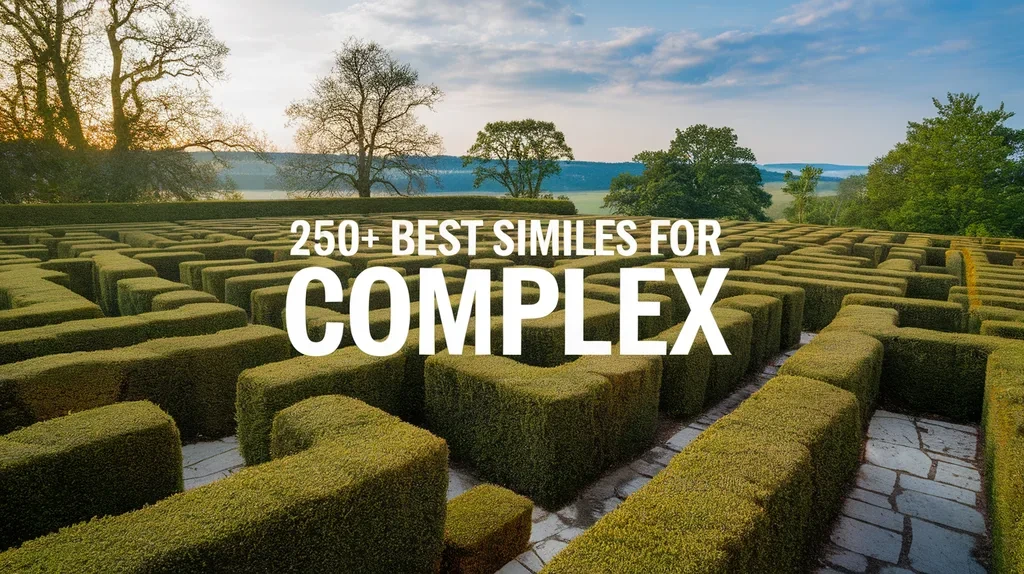
When a writer compares a difficult situation to “a labyrinth with no map,” the reader doesn’t just understand confusion, they feel the disorientation of it. Nature similes are especially useful for describing complexity, since the natural world is full of intricate systems—tangled roots, spiderwebs, river networks—that mirror the complicated structures found in life, thought, and emotion.
In the same way that trees are often used to symbolize strength, growth, resilience, wisdom, and human emotion, tangled and layered natural imagery is used to symbolize complexity, depth, and the challenge of untangling what feels overwhelming. Great similes in literature use this kind of layered imagery to make complicated ideas feel vivid rather than confusing. In this article, you’ll discover 15 of the best similes for complex, complete with meanings, usage insights, and example sentences to elevate your own writing.
What Is a Simile?
A simile is a comparison between two different things, usually joined by “like” or “as,” used to make writing more vivid and expressive. Instead of simply stating a fact, a simile helps the reader visualize or emotionally connect with an idea. For example, saying “the negotiations were complex as a labyrinth with no map” instantly creates a strong sense of confusion and difficulty, far more powerful than simply saying “the negotiations were complicated.”
Complex as a Spider’s Web Woven Overnight
Meaning: This simile compares complexity to the delicate yet intricate structure of a spider’s web, suggesting something built with hidden precision and many connecting threads.
Usage Insight: It works best when describing situations that appear simple on the surface but reveal intricate detail up close, such as relationships or plans.
Example Sentences:
- The company’s finances were complex as a spider’s web woven overnight, each department quietly connected to another.
- Their friendship had grown complex as a spider’s web woven overnight, delicate yet strong enough to hold years of history.
Complex as a Labyrinth with No Map
Meaning: This simile compares complexity to a maze without guidance, suggesting confusion, disorientation, and difficulty finding a clear path forward.
Usage Insight: It’s ideal for describing overwhelming systems, bureaucratic processes, or emotionally confusing situations.
Example Sentences:
- Understanding the new tax laws felt complex as a labyrinth with no map, even for experienced accountants.
- Her thoughts had become complex as a labyrinth with no map, each idea leading to another dead end.
Complex as a Thousand-Piece Puzzle Missing Its Picture
Meaning: This simile compares complexity to a puzzle without a reference image, suggesting difficulty in seeing how individual pieces fit into a larger whole.
Usage Insight: It works well when describing situations where the details are clear but the bigger picture remains unclear.
Example Sentences:
- The investigation was complex as a thousand-piece puzzle missing its picture, with clues that seemed unrelated at first glance.
- Building the new software system felt complex as a thousand-piece puzzle missing its picture, each function connected in ways no one fully understood.
Complex as the Wiring Behind a City’s Walls
Meaning: This simile compares complexity to the hidden, interconnected systems that quietly power a city, suggesting depth that isn’t visible from the outside.
Usage Insight: It’s effective when describing organizations, institutions, or systems that appear straightforward but rely on complicated infrastructure underneath.
Example Sentences:
- The hospital’s scheduling system was complex as the wiring behind a city’s walls, invisible until something went wrong.
- His explanation revealed a plan complex as the wiring behind a city’s walls, far more involved than anyone had expected.
Complex as a Symphony with a Hundred Instruments
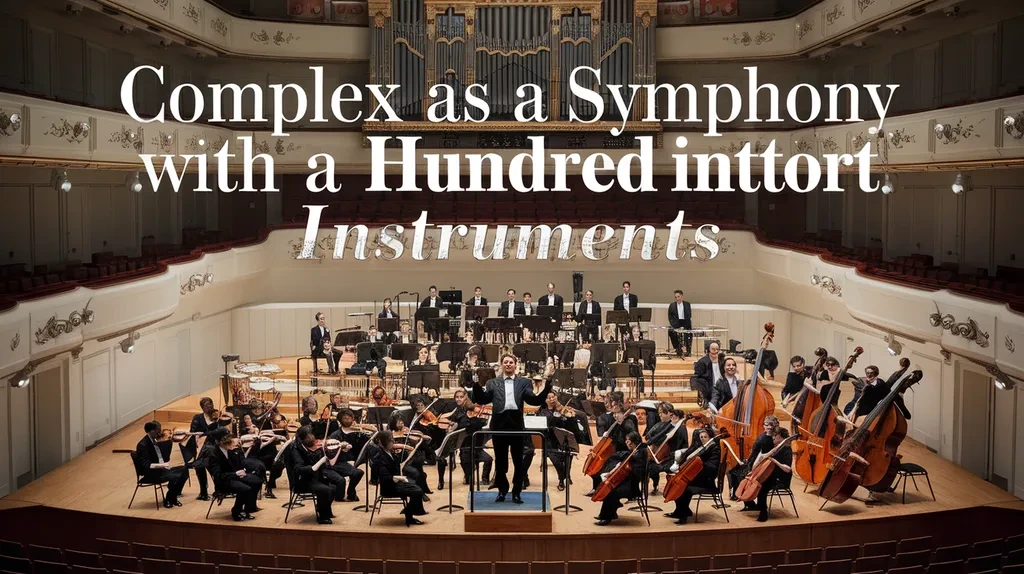
Meaning: This simile compares complexity to the layered coordination of a large orchestra, suggesting many moving parts working together toward one outcome.
Usage Insight: It works well when describing collaborative projects, large organizations, or intricate creative works.
Example Sentences:
- Coordinating the wedding felt complex as a symphony with a hundred instruments, every detail needing perfect timing.
- The city’s transportation network was complex as a symphony with a hundred instruments, each part essential to keeping the whole system moving.
Complex as Knots Tied in the Dark
Meaning: This simile compares complexity to tangles formed without clear sight, suggesting confusion that developed gradually and without full awareness.
Usage Insight: It’s ideal for describing emotional entanglements or misunderstandings that built up slowly over time.
Example Sentences:
- Their relationship had become complex as knots tied in the dark, neither of them sure exactly when things had gone wrong.
- The legal dispute was complex as knots tied in the dark, with years of decisions tangled together.
Complex as a Clockwork Machine with a Thousand Gears
Meaning: This simile compares complexity to a finely built mechanical system, suggesting precision, interdependence, and the risk of failure if even one part is misaligned.
Usage Insight: It works well when describing detailed plans, technical systems, or processes that require exact coordination.
Example Sentences:
- The product launch was complex as a clockwork machine with a thousand gears, every team relying on the next to stay on schedule.
- Her research project had grown complex as a clockwork machine with a thousand gears, each experiment depending on the results of the last.
Complex as a Family Tree Spanning Centuries
Meaning: This simile compares complexity to generations of interconnected relationships, suggesting depth built up over a long period of time.
Usage Insight: It’s effective when describing histories, traditions, or relationships shaped by many years of accumulated context.
Example Sentences:
- The company’s ownership structure was complex as a family tree spanning centuries, with connections dating back decades.
- Their cultural traditions were complex as a family tree spanning centuries, each generation adding its own branch to the story.
Complex as a Chess Match Played Blindfolded
Meaning: This simile compares complexity to a challenge requiring memory, strategy, and careful thought without full visibility, suggesting difficulty and mental strain.
Usage Insight: It works well when describing high-stakes decisions or strategic situations that demand careful planning.
Example Sentences:
- Negotiating the merger was complex as a chess match played blindfolded, with every move affecting outcomes no one could fully predict.
- Planning the campaign felt complex as a chess match played blindfolded, each decision made without knowing the competitor’s next step.
Complex as Roots Tangled Beneath Old Soil
Meaning: This simile compares complexity to the hidden, interconnected roots beneath the ground, suggesting depth, history, and connections that aren’t immediately visible.
Usage Insight: It’s ideal for describing long-standing issues, generational patterns, or deeply rooted emotional situations.
Example Sentences:
- Their family’s history was complex as roots tangled beneath old soil, each story connected to another no one fully understood.
- The community’s problems were complex as roots tangled beneath old soil, far deeper than any single solution could address.
Complex as a Novel with a Hundred Characters
Meaning: This simile compares complexity to a story with many interconnected people, suggesting layered relationships and multiple perspectives.
Usage Insight: It works well when describing large groups, social dynamics, or situations involving many different viewpoints.
Example Sentences:
- Office politics at the firm were complex as a novel with a hundred characters, each person with their own motives.
- The peace negotiations were complex as a novel with a hundred characters, every party bringing a different version of events.
Complex as a River Splitting into a Thousand Streams

Meaning: This simile compares complexity to a single source branching into countless smaller paths, suggesting divergence, unpredictability, and interconnected outcomes.
Usage Insight: It’s effective when describing decisions or events that lead to many different consequences.
Example Sentences:
- The policy’s effects were complex as a river splitting into a thousand streams, touching industries no one had anticipated.
- Her decision to leave felt complex as a river splitting into a thousand streams, each choice leading to another unexpected path.
Complex as a Code Written in a Forgotten Language
Meaning: This simile compares complexity to something difficult to interpret because its structure or logic isn’t immediately understood.
Usage Insight: It works well when describing confusing systems, unfamiliar processes, or ideas that require specialized knowledge to decipher.
Example Sentences:
- The old software system was complex as a code written in a forgotten language, and no one on the team could explain how it worked.
- His reasoning felt complex as a code written in a forgotten language, logical to him but nearly impossible for others to follow.
Complex as a Tapestry Woven from a Thousand Threads
Meaning: This simile compares complexity to a large, detailed fabric made of countless individual strands, suggesting richness, interconnection, and craftsmanship.
Usage Insight: It’s ideal for describing cultures, communities, or long-term projects built from many contributing elements.
Example Sentences:
- The city’s history was complex as a tapestry woven from a thousand threads, each community adding its own color to the whole.
- Their shared past was complex as a tapestry woven from a thousand threads, impossible to separate into simple, single stories.
Complex as a Mind Lost in Its Own Maze
Meaning: This simile compares complexity to the internal confusion of overthinking, suggesting a mental state where thoughts loop and tangle without resolution.
Usage Insight: It works well in introspective or emotional writing, particularly when describing anxiety, indecision, or deep reflection.
Example Sentences:
- His thoughts before the interview were complex as a mind lost in its own maze, each worry leading to another.
- She sat in silence, her feelings complex as a mind lost in its own maze, unsure which path led back to clarity.
How to Use Similes Effectively in Writing
Similes can transform flat description into vivid imagery, but only when used with intention. Here are some practical tips for using similes for complex—and similes in general—across different types of writing:
- poems: Choose similes that match the poem’s emotional tone. A reflective poem calls for “complex as a mind lost in its own maze,” while a poem about legacy might use “complex as a family tree spanning centuries.”
- In stories: Use similes to reveal a character’s inner confusion without stating it directly. Instead of writing “he felt overwhelmed,” show it through “his thoughts felt complex as knots tied in the dark.”
- essays: Use similes sparingly and purposefully to clarify complicated ideas or systems, especially in analytical or argumentative writing.
- In songs: Choose short, rhythmic similes that flow naturally when sung aloud, since lyrical similes need to sound as good as they read.
- creative descriptions: Match the simile to the subject’s structure—use mechanical or architectural similes for systems, and natural or emotional similes for feelings and relationships.
- General rule: Avoid overusing similes in a single paragraph. One well-placed comparison is often more powerful than several stacked together.
FAQs About Similes for Complex
1. What are the best similes for complex?
Some of the best similes for complex include “complex as a labyrinth with no map,” “complex as a clockwork machine with a thousand gears,” and “complex as roots tangled beneath old soil.” Each one highlights a different aspect of complexity, from confusion to precision to hidden depth.
2. What is the difference between a simile and a metaphor?
A simile compares two things using “like” or “as” (e.g., “complex as a tapestry woven from a thousand threads”), while a metaphor states that one thing is another without using comparison words (e.g., “the plan was a tangled web”). Similes are generally softer and more descriptive, while metaphors are more direct and symbolic.
3. Why are nature similes so effective for describing complexity?
Nature similes work well because natural systems like roots, rivers, and spiderwebs already have intricate, interconnected structures, making them ideal for representing complicated ideas in a way readers can visualize.
4. Can similes be used in academic writing?
Yes, similes can be used in academic writing, particularly in reflective, narrative, or explanatory writing, but they should be used sparingly and appropriately to maintain a professional tone.
5. How do similes improve creative writing?
Similes improve creative writing by turning abstract or complicated ideas into vivid, sensory images, helping readers feel and understand them rather than simply reading facts.
Conclusion
Complexity can be difficult to explain in plain language, but similes give writers a way to make even the most tangled ideas feel clear and vivid. The best similes for complex allow readers to visualize confusion, depth, and intricate structure through familiar images like mazes, roots, gears, and tapestries. By comparing complicated situations to these vivid, relatable images, writers add clarity, imagery, and emotional depth that plain explanation simply can’t achieve. Whether you’re writing poetry, fiction, essays, or song lyrics, choosing the right simile can turn an overwhelming idea into something readers can truly grasp. The next time you need to describe something complicated, reach for one of these comparisons and let your writing untangle what words alone cannot.