

Perfection is a word we use often, but truly capturing that sense of flawless beauty or precision requires more than the word alone. A simile is a figure of speech that compares two unlike things using “like” or “as,” helping writers turn an abstract idea like perfection into something readers can vividly picture and admire. Similes matter in figurative language because they connect an intangible standard—flawlessness—to a specific, memorable image that instantly communicates just how ideal something is.
When a writer compares something to “a snowflake formed without flaw,” the reader doesn’t just understand perfection, they picture its delicate, singular beauty. Nature similes are especially fitting here, since the natural world offers striking examples of precision and balance—snowflakes, pearls, sunrises, and still lakes that all seem crafted with extraordinary care.
In the same way that trees are often used to symbolize strength, growth, resilience, wisdom, and human emotion, other elements of nature are used to express flawlessness, balance, and quiet, effortless beauty. Great similes in literature use this kind of exquisite imagery to make moments of perfection feel vivid and unforgettable rather than simply stated. In this article, you’ll discover 15 brilliant similes for perfect, complete with meanings, usage insights, and example sentences to elevate your own writing.
What Is a Simile?
A simile is a comparison between two different things, usually joined by “like” or “as,” used to make writing more vivid and expressive. Instead of simply stating a fact, a simile helps the reader visualize or emotionally connect with an idea.
For example:
saying “the evening was perfect as a snowflake formed without flaw” instantly creates a sense of delicate, singular beauty, far more powerful than simply saying “the evening was perfect.”
Perfect as a Snowflake Formed Without Flaw
Meaning:
This simile compares perfection to the intricate, delicate design of a snowflake, suggesting rare beauty shaped with extraordinary precision.
Usage Insight:
It works best when describing something uniquely beautiful or one-of-a-kind, particularly in poetic or descriptive writing.
Example Sentences:
- Her wedding dress was perfect as a snowflake formed without flaw, delicate in every careful detail.
- The design of the building was perfect as a snowflake formed without flaw, admired by architects around the world.
Perfect as a Pearl Shaped Inside Its Shell
Meaning:
This simile compares perfection to something formed slowly and carefully over time, suggesting quiet, patient refinement.
Usage Insight:
It’s ideal for describing achievements or qualities developed gradually through effort and care.
Example Sentences:
- Her writing style had become perfect as a pearl shaped inside its shell, refined through years of quiet practice.
- Their friendship felt perfect as a pearl shaped inside its shell, formed patiently over a decade of shared experiences.
Perfect as a Sunrise Arriving Right on Time
Meaning:
This simile compares perfection to something reliable, timely, and naturally beautiful, suggesting harmony between timing and outcome.
Usage Insight:
It works well when describing moments that unfold exactly as hoped, particularly in hopeful or reflective writing.
Example Sentences:
- Her acceptance letter arrived perfect as a sunrise arriving right on time, just when she needed good news most.
- The proposal happened perfect as a sunrise arriving right on time, exactly the moment they both knew was right.
Perfect as a Symphony’s Final Resolving Chord
Meaning:
This simile compares perfection to a satisfying, complete resolution after buildup and anticipation, suggesting emotional and structural completeness.
Usage Insight:
It’s effective when describing the end of a story, project, or experience that feels fully and beautifully resolved.
Example Sentences:
- The ending of the novel felt perfect as a symphony’s final resolving chord, tying every thread together beautifully.
- Their reconciliation was perfect as a symphony’s final resolving chord after years of unresolved tension.
Perfect as a Puzzle Piece Clicking into Place

Meaning:
This simile compares perfection to something that fits exactly where it belongs, suggesting harmony and a natural sense of completeness.
Usage Insight:
It works well when describing relationships, solutions, or moments that feel exactly right without effort.
Example Sentences:
- Their partnership felt perfect as a puzzle piece clicking into place from the very first meeting.
- The final detail of the plan was perfect as a puzzle piece clicking into place, completing everything they had worked toward.
Perfect as a Diamond Cut with Precise Angles
Meaning:
This simile compares perfection to meticulous craftsmanship and exact precision, suggesting flawless technical skill.
Usage Insight:
It’s ideal for describing achievements involving skill, discipline, or attention to detail.
Example Sentences:
- Her performance was perfect as a diamond cut with precise angles, every note delivered with total control.
- His argument in court was perfect as a diamond cut with precise angles, leaving no room for doubt.
Perfect as a Still Lake Mirroring a Clear Sky
Meaning:
This simile compares perfection to calm, undisturbed beauty that reflects harmony and balance, suggesting serenity and clarity.
Usage Insight:
It works well when describing peaceful, balanced moments or relationships that feel effortless and calm.
Example Sentences:
- Their morning routine felt perfect as a still lake mirroring a clear sky, calm and unhurried.
- The retreat’s final afternoon was perfect as a still lake mirroring a clear sky, quiet and completely at ease.
Perfect as a Recipe Passed Down and Never Changed
Meaning:
This simile compares perfection to something time-tested and consistently excellent, suggesting reliability and enduring quality.
Usage Insight:
It’s effective when describing traditions, relationships, or processes that have remained reliably wonderful over time.
Example Sentences:
- Their family’s holiday traditions felt perfect as a recipe passed down and never changed, comforting year after year.
- The company’s core values remained perfect as a recipe passed down and never changed, even through leadership transitions.
Perfect as a Rose Untouched by Frost
Meaning:
This simile compares perfection to something delicate and beautiful that has remained fully intact, suggesting rarity and preserved beauty.
Usage Insight:
It’s ideal for describing something admired for having remained unspoiled or undamaged despite challenging conditions.
Example Sentences:
- Her optimism remained perfect as a rose untouched by frost, even after years of professional setbacks.
- The antique painting was perfect as a rose untouched by frost, remarkably preserved despite its age.
Perfect as a Handwritten Letter with Not a Single Crossed-Out Word
Meaning:
This simile compares perfection to effortless clarity and precision, suggesting that something came together exactly right on the first attempt.
Usage Insight:
It works well when describing writing, speeches, or creative work that feels naturally polished and complete.
Example Sentences:
- Her toast at the wedding was perfect as a handwritten letter with not a single crossed-out word, heartfelt and effortless.
- His resignation letter was perfect as a handwritten letter with not a single crossed-out word, clear and respectful from start to finish.
Perfect as a Violin Tuned to Exact Pitch
Meaning:
This simile compares perfection to precise calibration and harmony, suggesting technical excellence and careful attention.
Usage Insight:
It’s effective when describing performances, systems, or processes that function with exact precision.
Example Sentences:
- The orchestra’s opening note was perfect as a violin tuned to exact pitch, setting the tone for the entire performance.
- Her presentation was perfect as a violin tuned to exact pitch, timed and delivered without a single misstep.
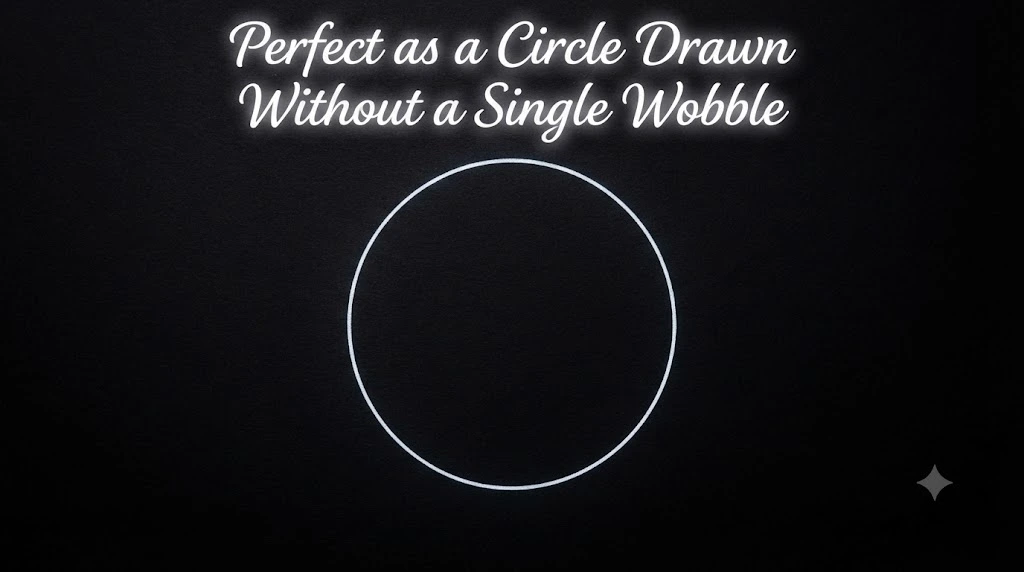
Perfect as a Circle Drawn Without a Single Wobble
Meaning:
This simile compares perfection to flawless precision achieved through skill and steady control, suggesting mastery and confidence.
Usage Insight:
It works well when describing skillful execution, particularly in creative, athletic, or technical achievements.
Example Sentences:
- Her brushstroke was perfect as a circle drawn without a single wobble, smooth and confident.
- His free throw form was perfect as a circle drawn without a single wobble, practiced to complete consistency.
Perfect as a Summer Evening with No Rain in Sight
Meaning:
This simile compares perfection to ideal conditions coming together without interruption, suggesting ease and untroubled enjoyment.
Usage Insight:
It’s ideal for describing carefree, joyful moments that unfold exactly as hoped.
Example Sentences:
- Their wedding day was perfect as a summer evening with no rain in sight, warm and full of laughter.
- The family reunion felt perfect as a summer evening with no rain in sight, easy and completely unhurried.
Perfect as a Photograph Framed at Just the Right Angle
Meaning:
This simile compares perfection to a moment captured with ideal composition and timing, suggesting balance and visual harmony.
Usage Insight:
It works well when describing scenes or moments that feel visually or emotionally complete.
Example Sentences:
- The proposal moment was perfect as a photograph framed at just the right angle, captured exactly as they’d imagined.
- Her garden looked perfect as a photograph framed at just the right angle, every flower placed with quiet intention.
Perfect as a Melody That Needs No Additional Note
Meaning:
This simile compares perfection to completeness, suggesting that nothing more could be added without disrupting the whole.
Usage Insight:
It’s effective when describing something that feels finished and fully satisfying exactly as it is.
Example Sentences:
- Her speech was perfect as a melody that needs no additional note, complete and beautifully simple.
- Their quiet evening together felt perfect as a melody that needs no additional note, needing nothing more to feel whole.
How to Use Similes Effectively in Writing
Similes can transform flat description into vivid imagery, but only when used with intention. Here are some practical tips for using similes for perfect—and similes in general—across different types of writing:
- poems: Choose similes that match the poem’s emotional tone. A poem about quiet harmony calls for “perfect as a still lake mirroring a clear sky,” while a poem about achievement might use “perfect as a diamond cut with precise angles.”
- In stories: Use similes to show a character’s admiration without stating it directly. Instead of writing “it was perfect,” show it through “it felt perfect as a puzzle piece clicking into place.”
- essays: Use similes sparingly and purposefully to add descriptive richness, especially in reflective or narrative writing about meaningful moments.
- In songs: Choose short, rhythmic similes that flow naturally when sung aloud, since lyrical similes need to sound as good as they read.
- creative descriptions: Match the simile to the type of perfection—use nature-based similes for effortless, natural beauty, and craftsmanship-based similes for skill and precision.
- General rule: Avoid overusing similes in a single paragraph. One well-placed comparison is often more powerful than several stacked together.
FAQs
1. What are some brilliant similes for perfect?
Some brilliant similes for perfect include “perfect as a snowflake formed without flaw,” “perfect as a puzzle piece clicking into place,” and “perfect as a melody that needs no additional note.” Each one captures a different type of perfection, from rare beauty to natural harmony to complete satisfaction.
2. What is the difference between a simile and a metaphor?
A simile compares two things using “like” or “as” (e.g., “perfect as a violin tuned to exact pitch”), while a metaphor states that one thing is another without using comparison words (e.g., “her performance was a perfectly tuned violin”). Similes are generally softer and more descriptive, while metaphors are more direct and symbolic.
3. Why are nature similes so effective for describing perfection?
Nature similes work well because natural elements like snowflakes, pearls, and still lakes already represent balance, precision, and rare beauty, making them ideal for capturing the idea of flawlessness in a way readers can visualize.
4. Can similes be used in academic writing?
Yes, similes can be used in academic writing, particularly in reflective, narrative, or descriptive essays, but they should be used sparingly and appropriately to maintain a professional tone.
5. How do similes improve creative writing?
Similes improve creative writing by turning an abstract idea like perfection into vivid, relatable images, helping readers feel the beauty or satisfaction of a moment rather than simply reading about it.
Conclusion
True perfection is rare, which is exactly why it deserves language as vivid and memorable as the moments it describes. Brilliant similes for perfect help capture that flawless quality, comparing it to snowflakes, pearls, still lakes, and melodies that need nothing more. By grounding perfection in these vivid, meaningful images, writers add clarity, imagery, and emotional depth that plain description simply can’t achieve. Whether you’re writing poetry, fiction, essays, or song lyrics, choosing the right simile can turn a simple mention of perfection into something readers feel deeply and remember. The next time you want to describe something flawless in your writing, reach for one of these comparisons and let your words shine just as brilliantly as the moment itself.