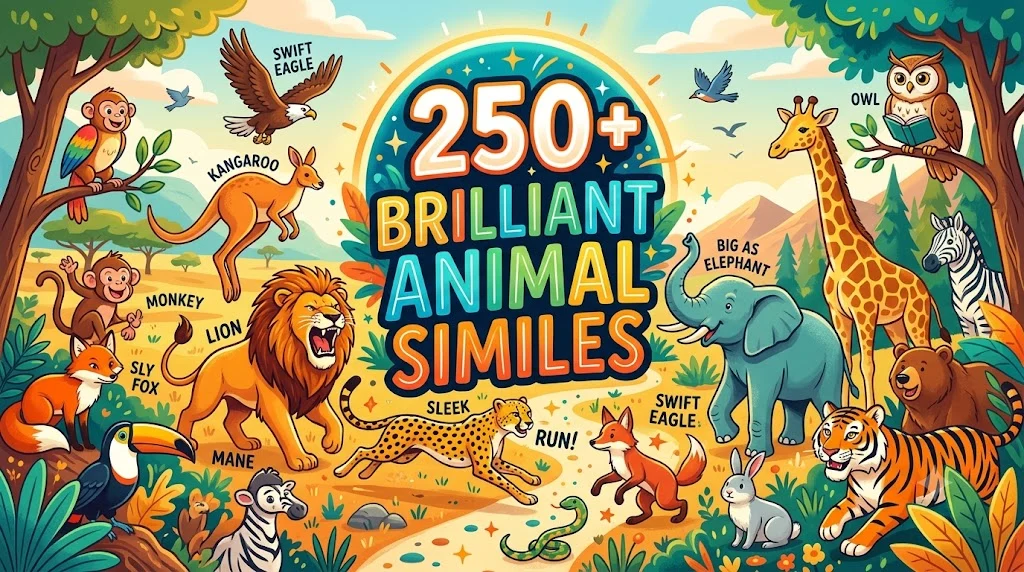
Animals appear frequently in great writing for a reason. Their instincts, movements, and personalities reveal aspects of human nature that words often miss. To capture that raw, instinctive quality on the page, writers often turn to similes, one of the most effective tools in figurative language. A simile is a comparison between two unlike things, usually joined by “like” or “as,” that helps readers see and feel an image more vividly.
Similes are important. They link abstract ideas, like determination or fear, to creatures that readers can easily picture and understand. Animals hold powerful symbols. They represent instinct, freedom, courage, and raw emotion. Their meanings feel immediate and honest. Trees show quiet strength and steady growth. In contrast, animals display active power through movement, alertness, and survival.
Every animal has its own unique personality. From the stubborn mule to the watchful hawk, they give writers a nearly endless source of comparison. This article offers fifteen unique animal similes. Each one will make your writing more vivid, emotional, and lifelike.
What Is a Simile?
A simile is a figure of speech that compares two different things using the words “like” or “as” to highlight a quality they share. Similes in literature help writers make their imagery clearer and more memorable. They connect ideas to familiar things that are easy to picture.
For example:
The phrase “her mind moved like a hawk circling for the smallest opening” shows sharpness, patience, and focused intent. The true purpose of figurative language is to convey deeper meaning and emotion with fewer, carefully chosen words.
1. Thinking Sharp Like a Hawk Circling for the Smallest Opening
Meaning:
This simile likens a focused, calculating mind to a hawk hunting for prey. It hints at patience, precision, and keen awareness.
Usage Insight:
This works well in strategic or tense scenes. It’s especially true for fiction that features negotiations, competitions, or careful choices.
Example Sentences:
- Her mind worked sharp like a hawk circling for the smallest opening in the argument.
- He studied the contract like a hawk circling for the smallest opening, patient and unhurried.
2. Stubborn as a Mule Refusing to Take Another Step
Meaning:
This simile compares strong, unyielding resistance to a mule’s famous stubbornness. It shows willfulness, a refusal to change, and a quiet defiance.
Usage Insight:
This comparison is useful for conflict-driven dialogue or character descriptions, especially for showing someone who won’t compromise.
Example Sentences:
- He was stubborn as a mule refusing to take another step, no matter how much they tried to persuade him.
- She dug in stubborn as a mule refusing to take another step, certain she was right.
3. Slithering Through Excuses Like a Snake Sliding Between Rocks
Meaning:
This simile likens sly, deceptive actions to a snake gliding through narrow gaps. It hints at cunning, slipperiness, and evasion of responsibility.
Usage Insight:
Use this comparison when portraying manipulative or dishonest characters, particularly in tense confrontations or moments of exposed deceit.
Example Sentences:
- He slithered through excuses like a snake sliding between rocks, never quite landing on the truth.
- Her explanations moved like a snake sliding between rocks, smooth enough to almost seem believable.
4. Standing Guard Like a Sheepdog Watching Over a Restless Flock
Meaning:
This simile likens caring and protective behaviour to a sheepdog guarding its flock. It suggests vigilance, responsibility, and quiet devotion.
Usage Insight:
This is great for family or leadership writing, especially when showing a character who watches over others with care and attention.
Example Sentences:
- She stood guard like a sheepdog watching over a restless flock, alert to every small worry.
- He led the team like a sheepdog watching over a restless flock, steady and endlessly attentive.
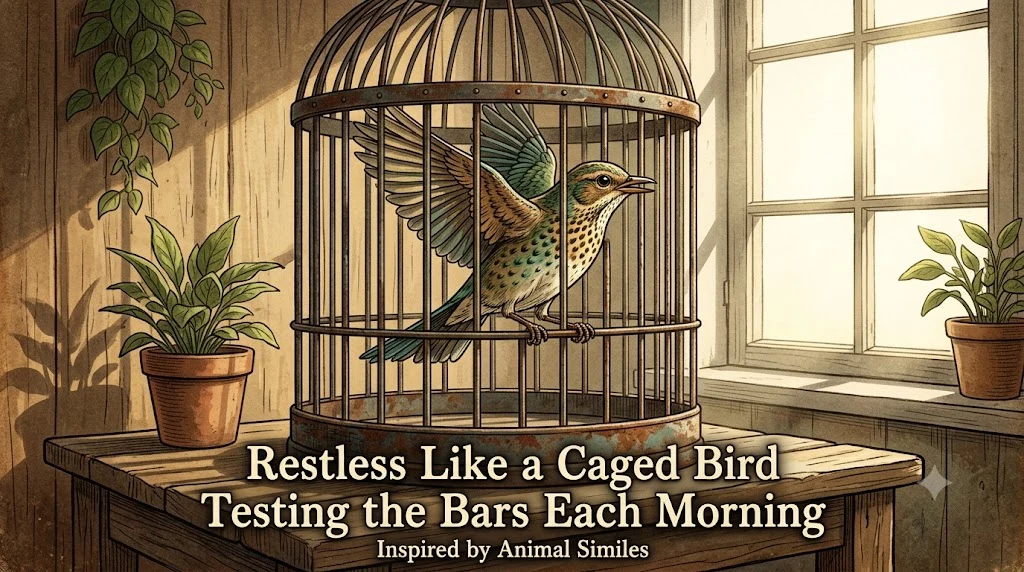
5. Restless Like a Caged Bird Testing the Bars Each Morning
Meaning:
This simile likens the desire for freedom or change to a bird trapped against its will. It shows feelings of frustration, yearning, and quiet desperation.
Usage Insight:
This fits nicely in emotional scenes. It’s perfect for depicting a character stuck in their situation, routine, or expectations.
Example Sentences:
- He felt restless like a caged bird testing the bars each morning, longing for something beyond the walls of his job.
- Her spirit grew restless like a caged bird testing the bars each morning, aching for a life of her own choosing.
6. Charging Forward Like a Bull That Sees Only Red
Meaning:
This simile likens reckless determination to a bull’s fierce focus. It suggests intensity, impulsiveness, and a narrow view.
Usage Insight:
This comparison works well in tense or emotional scenes, especially when a character acts without thinking about the results.
Example Sentences:
- He charged forward like a bull that sees only red, ignoring every warning along the way.
- Her anger drove her like a bull that sees only red, blind to anything but the argument ahead.
7. Patient as a Spider Waiting at the Edge of Its Web
Meaning:
This simile likens quiet patience to a spider’s stillness before it catches prey. It hints at strategy, discipline, and controlled anticipation.
Usage Insight:
Use this comparison in suspenseful or strategic writing. It’s great for moments when a character waits for the perfect time to act.
Example Sentences:
- She was patient as a spider waiting at the edge of its web, certain the opportunity would come.
- He watched the market like a spider waiting at the edge of its web, calm despite the pressure to act.
8. Curious Like a Kitten Chasing a Shadow Across the Floor
Meaning:
This simile compares playful curiosity to a kitten chasing movement. It shows wonder, lightness, and unguarded enthusiasm.
Usage Insight:
This fits nicely in cheerful or playful scenes. It works best in stories that highlight innocence, discovery, or the early stages of learning.
Example Sentences:
- She was curious like a kitten chasing a shadow across the floor, delighted by even the smallest discovery.
- His enthusiasm for the new project felt like a kitten chasing a shadow across the floor, eager and untamed.
9. Steady as a Tortoise Making Its Way Across an Open Field
Meaning:
This simile likens steady progress to a tortoise’s slow pace. It highlights patience, reliability, and quiet perseverance over time.
Usage Insight:
This comparison fits well in stories about long-term goals. It contrasts steady effort with impulsive or rushed methods.
Example Sentences:
- He remained steady as a tortoise making its way across an open field, never rushing despite the pressure around him.
- Her progress felt slow but sure, steady as a tortoise making its way across an open field toward the finish line.
10. Alert Like a Deer Frozen at the Snap of a Twig
Meaning:
This simile likens sudden awareness to a deer’s quick response to danger. It hints at tension, vulnerability, and immediate alertness.
Usage Insight:
This works well in suspenseful or emotionally charged scenes, particularly when a character senses danger or an unexpected shift in a situation.
Example Sentences:
- She went alert like a deer frozen at the snap of a twig the moment she heard footsteps behind her.
- His body tensed, alert like a deer frozen at the snap of a twig, waiting to see if the threat was real.
11. Busy as a Bee Moving from One Task to the Next Without Pause
Meaning:
This simile compares constant, productive activity to a bee’s tireless work ethic, suggesting industriousness, energy, and focused effort.
Usage Insight:
Use this comparison in work-focused or high-energy scenes, particularly when depicting a character managing multiple responsibilities.
Example Sentences:
- She stayed busy as a bee moving from one task to the next without pause all afternoon.
- His schedule kept him busy as a bee moving from one task to the next, barely stopping to rest.
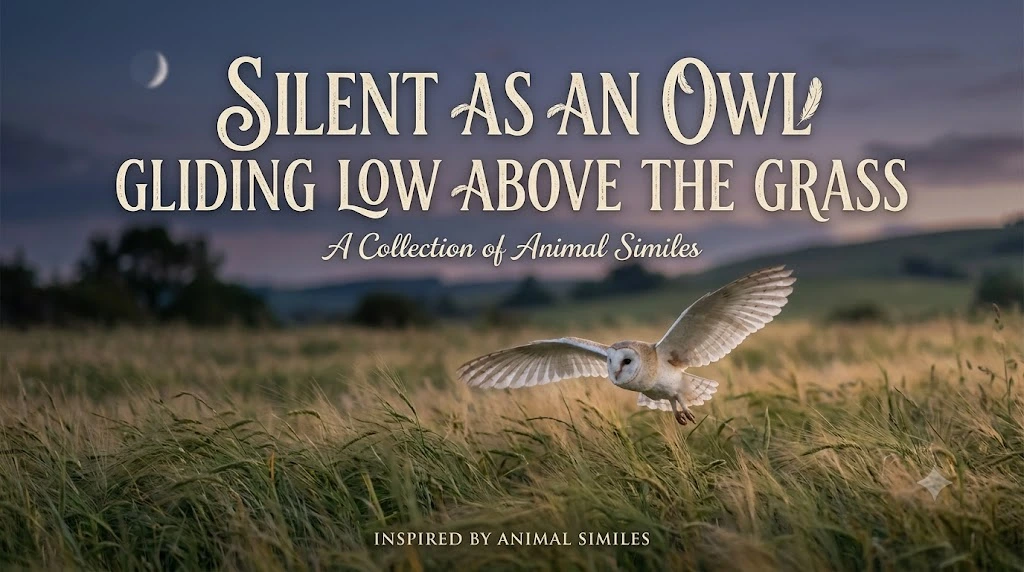
12. Silent as an Owl Gliding Low Above the Grass
Meaning:
This simile compares quiet, unnoticed movement to an owl’s near-silent flight, suggesting stealth, calmness, and careful control.
Usage Insight:
This comparison is effective in tense or quietly dramatic scenes, particularly when a character moves carefully to avoid detection or disruption.
Example Sentences:
- He entered the room silent as an owl gliding low above the grass, careful not to wake anyone.
- She crossed the hallway silent as an owl gliding low above the grass, holding her breath the entire way.
13. Proud as a Peacock Strutting Through an Admiring Crowd
Meaning:
This simile compares confident, sometimes showy pride to a peacock displaying itself, suggesting self-assurance, visibility, and a desire for admiration.
Usage Insight:
This works well in lighter or satirical writing, particularly when portraying confidence that borders on vanity.
Example Sentences:
- He walked into the party proud as a peacock strutting through an admiring crowd.
- Her confidence that evening was proud as a peacock strutting through an admiring crowd, impossible to overlook.
14. Determined Like a Salmon Swimming Upstream Against the Current
Meaning:
This simile compares persistent effort against difficulty to a salmon’s instinctual struggle upstream, suggesting resilience, willpower, and effort against resistance.
Usage Insight:
This works beautifully in motivational or challenge-driven narratives, particularly when a character pushes forward despite significant obstacles.
Example Sentences:
- She remained determined like a salmon swimming upstream against the current, refusing to give up on her goal.
- His career felt like a salmon swimming upstream against the current, difficult but never impossible.
15. Content as a Cow Grazing Slowly Beneath the Afternoon Sun
Meaning:
This simile compares calm, easy satisfaction to a cow’s unhurried grazing, suggesting peace, simplicity, and quiet contentment with the present moment.
Usage Insight:
This works nicely in closing passages or reflective conclusions, particularly in scenes emphasizing rest, simplicity, or a slower pace of life.
Example Sentences:
- She sat content as a cow grazing slowly beneath the afternoon sun, in no hurry to be anywhere else.
- Life on the farm felt content as a cow grazing slowly beneath the afternoon sun, simple and unbothered by time.
How to Use Similes Effectively in Writing
Similes can bring characters and scenes vividly to life, but only when used with intention and restraint. Here are some practical tips for using them across different types of writing.
Poems: Focus on emotional resonance and sensory detail rather than clever wordplay alone. A single, well-placed animal simile often carries more weight than several crowded into one stanza.
For Stories: Use similes to reveal a character’s personality or emotional state, particularly by connecting animal instincts like patience, stubbornness, or vigilance to human behavior.
Essays: Similes work best in essays when they clarify a complex or abstract idea by linking it to something familiar. Keep them purposeful, since formal writing rewards clarity over decoration.
For Songs: Similes in lyrics should feel natural to sing and instantly understandable, often built around universal animal imagery listeners can picture right away.
Creative Descriptions: Match your similes to the tone of the scene. Bold, dramatic comparisons suit intense or urgent moments, while gentler animal imagery suits calm or reflective ones.
As a general rule, one meaningful simile will always outshine several ordinary ones. Before including a comparison, ask whether it adds clarity or emotional depth; if it doesn’t, it’s better left out.
FAQs
1. What are brilliant animal similes?
Brilliant animal similes are comparisons that use “like” or “as” to describe human behavior, emotion, or instinct through animal imagery, such as thinking sharp like a hawk circling for the smallest opening or standing guard like a sheepdog watching over a restless flock. These comparisons help writers capture personality and emotion in a vivid, memorable way.
2. What is the difference between a simile and a metaphor?
A simile compares two things using “like” or “as,” such as “she was patient as a spider,” while a metaphor states that one thing is another without comparison words, such as “she was a spider waiting at the edge of its web.” Both add imagery to writing, but similes tend to feel slightly more explicit in their comparison.
3. Why are animal similes useful in creative writing?
Animal similes make creative writing more vivid by linking human traits, such as patience, stubbornness, or vigilance, to familiar animal behaviors readers instantly recognize. This helps readers form a clearer mental picture and feel a stronger connection to the character or scene being described.
4. Can similes be used in academic writing?
Yes, similes can be used in academic writing when they help clarify a complicated idea, though they should be used sparingly and with clear purpose. In formal writing, similes work best when they support understanding rather than serve only as decoration.
5. How do I create my own original animal similes?
Start by observing a specific animal’s behavior, movement, or personality, then consider what human emotion or trait it closely resembles. The strongest similes usually come from honest, personal observation rather than familiar or overused comparisons.
Conclusion
Animals have always offered writers a rich, instinctive language for describing human emotion, behavior, and character, and similes are one of the most effective ways to bring that language to life. These brilliant animal similes do more than simply decorate a sentence; they add clarity, imagery, and emotional depth that plain description often cannot achieve alone. Whether you’re writing a poem about quiet patience, a story that needs a touch of tension, or a simple reflection on stubbornness and pride, the right simile can turn a passing observation into something readers genuinely feel. Like the animals that inspire them, the best similes carry instinct, energy, and truth, connecting readers to something both wild and deeply familiar. Keep observing the world around you, and let your comparisons move as naturally and powerfully as the creatures that inspire them.