Few things in nature grab our attention like a flower in bloom. It’s delicate, striking, fleeting, and unforgettable. To describe that beauty in words, writers often reach for similes, one of the most effective tools in figurative language. A simile is a comparison between two unlike things, usually joined by “like” or “as,” that helps readers see and feel an image more vividly.
Similes are important. They link something beautiful, like a flower, to an emotion or idea that readers easily understand. Flowers are strong symbols of beauty, fragility, love, and fleeting joy. They bloom brightly but fade away, just like many meaningful moments in life. Trees show strength, resilience, and quiet wisdom. Flowers, on the other hand, reflect a softer power. This power is based on grace, emotion, and the courage to bloom even in uncertain times.
Because flowers rarely last forever, they also remind us to notice and appreciate beauty while it’s here, rather than taking it for granted. In this article, you’ll discover fifteen unique, nature-inspired similes for flowers. They’ll make your writing more vivid, emotional, and lifelike.
What Is a Simile?
A simile is a figure of speech that compares two different things using the words “like” or “as” to highlight a quality they share. Similes in literature help writers make images clearer and more memorable. They link ideas to familiar things that are easy to picture.
For example:
saying “she smiled like a flower opening to the morning sun” instantly conveys warmth, joy, and a sense of gentle, natural beauty. The real purpose of figurative language is to convey deeper meaning and emotion using fewer, carefully selected words.
1. A Flower Opening Like a Smile Breaking Across a Quiet Face
Meaning:
This simile compares a flower blooming to a smile spreading naturally, suggesting warmth, joy, and an emotion too genuine to hide.
Usage Insight:
This works wonderfully in tender, emotional scenes. It shines in poetry or fiction that shows a character’s joy or a quiet moment of realisation.
Example Sentences:
- The flower opened like a smile breaking across a quiet face, slow and unmistakably genuine.
- Her joy bloomed like a smile breaking across a quiet face the moment she saw him again.
2. Petals Falling Like Confetti at the End of a Celebration
Meaning:
This simile likens fallen flower petals on the ground to confetti after a party. It hints at festivity, beauty, and the soft remnants of joy.
Usage Insight:
This comparison fits well in nostalgic or celebratory scenes. It’s great for stories about weddings, festivals, or memorable life events.
Example Sentences:
- Petals fell like confetti at the end of a celebration, scattering softly across the garden path.
- The wind carried the blossoms down like confetti at the end of a celebration no one wanted to see finish.
3. A Rose Blooming Like Passion Finally Given Permission to Show
Meaning:
This simile compares a rose opening to hidden passion coming out. It suggests intensity, boldness, and a long-awaited emotional release.
Usage Insight:
Use this comparison in romantic or emotional writing. It works well when revealing a character’s feelings at last.
Example Sentences:
- The rose bloomed like passion finally given permission to show, deep red and unmistakably bold.
- Her feelings unfolded like a rose blooming, passion finally given permission to show after months of silence.
4. Wildflowers Scattered Like Laughter Across an Open Field
Meaning:
This simile likens wildflowers scattered in a field to the joyful sound of laughter. It hints at spontaneity, happiness, and natural beauty.
Usage Insight:
This fits nicely in light, carefree scenes. It’s great for describing childhood, freedom, or unexpected happy moments.
Example Sentences:
- Wildflowers were scattered across the field like laughter, bright and impossible to predict.
- The meadow looked like laughter caught mid-air, wildflowers tumbling freely in every direction.
5. A Wilting Flower Bowing Like Someone Too Tired to Stand Tall
Meaning:
This simile likens a drooping flower to someone who feels exhausted or overwhelmed. It suggests weariness, vulnerability, and quiet surrender.
Usage Insight:
This comparison works well in emotional writing. It’s especially useful for showing a character’s exhaustion, sadness, or decline.
Example Sentences:
- The wilting flower bowed like someone too tired to stand tall any longer.
- By evening, the tulip drooped like someone too tired to stand tall, its petals soft and heavy.
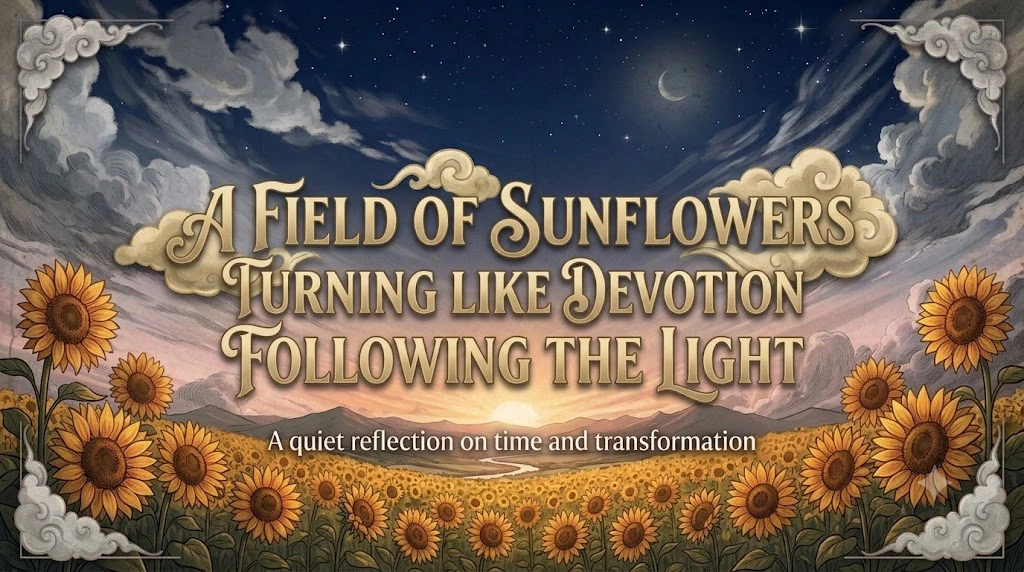
6. A Field of Sunflowers Turning Like Devotion Following the Light
Meaning:
This simile compares sunflowers following the sun to strong devotion. It suggests loyalty, admiration, and a natural attraction to something important.
Usage Insight:
This fits well in romantic or reflective writing. It shines when showing loyalty, admiration, or a deep emotional bond between characters.
Example Sentences:
- The field of sunflowers turned like devotion following the light, never once looking away.
- Her attention moved like sunflowers turning toward the light, drawn instinctively toward him.
7. A Lily Standing Like Elegance That Requires No Explanation
Meaning:
This simile likens the grace of a lily to effortless elegance. It hints at quiet confidence, refinement, and subtle beauty.
Usage Insight:
Use this comparison to describe characters or settings that show grace naturally. This works well in literary fiction or character studies.
Example Sentences:
- The lily stood like elegance that requires no explanation, simple yet impossible to overlook.
- She carried herself like a lily standing tall, elegance that required no explanation at all.
8. Cherry Blossoms Drifting Like Memories Too Delicate to Hold
Meaning:
This simile likens falling cherry blossoms to delicate memories. It hints at nostalgia, impermanence, and the bittersweet feeling of recalling the past.
Usage Insight:
This fits well in reflective, nostalgic writing. It’s great for memoirs or seasonal essays that explore memory, time, and loss.
Example Sentences:
- Cherry blossoms drifted through the air like memories too delicate to hold for long.
- The petals scattered like memories too delicate to hold, beautiful yet impossible to keep completely still.
9. A Bouquet Arranged Like Emotions Too Complex for Words
Meaning:
This simile likens a well-arranged bouquet of mixed flowers to complex feelings. It hints at depth, nuance, and emotional richness that can’t be simplified.
Usage Insight:
This comparison is effective in emotionally layered writing, particularly when a character’s feelings are too complex to express directly.
Example Sentences:
- The bouquet was arranged like emotions too complex for words, each flower telling a different part of the story.
- Her feelings felt like a bouquet arranged carefully, emotions too complex for words to fully capture.
10. A Daisy Standing Simple Like Honesty in a World Full of Noise
Meaning:
This simile compares a daisy’s simple beauty to honesty. It suggests qualities like sincerity, simplicity, and quiet authenticity.
Usage Insight:
This works well in character-driven writing, particularly when portraying a character whose genuine nature stands out against more complicated or dramatic personalities.
Example Sentences:
- The daisy stood simple like honesty in a world full of noise, unremarkable yet quietly reassuring.
- Her words felt like a daisy standing simple, honesty in a world full of noise and pretense.
11. A Garden in Bloom Like Joy Spilling Over Every Boundary
Meaning:
This simile compares an overflowing garden of blossoms to uncontainable happiness, suggesting abundance, vibrancy, and overflowing positive emotion.
Usage Insight:
This works beautifully in celebratory or uplifting scenes, particularly in descriptive passages emphasizing happiness, abundance, or a fulfilling season of life.
Example Sentences:
- The garden bloomed like joy spilling over every boundary, colors overflowing in every direction.
- Their happiness felt like a garden in bloom, joy spilling over every boundary they had once set.
12. A Single Flower Growing Like Hope Refusing to Be Ignored
Meaning:
This simile compares one flower blooming in an unlikely or difficult place to persistent hope, suggesting resilience, optimism, and quiet determination.
Usage Insight:
Use this comparison in motivational or resilience-themed writing, particularly in stories about overcoming hardship or finding strength in difficult circumstances.
Example Sentences:
- A single flower grew through the cracked pavement like hope refusing to be ignored.
- Even after everything, her optimism bloomed like hope refusing to be ignored in the hardest of seasons.
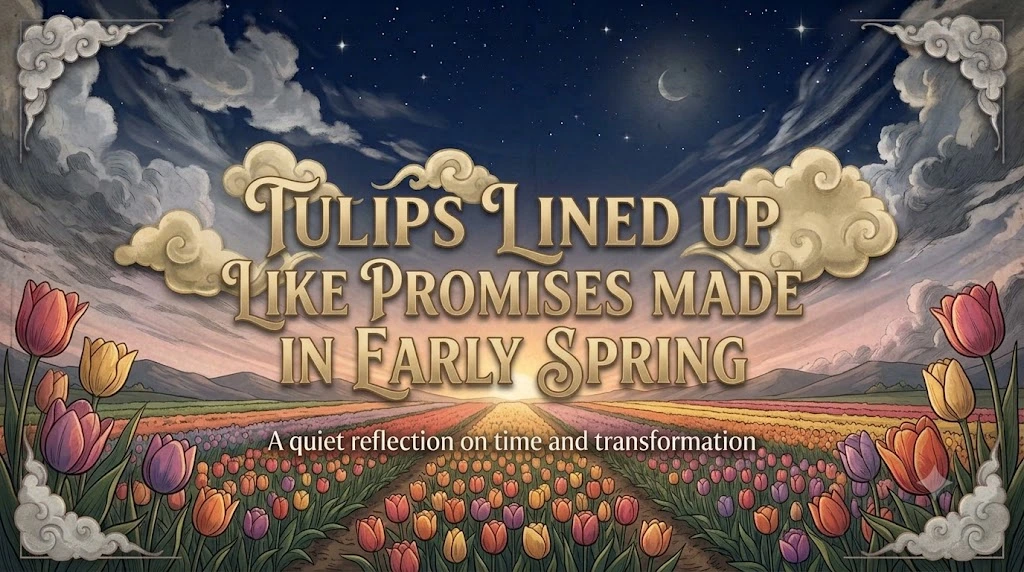
13. Tulips Lined Up Like Promises Made in Early Spring
Meaning:
This simile compares neatly arranged tulips to commitments made at the start of something new, suggesting order, intention, and hopeful beginnings.
Usage Insight:
This works well in seasonal or reflective writing, particularly when describing new beginnings, resolutions, or the start of a meaningful chapter in life.
Example Sentences:
- The tulips lined up like promises made in early spring, bright and full of intention.
- Along the path, rows of tulips stood like promises made in early spring, waiting to be kept.
14. Orchids Growing Delicately Like Trust Given Slowly and Carefully
Meaning:
This simile compares the slow, careful growth of orchids to trust being built gradually, suggesting patience, vulnerability, and emotional care.
Usage Insight:
This comparison is effective in relationship-focused writing, particularly when depicting emotional intimacy or trust developing slowly between characters.
Example Sentences:
- The orchid grew delicately like trust given slowly and carefully, requiring patience and attention.
- Their bond formed like an orchid growing, trust given slowly and carefully over many quiet months.
15. A Flower Field at Sunset Glowing Like Gratitude Made Visible
Meaning:
This simile compares a field of flowers illuminated by sunset light to a visible expression of gratitude, suggesting warmth, appreciation, and quiet emotional fullness.
Usage Insight:
This works beautifully in closing passages or reflective conclusions, particularly in nature writing or personal essays emphasizing appreciation and contentment.
Example Sentences:
- The flower field glowed at sunset like gratitude made visible, warm and softly golden.
- Standing among the blossoms, she felt as though the light itself was gratitude made visible.
How to Use Similes Effectively in Writing
Similes can turn ordinary descriptions into something memorable, but only when used with intention and restraint. Here are some practical tips for using them across different types of writing.
Poems: Focus on emotional resonance and sensory detail rather than clever wordplay alone. A single, well-placed simile often carries more weight than several crowded into one stanza.
For Stories: Use similes to reflect a character’s emotional state or relationships, particularly by connecting flower imagery to feelings like love, grief, or hope.
Essays: Similes work best in essays when they clarify a complex or abstract idea by linking it to something familiar. Keep them purposeful, since formal writing rewards clarity over decoration.
For Songs: Similes in lyrics should feel natural to sing and instantly understandable, often built around universal images listeners can picture right away.
Creative Descriptions: Match your similes to the mood of the scene. Bright, joyful comparisons suit uplifting moments, while softer, more delicate similes suit tender or reflective ones.
As a general rule, one meaningful simile will always outshine several ordinary ones. Before including a comparison, ask whether it adds clarity or emotional depth; if it doesn’t, it’s better left out.
FAQs
1. What are powerful similes for beautiful flowers?
Powerful similes for beautiful flowers are comparisons that use “like” or “as” to describe blooming, color, and fragrance, such as a flower opening like a smile breaking across a quiet face or petals falling like confetti at the end of a celebration. These comparisons help writers capture the beauty and emotion of flowers in a vivid, memorable way.
2. What is the difference between a simile and a metaphor?
A simile compares two things using “like” or “as,” such as “her joy bloomed like a flower,” while a metaphor states that one thing is another without comparison words, such as “her joy was a flower in bloom.” Both add imagery to writing, but similes tend to feel slightly more explicit and gentle in their comparison.
3. Why are flower similes useful in nature writing?
Flower similes make nature writing more vivid by linking color, fragrance, and delicate beauty to familiar human experiences and emotions. This helps readers form a clearer mental picture and feel a stronger emotional connection to the scene being described.
4. Can similes be used in academic writing?
Yes, similes can be used in academic writing when they help clarify a complicated idea, though they should be used sparingly and with clear purpose. In formal writing, similes work best when they support understanding rather than serve only as decoration.
5. How do I create my own original flower similes?
Start by closely observing a specific flower’s color, shape, or fragrance, then consider what everyday feeling or experience it reminds you of. The strongest similes usually come from honest, personal observation rather than familiar or overused comparisons.
Conclusion
Flowers have always given us a fleeting, delicate kind of beauty, and similes offer one of the most effective ways to capture that beauty on the page. These powerful similes for beautiful flowers do more than simply decorate a sentence; they add clarity, imagery, and emotional depth that plain description often cannot achieve alone. Whether you’re writing a poem about new love, a story that needs a touch of tenderness, or a simple reflection on beauty and impermanence, the right simile can turn a passing observation into something readers genuinely feel. Like flowers themselves, the best similes bloom brightly, leaving a lasting impression long after the moment has passed. Keep noticing the small, beautiful details around you, and let your comparisons blossom as naturally and vividly as a garden in full bloom.