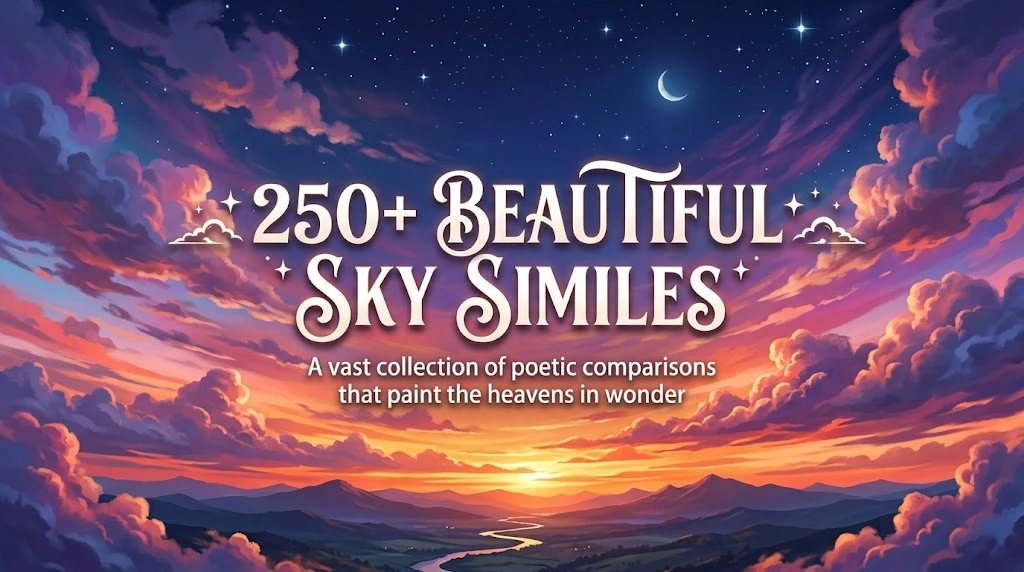
Stepping outside and looking up can be magical. The sky might glow bright orange at sunset or be filled with countless stars at midnight. Writers often use similes to express feelings in words. They are one of the most effective tools in figurative language. A simile compares two different things using “like” or “as.” This helps readers understand and feel an idea more clearly.
Similes are important because they connect grand concepts, such as the sky, to familiar objects that we can easily picture. The sky has long symbolised vastness, freedom, wonder, and the limitless human imagination. Trees stand strong and wise, while the sky stretches endlessly above. It reminds us of possibilities, perspectives, and the feelings we have when we look beyond daily life.
Whether painted in soft pastels at dawn or lit by lightning during a storm, the sky reflects a full range of human feeling, from peace to awe to longing. In this article, you’ll discover fifteen original similes inspired by the sky. Each one is designed to make your writing feel more vivid, emotional, and real.
What Is a Simile?
A simile is a figure of speech that compares two different things using the words “like” or “as” to highlight a quality they share. Similes in literature help writers create clear and memorable images. They link an idea to something familiar and easy to visualise.
For example:
saying “the sky stretched out like an ocean turned upside down” instantly gives the reader a sense of vastness, depth, and quiet wonder. The true purpose of figurative language is to convey deeper meaning and emotion using fewer, carefully chosen words.
1. The Sky Stretching Like an Ocean Turned Upside Down
Meaning:
This simile compares the vast, open sky to an ocean flipped above the earth, suggesting depth, vastness, and a sense of endless space.
Usage Insight:
This is great for big landscape descriptions. It’s perfect for travel writing or poetry about open spaces and calm beauty.
Example Sentences:
- The sky stretched out like an ocean turned upside down, deep and endless above the quiet fields.
- From the mountain peak, the horizon looked like an ocean turned upside down, vast in every direction.
2. Sunset Colors Spilling Like Paint Across a Blank Canvas
Meaning:
This simile compares the bright sunset colours to paint on a canvas. It suggests creativity, spontaneity, and vibrant beauty.
Usage Insight:
This comparison is ideal for vivid, sensory-rich descriptions, particularly in poetry or the closing scenes of a chapter where visual beauty needs emphasis.
Example Sentences:
- Sunset colors spilled across the sky like paint across a blank canvas, bold and unplanned.
- Orange and pink spread over the horizon like paint spilled across a blank canvas, blending into something new.
3. Stars Scattered Like Sugar Spilled on Black Velvet
Meaning:
This simile likens stars in the night sky to scattered sugar on dark fabric. It suggests brightness, delicacy, and a quiet beauty amid darkness.
Usage Insight:
Use this comparison in nighttime or dreamlike scenes. It works well in fantasy fiction or poetry that highlights the magic and stillness of a clear night sky.
Example Sentences:
- The stars were scattered like sugar spilled on black velvet, endless and glittering above the quiet fields.
- She looked up at a sky like sugar spilled on black velvet, unable to look away from its quiet brilliance.
4. Storm Clouds Rolling In Like an Army Marching to War
Meaning:
This simile likens storm clouds to an advancing army. It suggests power, intensity, and a strong, unstoppable force.
Usage Insight:
This works well in dramatic scenes. It’s great for building tension, especially in fiction that hints at conflict or an important emotional shift.
Example Sentences:
- Storm clouds rolled in like an army marching to war, dark and unrelenting across the horizon.
- The sky darkened quickly, clouds advancing like an army marching to war over the quiet valley.
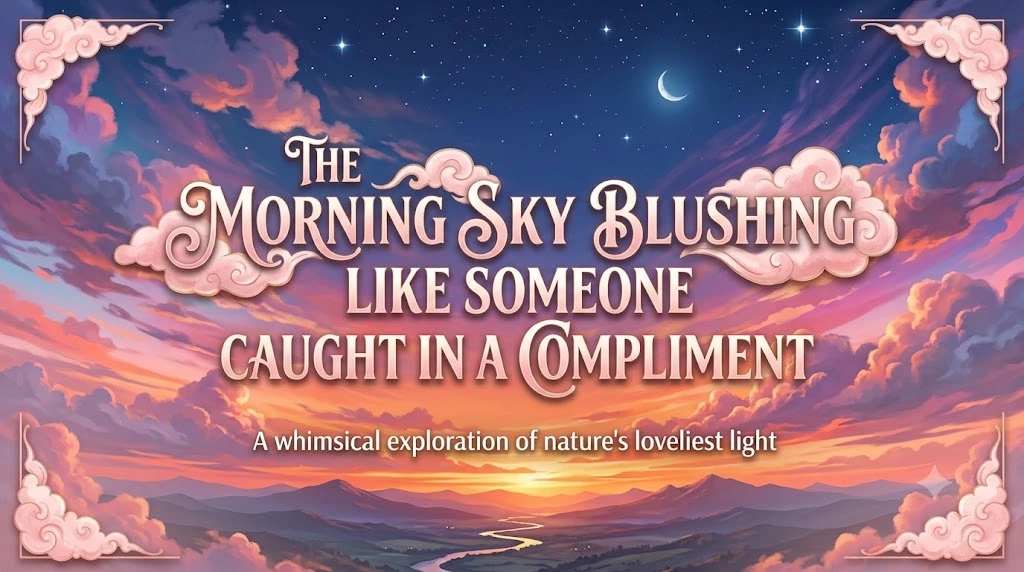
5. The Morning Sky Blushing Like Someone Caught in a Compliment
Meaning:
This simile compares the soft pink and orange hues of sunrise to a person blushing, suggesting warmth, gentleness, and a shy kind of beauty.
Usage Insight:
This comparison fits well in gentle, thoughtful scenes. It’s especially effective in poetry or descriptive parts that start a story with a soft, hopeful tone.
Example Sentences:
- The morning sky blushed like someone caught in a compliment, soft pink spreading slowly across the horizon.
- At dawn, the sky turned the color of a blush, like someone caught in a compliment they hadn’t expected.
6. A Clear Blue Sky Opening Up Like an Invitation to Dream
Meaning:
This simile likens a clear, open sky to a warm invitation. It suggests freedom, possibility, and endless imagination.
Usage Insight:
This fits nicely in hopeful and uplifting writing. It’s great for stories about new beginnings, adventure, or personal growth.
Example Sentences:
- The clear blue sky opened up like an invitation to dream, wide and full of possibility.
- Standing in the open field, she looked up at a sky like an invitation to dream, endless and unclaimed.
7. Lightning Splitting the Sky Like a Crack in Old Glass
Meaning:
This simile likens lightning to a crack in glass. It shows suddenness, sharpness, and dramatic intensity.
Usage Insight:
This comparison works well in high-energy or suspenseful scenes. It’s especially effective in fiction about storms or sudden emotional or physical shocks.
Example Sentences:
- Lightning split the sky like a crack in old glass, sudden and impossible to ignore.
- For a brief second, the sky broke apart like a crack in old glass, illuminating the entire field.
8. Twilight Settling Like a Curtain Drawn Slowly Over the Day
Meaning:
This simile likens the sky’s slow dimming at dusk to a curtain closing. It suggests a calm and gentle shift from day to night.
Usage Insight:
This works beautifully in calm, reflective passages, particularly at the end of a scene or chapter that needs a gentle, closing tone.
Example Sentences:
- Twilight settled over the town like a curtain drawn slowly over the day.
- The sky dimmed gradually, like a curtain drawn slowly over the day’s final light.
9. Clouds Drifting Like Cotton Pulled Gently Apart
Meaning:
This simile likens soft, wispy clouds to stretched cotton. It evokes lightness, softness, and a delicate, dreamlike feel.
Usage Insight:
Use this comparison in calm, vivid descriptions. It works well in children’s stories or gentle nature poetry where a soft tone is important.
Example Sentences:
- The clouds drifted like cotton pulled gently apart, thin and slow against the pale afternoon sky.
- Above the meadow, wisps of cloud stretched like cotton pulled gently apart in the warm summer air.
10. The Night Sky Glowing Like a Lantern Lit for Wandering Travelers
Meaning:
This simile compares the moon and stars to a lantern that lights the dark. It suggests warmth, guidance, and comfort when things are uncertain.
Usage Insight:
This works well in journey-based or folklore-inspired writing, particularly in fantasy fiction or stories emphasizing hope during difficult or uncertain moments.
Example Sentences:
- The night sky glowed like a lantern lit for wandering travelers, guiding them safely home.
- Even in the darkest hours, the stars shone like a lantern lit for wandering travelers who had lost their way.
11. The Horizon Blurring Like Watercolors Left in the Rain
Meaning:
This simile compares the soft colours at the horizon in certain weather to rain-smudged watercolour paint. It suggests softness, fluidity, and gentle imperfection.
Usage Insight:
This comparison works well in scenes that are atmospheric or emotionally reflective. It’s especially strong in poetry or literary fiction that looks at themes of change and impermanence.
Example Sentences:
- The horizon blurred like watercolors left in the rain, colors bleeding softly into one another.
- Through the misty window, the sky looked like watercolors left in the rain, soft and slightly out of focus.
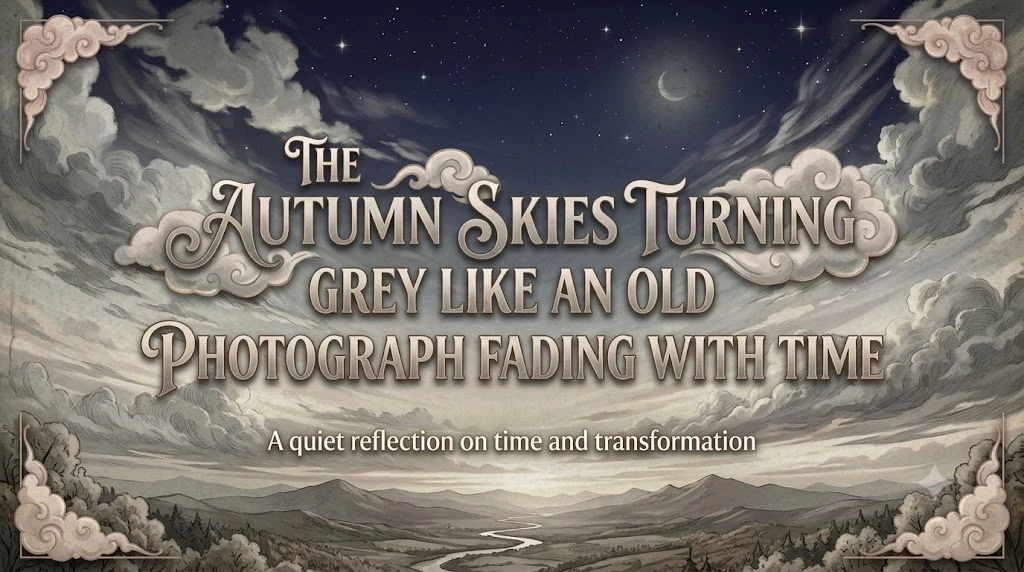
12. Autumn Skies Turning Grey Like an Old Photograph Fading with Time
Meaning:
This simile compares the muted, overcast tones of an autumn sky to a faded photo, suggesting nostalgia, memory, and the gentle passage of time.
Usage Insight:
This is great for reflective or nostalgic writing. It fits well in memoirs or seasonal essays that explore change and remembrance.
Example Sentences:
- The autumn sky turned grey like an old photograph fading with time, soft and quietly wistful.
- Overhead, the clouds dulled the light like an old photograph fading with time, familiar yet distant.
13. The Sky After a Storm Feeling Like Relief Finally Exhaled
Meaning:
This simile compares the clear, calm sky following a storm to a held breath being released, suggesting relief, renewal, and emotional release.
Usage Insight:
Use this comparison at emotional turning points in a story, particularly when tension gives way to peace or resolution after conflict.
Example Sentences:
- The sky after the storm felt like relief finally exhaled, calm and impossibly clear.
- As the clouds cleared, the sky opened up like relief finally exhaled after a long, tense afternoon.
14. A Winter Sky Stretching Like a Sheet of Frosted Glass
Meaning:
This simile likens a pale, cold winter sky to frosted glass. It suggests stillness, coolness, and a quiet, muted beauty.
Usage Insight:
This works nicely in seasonal descriptions, particularly in fiction or poetry set in colder climates where a crisp, quiet atmosphere is needed.
Example Sentences:
- The winter sky stretched overhead like a sheet of frosted glass, pale and perfectly still.
- The sky above the snowy fields shone like frosted glass, cold and softly glowing.
15. The Sky at Dawn Whispering Like a Promise of a Brand-New Day
Meaning:
This simile compares the soft light of early morning sky to a quiet, hopeful promise, suggesting renewal, optimism, and the gentle start of something new.
Usage Insight:
This works beautifully in opening passages or hopeful conclusions, particularly in stories or essays emphasizing fresh starts and quiet optimism.
Example Sentences:
- The sky at dawn whispered like a promise of a brand-new day, soft and full of quiet hope.
- She watched the light spread slowly, like a promise of a brand-new day waiting just beyond the horizon.
How to Use Similes Effectively in Writing
Similes can elevate ordinary writing into something memorable, but only when used with intention and restraint. Here are some practical tips for using them across different types of writing.
Poems: Focus on emotional resonance and sensory detail rather than clever wordplay alone. A single, well-placed simile often carries more weight than several crowded into one stanza.
For Stories: Use similes to reflect mood or foreshadow emotional shifts, particularly by connecting sky imagery to a character’s internal state.
Essays: Similes shine in essays when they explain complex or abstract ideas by connecting them to familiar things. Keep them purposeful, since formal writing rewards clarity over decoration.
For Songs: Similes in lyrics should feel natural to sing and instantly understandable, often built around universal images listeners can picture right away.
Creative Descriptions: Match your similes to the mood of the scene. Bright, hopeful comparisons suit uplifting moments, while softer, more delicate similes suit calm or reflective ones.
As a general rule, one meaningful simile will always outshine several ordinary ones. Before making a comparison, consider if it adds clarity or emotional depth. If it doesn’t, it’s best to leave it out.
FAQs About Sky Similes
What are beautiful sky similes?
Beautiful sky similes are comparisons that use “like” or “as” to describe the colours, motion, and mood of the sky, such as the sky stretching like an ocean turned upside down or sunset colours spilling like paint across a blank canvas. These comparisons help writers show the sky’s vastness and beauty clearly and memorably.
2. What is the difference between a simile and a metaphor?
A simile compares two things using “like” or “as,” such as “the sky glowed like a lantern,” while a metaphor states that one thing is another without comparison words, such as “the sky was a lantern.” Similes and metaphors both add imagery to writing. However, similes often feel more explicit and gentle in their comparisons.
3. Why are sky similes useful in nature writing?
Sky similes make nature writing more vivid by linking the sky’s colours, light, and movement to familiar human experiences and emotions. This helps readers create a clearer image and feel a deeper emotional bond with the scene.
4. Can writers use similes in academic writing?
Yes, writers can use similes in academic writing when they help clarify a complicated idea, though they should use them sparingly and with clear purpose. In formal writing, similes are most effective when they help understanding, not just add flair.
5. How do I create my own original sky similes?
Start by closely observing the sky at different times of day and in different weather, noticing its color, light, and movement, then consider what everyday object or feeling it reminds you of. The strongest similes usually come from honest, personal observation rather than familiar or overused comparisons.
Conclusion
The sky has always given us a shifting, ever-changing canvas of color, light, and mood, and similes offer one of the most effective ways to capture that beauty on the page. These beautiful sky similes do more than simply decorate a sentence; they add clarity, imagery, and emotional depth that plain description often cannot achieve alone. Whether you’re writing a poem about a quiet sunrise, a story that needs a touch of atmosphere, or a simple reflection on an evening spent looking upward, the right simile can turn a passing observation into something readers genuinely feel. The best similes, like the sky, go beyond the usual. They remind us that beauty often exceeds what words can express. Keep looking up, and let your comparisons grow as vast and vivid as the sky.