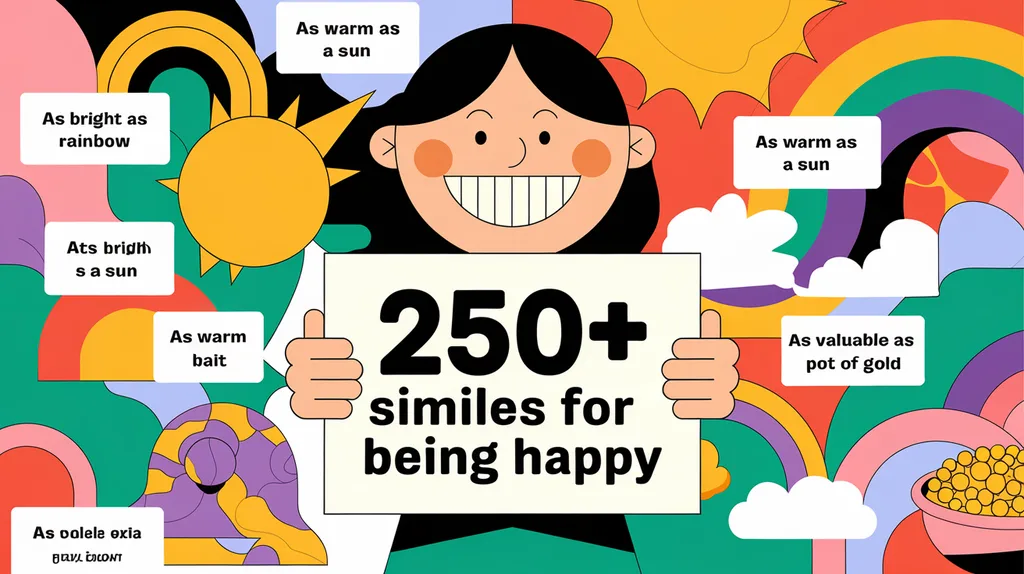
Happiness is one of the most universal human emotions, and writers often look for creative ways to describe it. One of the best tools for expressing joy is the simile. Similes compare two different things using the words “like” or “as,” helping readers understand feelings through vivid imagery. They play an important role in figurative language because they make descriptions more engaging, memorable, and emotionally powerful.
Whether used in poetry, stories, speeches, or everyday conversations, similes help bring emotions to life. Trees, for example, are powerful symbols of strength, growth, resilience, wisdom, and human emotion. Like people, trees weather storms, adapt to change, and continue reaching toward the light. In this guide, you’ll discover some of the most creative similes for being happy, complete with meanings, usage tips, and examples that can enrich your writing.
What Is a Simile?
A simile is a figure of speech that compares two unlike things using the words “like” or “as.” It helps create vivid mental images and makes ideas easier to understand.
Example:
She was as happy as a bird singing at sunrise.
This simile creates a cheerful image that instantly communicates joy and freedom.
As Happy as a Bird Singing at Sunrise
Meaning
Describes pure, natural happiness and contentment.
Usage Insight
Works best when expressing carefree joy and optimism.
Examples
- After receiving the good news, she was as happy as a bird singing at sunrise.
- The children were as happy as a bird singing at sunrise on the first day of vacation.
Like Sunshine Breaking Through the Clouds
Meaning
Represents happiness arriving after sadness or difficulty.
Usage Insight
Ideal for describing relief and renewed hope.
Examples
- His smile was like sunshine breaking through the clouds.
- The positive results felt like sunshine breaking through the clouds.
As Happy as a Butterfly in a Flower Garden
Meaning
Suggests delight, freedom, and enjoyment.
Usage Insight
Perfect for cheerful and lighthearted descriptions.
Examples
- She wandered through the festival as happy as a butterfly in a flower garden.
- The puppy looked as happy as a butterfly in a flower garden.
Like a River Dancing Over Smooth Stones

Meaning
Describes lively, flowing happiness.
Usage Insight
Useful for energetic and joyful scenes.
Examples
- Her laughter was like a river dancing over smooth stones.
- The celebration felt like a river dancing over smooth stones.
As Happy as a Child Opening a Surprise Gift
Meaning
Expresses excitement and wonder.
Usage Insight
Best for moments of joyful anticipation.
Examples
- He was as happy as a child opening a surprise gift.
- The team celebrated as happy as children opening surprise gifts.
Like a Rainbow Stretching Across the Sky
Meaning
Represents colorful, uplifting happiness.
Usage Insight
Works well in inspirational and emotional writing.
Examples
- Her success felt like a rainbow stretching across the sky.
- The reunion was like a rainbow stretching across the sky.
As Happy as a Meadow Filled with Wildflowers
Meaning
Suggests abundant joy and beauty.
Usage Insight
Excellent for nature-inspired writing.
Examples
- The village looked as happy as a meadow filled with wildflowers.
- She felt as happy as a meadow filled with wildflowers on her wedding day.
Like a Kite Soaring in a Gentle Breeze
Meaning
Describes freedom and carefree happiness.
Usage Insight
Perfect for expressing lighthearted emotions.
Examples
- His spirit felt like a kite soaring in a gentle breeze.
- She walked home like a kite soaring in a gentle breeze.
As Happy as the First Bloom of Spring
Meaning
Represents fresh beginnings and joyful renewal.
Usage Insight
Useful when describing hope and positive change.
Examples
- The new opportunity made her as happy as the first bloom of spring.
- He felt as happy as the first bloom of spring after moving into his new home.
Like Stars Sparkling in a Clear Night Sky

Meaning
Suggests bright, radiant happiness.
Usage Insight
Ideal for magical and memorable moments.
Examples
- Their eyes shone like stars sparkling in a clear night sky.
- The celebration felt like stars sparkling in a clear night sky.
As Happy as Waves Kissing the Shore
Meaning
Represents peaceful and natural joy.
Usage Insight
Great for calm and contented emotions.
Examples
- She sat quietly, as happy as waves kissing the shore.
- He felt as happy as waves kissing the shore during the holiday.
Like Music Floating Through the Air
Meaning
Describes happiness that feels effortless and uplifting.
Usage Insight
Works well in artistic and emotional writing.
Examples
- Her happiness spread like music floating through the air.
- The joyful atmosphere was like music floating through the air.
As Happy as a Tree Reaching Toward the Sun
Meaning
Symbolizes growth, fulfillment, and optimism.
Usage Insight
Excellent for personal achievements and life goals.
Examples
- After achieving his dream, he felt as happy as a tree reaching toward the sun.
- She stood proudly, as happy as a tree reaching toward the sun.
Like Fireflies Lighting Up a Summer Evening
Meaning
Represents small but beautiful moments of joy.
Usage Insight
Perfect for describing subtle happiness.
Examples
- Their laughter was like fireflies lighting up a summer evening.
- The simple family gathering felt like fireflies lighting up a summer evening.
As Happy as a Dream Finally Coming True
Meaning
Expresses deep satisfaction and fulfillment.
Usage Insight
Best for major accomplishments and life-changing moments.
Examples
- Graduating from university made her as happy as a dream finally coming true.
- Winning the competition felt as happy as a dream finally coming true.
How to Use Similes Effectively in Writing
Using similes effectively can make your writing more engaging and emotionally powerful. Here are some practical tips:
- Choose comparisons that readers can easily visualize.
- Match the simile to the tone and mood of your writing.
- Use original comparisons whenever possible.
- Avoid overloading a paragraph with too many similes.
- Draw inspiration from nature for vivid imagery.
- In poems, use similes to evoke emotions and create rhythm.
- In stories, use them to enrich characters and settings.
- In essays, use similes sparingly to clarify ideas.
- In songs, similes can make lyrics more memorable.
- Always ensure the comparison strengthens your message.
FAQs
What are similes for being happy?
Similes for being happy are comparisons that use “like” or “as” to describe feelings of joy, excitement, contentment, or delight.
What is an example of a simile for being happy?
A common example is: “She was as happy as a bird singing at sunrise.”
What is the difference between a simile and a metaphor?
A simile uses words like “like” or “as” to compare things, while a metaphor makes a direct comparison without those words.
Why are similes important in creative writing?
Similes create vivid imagery, strengthen emotional impact, and make writing more memorable.
Can similes be used in academic writing?
Yes. Similes can be used carefully to explain concepts and improve clarity when appropriate.
Conclusion
Similes for being happy are powerful tools that help writers express joy, excitement, contentment, and hope through vivid comparisons. Whether happiness is described as a bird singing at sunrise, a rainbow stretching across the sky, or a dream finally coming true, these comparisons make emotions easier to understand and more enjoyable to read. By using creative and meaningful similes, writers can add imagery, personality, and emotional depth to poems, stories, essays, speeches, and everyday communication. The best similes transform simple feelings into unforgettable experiences. Keep exploring new comparisons, and you’ll discover countless ways to make happiness shine through your writing.