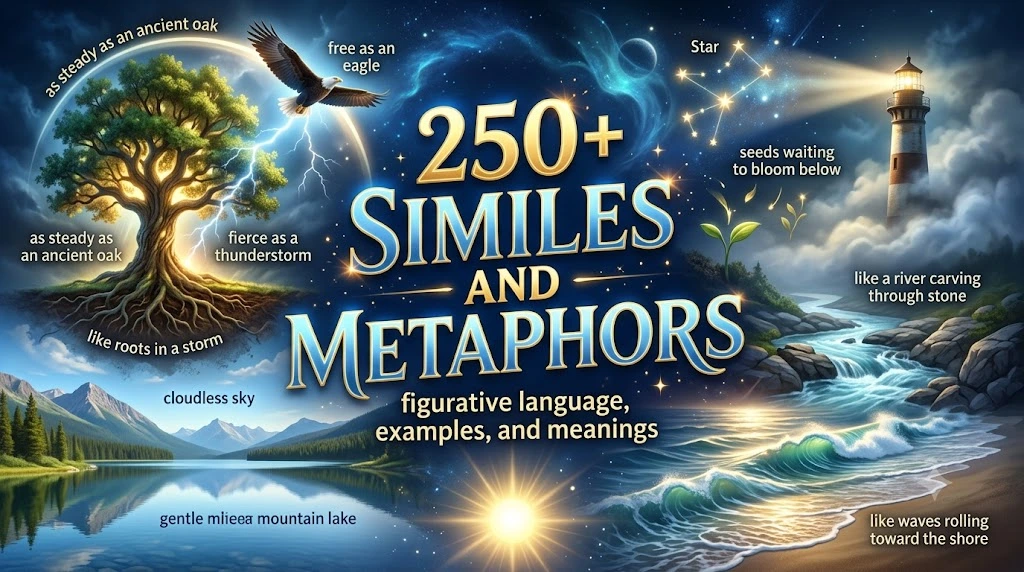

Devotion is one of the quietest yet most powerful forms of love, showing itself not in grand gestures but in steady, consistent presence over time. A simile is a figure of speech that compares two unlike things using “like” or “as,” helping writers turn an abstract quality like loyalty into something readers can see, feel, and remember. Similes matter in figurative language because they take intangible emotions and root them in familiar, vivid images that speak directly to the heart.
When a writer compares someone’s devotion to “a lighthouse keeper tending his flame,” the reader doesn’t just understand loyalty, they feel its quiet, unwavering commitment. Nature similes are especially effective for describing devotion, since the natural world offers countless examples of steady, patient faithfulness—rivers returning to the sea, roots clinging to soil, vines wrapped around a trellis. In the same way that trees are often used to symbolize strength, growth, resilience, wisdom, and human emotion, these same natural images are used to express devotion, since both qualities share a quiet, enduring constancy.
Great similes in literature use this kind of grounded imagery to make emotional bonds feel real and deeply felt rather than simply stated. In this article, you’ll discover 15 of the best similes for devoted, complete with meanings, usage insights, and example sentences to elevate your own writing.
What Is a Simile?
A simile is a comparison between two different things, usually joined by “like” or “as,” used to make writing more vivid and expressive. Instead of simply stating a fact, a simile helps the reader visualize or emotionally connect with an idea. For example, saying “she was devoted as a lighthouse keeper tending his flame” instantly creates a sense of quiet, steady loyalty, far more powerful than simply saying “she was very devoted.”
Devoted as a Lighthouse Keeper Tending His Flame
Meaning:
This simile compares devotion to the quiet, consistent duty of a lighthouse keeper who never lets the light go out, suggesting steady commitment even when no one is watching.
Usage Insight:
It works best when describing quiet, behind-the-scenes loyalty, such as caregiving or long-term dedication to a role or relationship.
Example Sentences:
- She cared for her aging father devoted as a lighthouse keeper tending his flame, never missing a single day.
- His commitment to the small community clinic was devoted as a lighthouse keeper tending his flame, steady through every difficult season.
Devoted as Roots Clinging to the Soil
Meaning:
This simile compares devotion to the way roots hold firmly to the ground, suggesting a bond that is deep, grounded, and difficult to break.
Usage Insight:
It’s ideal for describing long-standing relationships or loyalty rooted in shared history and identity.
Example Sentences:
- Their friendship remained devoted as roots clinging to the soil, unshaken by years of distance.
- He stayed devoted as roots clinging to the soil, refusing to leave the hometown that had shaped him.
Devoted as a Shepherd Watching His Flock Through the Night
Meaning:
This simile compares devotion to the vigilant, protective care of a shepherd who stays alert to keep his flock safe, suggesting responsibility and quiet sacrifice.
Usage Insight:
It works well when describing protective loyalty, especially in caregiving, mentorship, or leadership roles.
Example Sentences:
- The nurse remained devoted as a shepherd watching his flock through the night, checking on every patient without rest.
- Her devotion to her students was devoted as a shepherd watching his flock through the night, patient and unwavering.
Devoted as a Dog Waiting by the Door
Meaning:
This simile compares devotion to the simple, unconditional loyalty of a dog waiting patiently for someone’s return.
Usage Insight:
It’s effective in warm, heartfelt writing, particularly when describing loyalty that is loving, simple, and untainted by complication.
Example Sentences:
- Every evening, he waited devoted as a dog waiting by the door, eager for the sound of her footsteps.
- Her love for him was devoted as a dog waiting by the door, patient through every long absence.
Devoted as a Sailor Loyal to the Sea

Meaning:
This simile compares devotion to the deep, lifelong connection a sailor feels toward the ocean, suggesting loyalty that feels like a calling rather than a choice.
Usage Insight:
It works well when describing passion-driven devotion, such as commitment to a craft, career, or personal purpose.
Example Sentences:
- He remained devoted as a sailor loyal to the sea, returning to his research even after every setback.
- Her dedication to painting was devoted as a sailor loyal to the sea, impossible to separate from who she was.
Devoted as a Vine Wrapped Around Its Trellis
Meaning:
This simile compares devotion to the way a vine grows tightly around a supportive structure, suggesting a bond built through gradual, patient closeness.
Usage Insight:
It’s ideal for describing relationships that grew stronger slowly over time rather than suddenly.
Example Sentences:
- Their marriage grew devoted as a vine wrapped around its trellis, each year adding new strength to the bond.
- He remained devoted as a vine wrapped around its trellis, quietly supporting her through every challenge.
Devoted as a Soldier Standing Guard at Dawn
Meaning:
This simile compares devotion to the discipline and vigilance of a soldier committed to duty, suggesting seriousness and unwavering responsibility.
Usage Insight:
It works well when describing devotion tied to duty, protection, or a strong sense of responsibility.
Example Sentences:
- He remained devoted as a soldier standing guard at dawn, showing up for his family without fail.
- Her commitment to the cause was devoted as a soldier standing guard at dawn, steady even when others gave up.
Devoted as the Moon Following the Earth
Meaning:
This simile compares devotion to the moon’s constant orbit, suggesting loyalty that is natural, effortless, and unwavering.
Usage Insight:
It’s effective in poetic or romantic writing, particularly when describing a bond that feels timeless or fated.
Example Sentences:
- He stayed devoted as the moon following the earth, always present no matter how far she wandered.
- Their connection felt devoted as the moon following the earth, quiet but constant through every phase of life.
Devoted as an Old Oak Sheltering Its Ground
Meaning:
This simile compares devotion to the way an old oak tree provides shade and protection to the land beneath it, suggesting steady, generous care.
Usage Insight:
It works well when describing devotion expressed through protection, generosity, or quiet strength.
Example Sentences:
- Her grandfather remained devoted as an old oak sheltering its ground, always the steady presence the family relied on.
- He was devoted as an old oak sheltering its ground, offering support without ever asking for anything in return.
Devoted as a Mother Bird Returning to Her Nest
Meaning:
This simile compares devotion to the instinctive, tireless care of a mother bird providing for her young, suggesting nurturing loyalty.
Usage Insight:
It’s ideal for describing parental love or caregiving relationships built on consistent, selfless effort.
Example Sentences:
- She remained devoted as a mother bird returning to her nest, checking on her children every night before bed.
- His care for his younger siblings was devoted as a mother bird returning to her nest, patient and endlessly giving.
Devoted as a Monk to His Morning Prayers
Meaning:
This simile compares devotion to the disciplined, sacred routine of a monk’s daily practice, suggesting consistency and quiet reverence.
Usage Insight:
It works well when describing devotion expressed through habit, ritual, or spiritual commitment.
Example Sentences:
- He remained devoted as a monk to his morning prayers, writing in his journal every day without exception.
- Her dedication to her craft was devoted as a monk to his morning prayers, quiet, consistent, and deeply personal.
Devoted as a Compass Pointing Steadily North

Meaning:
This simile compares devotion to a compass needle that always finds true north, suggesting reliability and unwavering direction.
Usage Insight:
it’s effective when describing loyalty that remains constant despite changing circumstances or challenges.
Example Sentences:
- No matter what changed around them, he stayed devoted as a compass pointing steadily north.
- Her loyalty to the family business was devoted as a compass pointing steadily north, even during its hardest years.
Devoted as Ivy Climbing a Familiar Wall
Meaning:
This simile compares devotion to ivy that grows steadily along a wall it has known for years, suggesting closeness built through familiarity and time.
Usage Insight:
It works well when describing devotion shaped by long shared history, such as childhood friendships or lifelong partnerships.
Example Sentences:
- Their bond remained devoted as ivy climbing a familiar wall, growing stronger with every passing year.
- He stayed devoted as ivy climbing a familiar wall, tied to the town and people who raised him.
Devoted as a River Returning to the Same Sea
Meaning:
This simile compares devotion to a river’s natural path back to its source, suggesting a loyalty that feels inevitable and unshakable.
Usage Insight:
It’s ideal for describing devotion that feels destined, particularly in romantic or deeply personal relationships.
Example Sentences:
- No matter where life took him, he remained devoted as a river returning to the same sea, always coming home.
- Her love for him felt devoted as a river returning to the same sea, steady and impossible to redirect.
Devoted as a Candle Burning Until Its Very End
Meaning:
This simile compares devotion to a candle that gives its light fully, without holding anything back, suggesting selfless and complete commitment.
Usage Insight:
It works well when describing devotion marked by sacrifice, particularly caregiving or long-term acts of love.
Example Sentences:
- She remained devoted as a candle burning until its very end, giving everything she had to her family.
- His dedication to the mission was devoted as a candle burning until its very end, never wavering even as the work grew harder.
How to Use Similes Effectively in Writing
Similes can transform flat description into vivid imagery, but only when used with intention. Here are some practical tips for using similes for devoted—and similes in general—across different types of writing:
- poems: Choose similes that match the poem’s emotional tone. A tender poem calls for “devoted as a dog waiting by the door,” while a poem about destiny might use “devoted as a river returning to the same sea.”
- In stories: Use similes to reveal a character’s loyalty without stating it directly. Instead of writing “he was very loyal,” show it through “he remained devoted as a soldier standing guard at dawn.”
- essays: Use similes sparingly and purposefully to add emotional depth, especially in reflective or narrative essays about relationships.
- In songs: Choose short, rhythmic similes that flow naturally when sung aloud, since lyrical similes need to sound as good as they read.
- creative descriptions: Match the simile to the type of devotion—use nature-based similes for quiet, enduring loyalty, and human-centered similes for warm, personal connection.
- General rule: Avoid overusing similes in a single paragraph. One well-placed comparison is often more powerful than several stacked together.
FAQs
Some of the best similes for devoted include “devoted as a lighthouse keeper tending his flame,” “devoted as roots clinging to the soil,” and “devoted as a river returning to the same sea.” Each one highlights a different quality of devotion, from quiet duty to unshakable loyalty.
2. What is the difference between a simile and a metaphor?
A simile compares two things using “like” or “as” (e.g., “devoted as ivy climbing a familiar wall”), while a metaphor states that one thing is another without using comparison words (e.g., “her loyalty was ivy climbing a familiar wall”). Similes are generally softer and more descriptive, while metaphors are more direct and symbolic.
3. Why are nature similes so effective for describing devotion?
Nature similes work well because natural patterns like roots, rivers, and orbiting moons already reflect steady, enduring behavior, making them ideal for representing the quiet consistency of true devotion.
4. Can similes be used in academic writing?
Yes, similes can be used in academic writing, particularly in reflective, narrative, or descriptive essays, but they should be used sparingly and appropriately to maintain a professional tone.
5. How do similes improve creative writing?
Similes improve creative writing by turning abstract emotions like loyalty and devotion into vivid, relatable images, helping readers feel the depth of a relationship rather than simply reading about it.
Conclusion
Devotion rarely announces itself loudly—it shows up quietly, consistently, and over time, which is exactly why it can be so difficult to describe in words. The best similes for devoted give writers a way to capture that quiet strength, comparing loyalty to lighthouses, roots, rivers, and candles that never stop giving their light. By grounding devotion in these vivid, familiar images, writers add clarity, imagery, and emotional depth that plain description simply can’t achieve. Whether you’re writing poetry, fiction, essays, or song lyrics, choosing the right simile can turn a simple statement of loyalty into something readers feel deeply and remember long after. The next time you want to describe someone’s unwavering devotion, reach for one of these comparisons and let your words hold the same quiet strength.