
Sadness is one of the most universal emotions, yet it can be one of the hardest to put into words without sounding flat or overly simple. A simile is a figure of speech that compares two unlike things using “like” or “as,” helping writers turn an internal, often heavy feeling into something readers can see, sense, and emotionally connect with. Similes matter in figurative language because they translate quiet sorrow into vivid, external imagery that mirrors exactly how that feeling settles in.
When a writer compares sadness to “an empty chair at the dinner table,” the reader doesn’t just understand loss, they feel the absence behind it. Nature similes are especially fitting here, since natural imagery—falling leaves, gray skies, fading light—already carries a gentle, melancholic quality that echoes human emotion. In the same way that trees are often used to symbolize strength, growth, resilience, wisdom, and human emotion, quieter natural images are used to express grief, longing, and the slow passage of sorrow.
Great similes in literature use this kind of gentle, sensory imagery to make sadness feel honest and deeply human rather than simply stated. In this article, you’ll discover 15 powerful similes for sadness, complete with meanings, usage insights, and example sentences to elevate your own writing.
What Is a Simile?
A simile is a comparison between two different things, usually joined by “like” or “as,” used to make writing more vivid and expressive. Instead of simply stating a fact, a simile helps the reader visualize or emotionally connect with an idea.
For example:
saying “she felt sad as an empty chair at the dinner table” instantly creates a quiet, aching sense of absence, far more powerful than simply saying “she felt sad.”
Sad as a Rainy Day with No One to Call
Meaning:
This simile compares sadness to the quiet loneliness of a gray, rainy day spent without company, suggesting isolation and gentle melancholy.
Usage Insight:
It works best when describing loneliness or subtle emotional heaviness rather than sharp grief.
Example Sentences:
- After the move, her weekends felt sad as a rainy day with no one to call.
- He sat by the window, sad as a rainy day with no one to call, watching the street below stay empty.
Sad as an Empty Chair at the Dinner Table
Meaning:
This simile compares sadness to a visible, physical reminder of someone’s absence, suggesting grief tied to loss or separation.
Usage Insight:
It’s ideal for describing grief following the loss of a loved one or the absence of someone significant.
Example Sentences:
- The holidays felt sad as an empty chair at the dinner table that first year after he passed.
- Her house felt sad as an empty chair at the dinner table once her children had all moved away.
Sad as a Song Played in a Minor Key
Meaning:
This simile compares sadness to the emotional heaviness of melancholic music, suggesting a subtle, lingering sorrow rather than overt distress.
Usage Insight:
It works well when describing quiet, reflective sadness, particularly in artistic or introspective writing.
Example Sentences:
- Her voice sounded sad as a song played in a minor key when she talked about the friendship that had faded.
- The whole evening felt sad as a song played in a minor key, gentle but impossible to shake.
Sad as a Photograph Faded by Time
Meaning:
This simile compares sadness to the fading of a once-vivid memory, suggesting nostalgia and gentle loss.
Usage Insight:
It’s effective when describing sadness tied to memory, aging, or the passage of time.
Example Sentences:
- His memories of that summer felt sad as a photograph faded by time, blurred but still cherished.
- The old letters made her feel sad as a photograph faded by time, holding onto a version of her life that no longer existed.
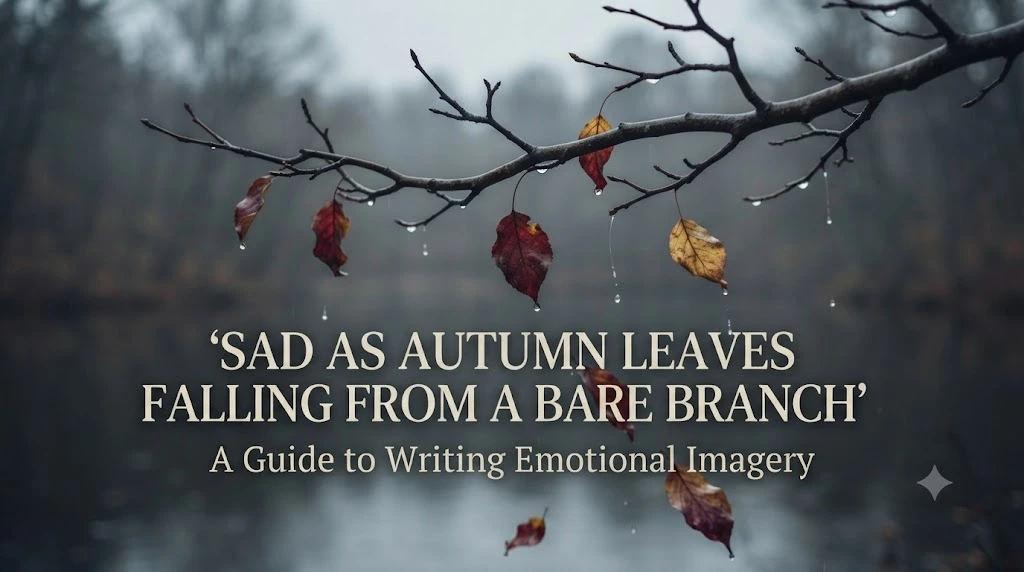
Sad as Autumn Leaves Falling from a Bare Branch
Meaning:
This simile compares sadness to the slow, natural process of loss, suggesting inevitability and quiet acceptance.
Usage Insight:
It works well when describing sadness connected to change, endings, or the natural passage of life stages.
Example Sentences:
- Watching her son leave for college felt sad as autumn leaves falling from a bare branch.
- Their friendship drifted apart sad as autumn leaves falling from a bare branch, gradually and without a single argument.
Sad as a House with the Lights Turned Off
Meaning:
This simile compares sadness to emptiness and stillness, suggesting a lack of warmth, life, or presence.
Usage Insight:
It’s ideal for describing emotional emptiness, particularly after significant loss or major life change.
Example Sentences:
- After the divorce, the apartment felt sad as a house with the lights turned off.
- Her mood had grown sad as a house with the lights turned off since she lost her job.
Sad as a Letter That Arrives Too Late
Meaning:
This simile compares sadness to missed opportunity or delayed connection, suggesting regret and a sense of things left unresolved.
Usage Insight:
It works well when describing sadness tied to timing, missed chances, or things left unsaid.
Example Sentences:
- His apology felt sad as a letter that arrives too late, kind but unable to undo the damage already done.
- She often thought about the things she never said, sad as a letter that arrives too late.
Sad as a Swing Set Left Rusting in the Yard
Meaning:
This simile compares sadness to the abandonment of something once full of joy, suggesting nostalgia and the passage of time.
Usage Insight:
It’s effective when describing sadness tied to childhood memories or things that once brought happiness but have since faded.
Example Sentences:
- The empty playground felt sad as a swing set left rusting in the yard, quiet where laughter used to be.
- Their old family home felt sad as a swing set left rusting in the yard, full of memories no one visited anymore.
Sad as a Violin’s Final, Lingering Note
Meaning:
This simile compares sadness to the emotional resonance of a beautiful but fading sound, suggesting depth and quiet reflection.
Usage Insight:
It works well in poetic or artistic writing, particularly moments of emotional closure or farewell.
Example Sentences:
- Her goodbye felt sad as a violin’s final, lingering note, soft but impossible to forget.
- The end of the ceremony felt sad as a violin’s final, lingering note, quiet and full of unspoken feeling.
Sad as Gray Skies That Never Clear
Meaning:
This simile compares sadness to a persistent, heavy mood that doesn’t lift easily, suggesting emotional weight over an extended period.
Usage Insight:
It’s ideal for describing prolonged sadness or a mood that colors everything else during a difficult season.
Example Sentences:
- Her mood had been sad as gray skies that never clear since the news of the layoffs.
- The whole town felt sad as gray skies that never clear in the months after the factory closed.
Sad as a Candle Burned Down to Nothing
Meaning:
This simile compares sadness to exhaustion and depletion, suggesting emotional fatigue after giving everything one has.
Usage Insight:
It works well when describing sadness tied to burnout, caregiving, or prolonged emotional effort.
Example Sentences:
- After months of caring for her mother, she felt sad as a candle burned down to nothing.
- His enthusiasm for the project had gone sad as a candle burned down to nothing after years of setbacks.
Sad as a Train Pulling Away from the Platform

Meaning:
This simile compares sadness to the moment of parting, suggesting distance, finality, and the ache of watching something leave.
Usage Insight:
It’s effective when describing farewells, especially in stories involving travel, separation, or long-distance relationships.
Example Sentences:
- Watching him leave for basic training felt sad as a train pulling away from the platform.
- Their last conversation felt sad as a train pulling away from the platform, both of them aware it might be the final one.
Sad as a Garden Left Untended Through Winter
Meaning:
This simile compares sadness to neglect and quiet decline, suggesting a loss of vitality or care over time.
Usage Insight:
It works well when describing sadness tied to neglected relationships, dreams, or personal wellbeing.
Example Sentences:
- Her once-vibrant career felt sad as a garden left untended through winter after years of putting others first.
- Their marriage had grown sad as a garden left untended through winter, quietly fading from lack of attention.
Sad as an Old Song No One Requests Anymore
Meaning:
This simile compares sadness to being forgotten or overlooked, suggesting quiet irrelevance and fading significance.
Usage Insight:
It’s ideal for describing sadness tied to aging, being left behind, or watching something once meaningful lose its place.
Example Sentences:
- He felt sad as an old song no one requests anymore, watching younger employees take over projects he once led.
- Her favorite childhood diner felt sad as an old song no one requests anymore, quiet and mostly empty these days.
Sad as a Shoreline Erased by the Tide
Meaning:
This simile compares sadness to gradual, quiet loss, suggesting that something once solid is slowly disappearing.
Usage Insight:
It works well when describing sadness tied to fading memory, identity, or connection over time.
Example Sentences:
- Her memories of her grandmother felt sad as a shoreline erased by the tide, softer with every passing year.
- Their once-close friendship had grown sad as a shoreline erased by the tide, disappearing a little more with each missed call.
How to Use Similes Effectively in Writing
Similes can transform flat description into vivid imagery, but only when used with intention. Here are some practical tips for using similes for sadness—and similes in general—across different types of writing:
- poems: Choose similes that match the poem’s emotional tone. A poem about quiet loneliness calls for “sad as a rainy day with no one to call,” while a poem about loss might use “sad as an empty chair at the dinner table.”
- In stories: Use similes to reveal a character’s inner sorrow without stating it directly. Instead of writing “she felt sad,” show it through “her mood felt sad as gray skies that never clear.”
- essays: Use similes sparingly and purposefully to add emotional depth, especially in reflective or personal narrative writing.
- In songs: Choose short, rhythmic similes that flow naturally when sung aloud, since lyrical similes need to sound as good as they read.
- creative descriptions: Match the simile to the type of sadness—use gradual, natural similes for quiet, lingering sorrow, and sharper similes for grief tied to sudden loss.
- General rule: Avoid overusing similes in a single paragraph. One well-placed comparison is often more powerful than several stacked together.
FAQs
1. What are some powerful similes for sadness?
Some powerful similes for sadness include “sad as an empty chair at the dinner table,” “sad as autumn leaves falling from a bare branch,” and “sad as a candle burned down to nothing.” Each one captures a different quality of sorrow, from loss to gradual fading to emotional exhaustion.
2. What is the difference between a simile and a metaphor?
A simile compares two things using “like” or “as” (e.g., “sad as a house with the lights turned off”), while a metaphor states that one thing is another without using comparison words (e.g., “her heart was a house with the lights turned off”). Similes are generally softer and more descriptive, while metaphors are more direct and symbolic.
3. Why are nature similes so effective for describing sadness?
Nature similes work well because natural imagery like falling leaves, gray skies, and fading tides already reflect gradual, gentle loss, making the comparison feel honest and emotionally resonant.
4. Can similes be used in academic writing?
Yes, similes can be used in academic writing, particularly in reflective, narrative, or personal essays, but they should be used sparingly and appropriately to maintain a professional tone.
5. How do similes improve creative writing?
Similes improve creative writing by turning abstract emotions like sadness into vivid, sensory images, helping readers feel a character’s sorrow rather than simply reading about it.
Conclusion
Sadness rarely announces itself loudly—it often settles quietly, in the small, everyday moments where absence and change are felt most deeply. Powerful similes for sadness help capture that quiet ache, comparing sorrow to empty chairs, fading photographs, and gray skies that linger longer than expected. By grounding sadness in these gentle, familiar images, writers add clarity, imagery, and emotional depth that plain description simply can’t achieve. Whether you’re writing poetry, fiction, essays, or song lyrics, choosing the right simile can turn a simple mention of sadness into something readers feel deeply and remember. The next time you want to describe sorrow in your writing, reach for one of these comparisons and let your words hold that same quiet, honest weight.
If you’re exploring these themes because you’re going through something difficult yourself, please know that support is available, and reaching out to a trusted person or mental health professional can help.