
Being alone can feel peaceful or painful depending on the moment, and describing that feeling well takes more than simply saying someone was “alone.” A simile is a figure of speech that compares two unlike things using “like” or “as,” helping writers turn an internal experience—like solitude—into something readers can see, sense, and emotionally understand. Similes matter in figurative language because they connect an often invisible feeling to a vivid, external image that instantly communicates its weight or stillness.
When a writer compares loneliness to “a single star in an empty sky,” the reader doesn’t just understand isolation, they feel its quiet, distant vastness. Nature similes are especially fitting here, since natural imagery—empty skies, isolated islands, bare branches—already carries that same sense of quiet distance found in solitude. In the same way that trees are often used to symbolize strength, growth, resilience, wisdom, and human emotion, other elements of nature are used to express the quiet, sometimes aching feeling of being alone.
Great similes in literature use this kind of understated, sensory imagery to make solitude feel deeply human rather than simply stated. In this article, you’ll discover 15 of the best similes for alone, complete with meanings, usage insights, and example sentences to elevate your own writing.
What Is a Simile?
A simile is a comparison between two different things, usually joined by “like” or “as,” used to make writing more vivid and expressive. Instead of simply stating a fact, a simile helps the reader visualize or emotionally connect with an idea.
For example:
saying “she felt alone as a single star in an empty sky” instantly creates a quiet, distant image of isolation, far more powerful than simply saying “she felt alone.”
Alone as a Single Star in an Empty Sky
Meaning:
This simile compares solitude to the vast distance surrounding a lone star, suggesting isolation within something enormous and quiet.
Usage Insight:
It works best when describing emotional isolation, particularly moments of quiet reflection or existential loneliness.
Example Sentences:
- After the divorce, she felt alone as a single star in an empty sky, even while surrounded by friends.
- He sat on the rooftop feeling alone as a single star in an empty sky, unsure who to call.
Alone as a Lighthouse on a Forgotten Coastline
Meaning:
This simile compares solitude to a steady, isolated presence that continues its purpose despite being far from company, suggesting quiet resilience within loneliness.
Usage Insight:
It’s ideal for describing someone who feels dutifully isolated, such as caregivers or people in demanding, solitary roles.
Example Sentences:
- Working the night shift left him alone as a lighthouse on a forgotten coastline, awake while the rest of the world slept.
- Her role as the sole caregiver made her feel alone as a lighthouse on a forgotten coastline, steady but rarely acknowledged.
Alone as the Last Leaf Clinging to a Bare Branch
Meaning:
This simile compares solitude to being the final remaining presence after others have gone, suggesting vulnerability and quiet endurance.
Usage Insight:
It works well when describing someone who has outlasted others in a group, family, or era.
Example Sentences:
- After her siblings passed, she felt alone as the last leaf clinging to a bare branch during the holidays.
- He remained alone as the last leaf clinging to a bare branch in the neighborhood, the only one from his childhood who never left.
Alone as an Island Surrounded by Miles of Open Water
Meaning:
This simile compares solitude to physical and emotional distance from others, suggesting isolation that feels difficult to cross.
Usage Insight:
It’s effective when describing feelings of disconnection, particularly in unfamiliar environments or new stages of life.
Example Sentences:
- Moving to a new city left her alone as an island surrounded by miles of open water, unsure how to make new friends.
- He felt alone as an island surrounded by miles of open water after starting the new job, unfamiliar with everyone around him.
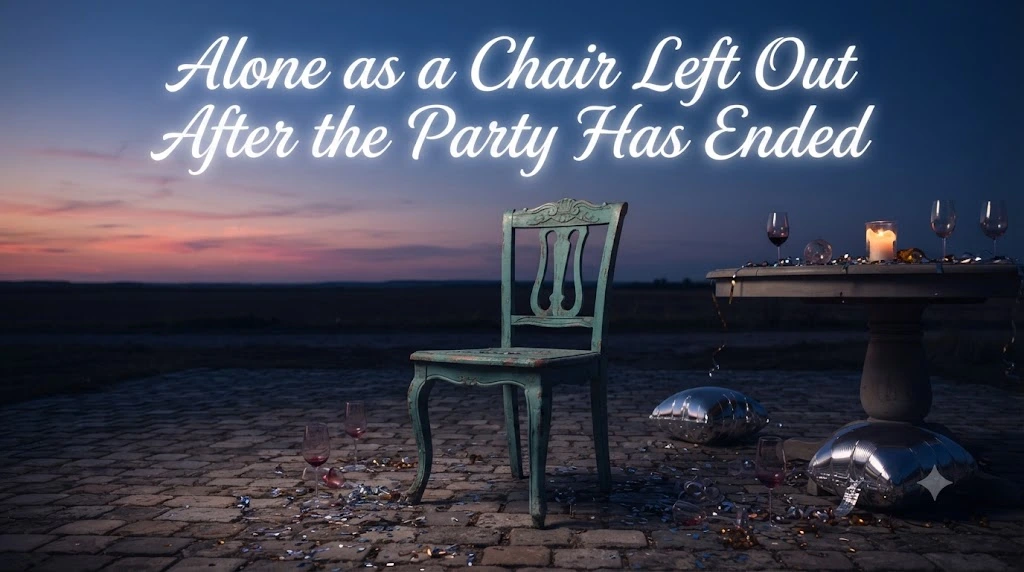
Alone as a Chair Left Out After the Party Has Ended
Meaning:
This simile compares solitude to the quiet stillness that follows connection, suggesting a lingering feeling once company has left.
Usage Insight:
It works well when describing the sudden quiet that follows a gathering, celebration, or period of closeness.
Example Sentences:
- The apartment felt alone as a chair left out after the party has ended once her friends went home.
- He felt alone as a chair left out after the party has ended when his children returned to their own lives after the holidays.
Alone as a Phone That Never Rings
Meaning:
This simile compares solitude to the absence of connection or communication, suggesting quiet disappointment and waiting.
Usage Insight:
It’s ideal for describing loneliness tied to feeling forgotten or disconnected from others.
Example Sentences:
- After retirement, he felt alone as a phone that never rings, missing the daily conversations from work.
- She felt alone as a phone that never rings during the months after the friendship ended.
Alone as a House at the End of a Quiet Road
Meaning:
This simile compares solitude to physical distance and separation from a busier, more connected environment, suggesting quiet remoteness.
Usage Insight:
It works well when describing emotional or physical isolation, particularly in settings far from community or activity.
Example Sentences:
- Her new home felt alone as a house at the end of a quiet road, peaceful but sometimes too silent.
- He felt alone as a house at the end of a quiet road after his neighbors all moved away one by one.
Alone as a Single Candle in a Dark Room
Meaning:
This simile compares solitude to a small, isolated source of light surrounded by emptiness, suggesting quiet vulnerability paired with inner strength.
Usage Insight:
It’s effective when describing someone who feels emotionally isolated but continues to hold onto hope or purpose.
Example Sentences:
- She felt alone as a single candle in a dark room during those first difficult weeks after the loss.
- He remained alone as a single candle in a dark room, still hopeful despite the silence around him.
Alone as a Ship Adrift with No Shore in Sight
Meaning:
This simile compares solitude to a lack of direction or connection, suggesting uncertainty and disorientation.
Usage Insight:
It works well when describing emotional isolation tied to confusion about the future or a lack of support.
Example Sentences:
- After the layoff, he felt alone as a ship adrift with no shore in sight, unsure what to do next.
- She felt alone as a ship adrift with no shore in sight during the uncertain months after the breakup.
Alone as an Empty Park Bench in Winter
Meaning:
This simile compares solitude to a quiet, unused space once filled with life, suggesting stillness and passing time.
Usage Insight:
It’s ideal for describing quiet nostalgia or emotional distance from previously shared spaces or memories.
Example Sentences:
- The old playground felt alone as an empty park bench in winter without the sound of children playing.
- He felt alone as an empty park bench in winter, remembering the friends who once filled his weekends.
Alone as a Voice Calling Out in an Empty Hallway
Meaning:
This simile compares solitude to being unheard or unanswered, suggesting isolation despite reaching out for connection.
Usage Insight:
It works well when describing the loneliness of feeling unheard, misunderstood, or ignored.
Example Sentences:
- She felt alone as a voice calling out in an empty hallway when her messages went unanswered for days.
- He felt alone as a voice calling out in an empty hallway during the meeting, his concerns repeatedly overlooked.
Alone as the Moon with No Stars Nearby

Meaning:
This simile compares solitude to quiet distance despite still being visible or present, suggesting isolation within visibility rather than complete absence.
Usage Insight:
It’s effective when describing someone who feels alone even while surrounded by others or in the public eye.
Example Sentences:
- Despite her popularity online, she felt alone as the moon with no stars nearby, disconnected from genuine friendship.
- He felt alone as the moon with no stars nearby at the crowded event, unable to find anyone to truly talk to.
Alone as a Table Set for One
Meaning:
This simile compares solitude to a space clearly designed for company but left unused by anyone else, suggesting quiet absence and longing.
Usage Insight:
It works well when describing meals, routines, or spaces once shared with someone who is no longer present.
Example Sentences:
- Dinner time felt alone as a table set for one after her children moved out.
- He felt alone as a table set for one during his first holiday season after the separation.
Alone as a Train Car with a Single Passenger
Meaning:
This simile compares solitude to physical isolation within a shared space, suggesting quiet distance despite proximity to others.
Usage Insight:
It’s ideal for describing emotional isolation during travel, transition, or moments surrounded by strangers.
Example Sentences:
- The long commute left him alone as a train car with a single passenger, lost in his own thoughts.
- She felt alone as a train car with a single passenger during the flight home after the funeral.
Alone as Footprints in Freshly Fallen Snow, Unaccompanied
Meaning:
This simile compares solitude to a visible trace of presence without company, suggesting quiet individuality and reflection.
Usage Insight:
It works well when describing solitary journeys, personal growth, or moments of independent reflection.
Example Sentences:
- Her early morning walks left her alone as footprints in freshly fallen snow, unaccompanied but peaceful.
- He felt alone as footprints in freshly fallen snow, unaccompanied, during his first year living independently.
How to Use Similes Effectively in Writing
Similes can transform flat description into vivid imagery, but only when used with intention. Here are some practical tips for using similes for alone—and similes in general—across different types of writing:
- poems: Choose similes that match the poem’s emotional tone. A poem about quiet peace calls for “alone as footprints in freshly fallen snow, unaccompanied,” while a poem about longing might use “alone as a phone that never rings.”
- In stories: Use similes to reveal a character’s isolation without stating it directly. Instead of writing “she felt lonely,” show it through “she felt alone as an island surrounded by miles of open water.”
- essays: Use similes sparingly and purposefully to add emotional depth, especially in reflective or personal narrative writing.
- In songs: Choose short, rhythmic similes that flow naturally when sung aloud, since lyrical similes need to sound as good as they read.
- creative descriptions: Match the simile to the type of solitude—use peaceful, natural similes for chosen or restorative alone time, and quieter, sadder similes for isolation tied to loss or disconnection.
- General rule: Avoid overusing similes in a single paragraph. One well-placed comparison is often more powerful than several stacked together.
FAQs About Similes for Alone
1. What are the best similes for alone?
Some of the best similes for alone include “alone as a single star in an empty sky,” “alone as an island surrounded by miles of open water,” and “alone as a table set for one.” Each one captures a different quality of solitude, from quiet distance to disconnection to visible absence.
2. What is the difference between a simile and a metaphor?
A simile compares two things using “like” or “as” (e.g., “alone as a ship adrift with no shore in sight”), while a metaphor states that one thing is another without using comparison words (e.g., “she was a ship adrift with no shore in sight”). Similes are generally softer and more descriptive, while metaphors are more direct and symbolic.
3. Why are nature similes so effective for describing being alone?
Nature similes work well because natural images like empty skies, isolated islands, and quiet winter scenes already reflect distance and stillness, making the comparison feel honest and easy to visualize.
4. Can similes be used in academic writing?
Yes, similes can be used in academic writing, particularly in reflective, narrative, or personal essays, but they should be used sparingly and appropriately to maintain a professional tone.
5. How do similes improve creative writing?
Similes improve creative writing by turning an abstract feeling like solitude into vivid, sensory images, helping readers feel a character’s isolation rather than simply reading about it.
Conclusion
Being alone can hold many different meanings, from peaceful solitude to painful isolation, and finding the right words to describe it can make writing feel more honest and deeply human. The best similes for alone help capture that range, comparing solitude to distant stars, quiet islands, and tables set for one. By grounding this feeling in vivid, familiar images, writers add clarity, imagery, and emotional depth that plain description simply can’t achieve. Whether you’re writing poetry, fiction, essays, or song lyrics, choosing the right simile can turn a simple mention of solitude into something readers feel deeply and remember. The next time you want to describe being alone in your writing, reach for one of these comparisons and let your words hold that same quiet honesty.
If these themes reflect something you’re personally experiencing, please remember that reaching out to someone you trust or a mental health professional can make a real difference.