
Time is tough to describe. It can feel endless or fleeting, depending on the moment. Writers often use similes to capture that strange, shifting quality in words. They are one of the most effective tools in figurative language.
A simile is a comparison between two unlike things, usually joined by “like” or “as,” that helps readers see and feel an abstract idea more clearly. Similes matter because they take something as invisible as time and connect it to an image the mind can actually picture and understand.
Trees show how nature marks time. Their rings record each season they’ve experienced, layer by layer, year by year. Like a tree’s height and thickness show years of growth, similes about time use nature to highlight how moments build up slowly. We often don’t see how far we’ve come until later.
This connection between trees and time reminds us that meaningful growth, whether in a forest or in a life, rarely happens all at once. In this article, you’ll discover fifteen unique similes for time. Each one aims to make your writing more vivid, emotional, and realistic.
What Is a Simile?
A simile is a figure of speech that compares two different things using the words “like” or “as” to highlight a quality they share. Similes in literature help writers share abstract ideas. They do this by linking these ideas to something familiar and easy to visualise.
For example:
The phrase “time slipped through her fingers like sand she couldn’t hold onto” shows urgency and loss. It captures the frustration of moments passing too quickly. The true purpose of figurative language is to express deeper meaning and emotion with fewer, carefully chosen words.
1. Time Slipping Through Her Fingers Like Sand She Couldn’t Hold Onto
Meaning:
This simile likens time to sand slipping through open fingers. It shows urgency, helplessness, and the frustration of trying to grasp something that quickly fades away.
Usage Insight:
This works well in tense moments. It’s effective when a character feels time slipping away from a key chance or relationship.
Example Sentences:
- Time slipped through her fingers like sand she couldn’t hold onto, no matter how tightly she tried.
- The final weeks of summer felt like sand she couldn’t hold onto, each day disappearing faster than the last.
2. Years Passing Like Pages Turned by an Impatient Reader
Meaning:
This simile likens the swift passing of years to pages being quickly flipped. It shows how life can feel like it’s moving faster than we expect.
Usage Insight:
This comparison works well in reflective or nostalgic writing. It’s especially useful in memoirs or essays that look back on how quickly life has changed.
Example Sentences:
- The years passed like pages turned by an impatient reader, each one blurring into the next.
- Looking back, her twenties felt like pages turned by an impatient reader, over before she had fully begun.
3. A Single Moment Stretching Like Taffy Pulled Slowly Apart
Meaning:
This simile compares a long moment to taffy being stretched. It suggests tension, anticipation, and time moving slowly.
Usage Insight:
Use this comparison in tense or emotional moments. It works well when a character anxiously waits for something important to occur.
Example Sentences:
- The silence stretched like taffy pulled slowly apart as they waited for the results.
- That last second before impact felt like taffy being pulled. It seemed to last forever and was filled with tension.
4. Childhood Fading Like a Photograph Left Too Long in the Sun
Meaning:
This simile compares fading childhood memories to a photo losing its colour. It suggests nostalgia, softness, and a gentle loss of clarity.
Usage Insight:
This works well in memoirs or coming-of-age stories. It shows how clear memories gradually fade over time.
Example Sentences:
- Her childhood faded like a photograph left too long in the sun, still visible but softened at the edges.
- Those early memories felt like a photograph left too long in the sun, warm but harder to bring fully into focus.
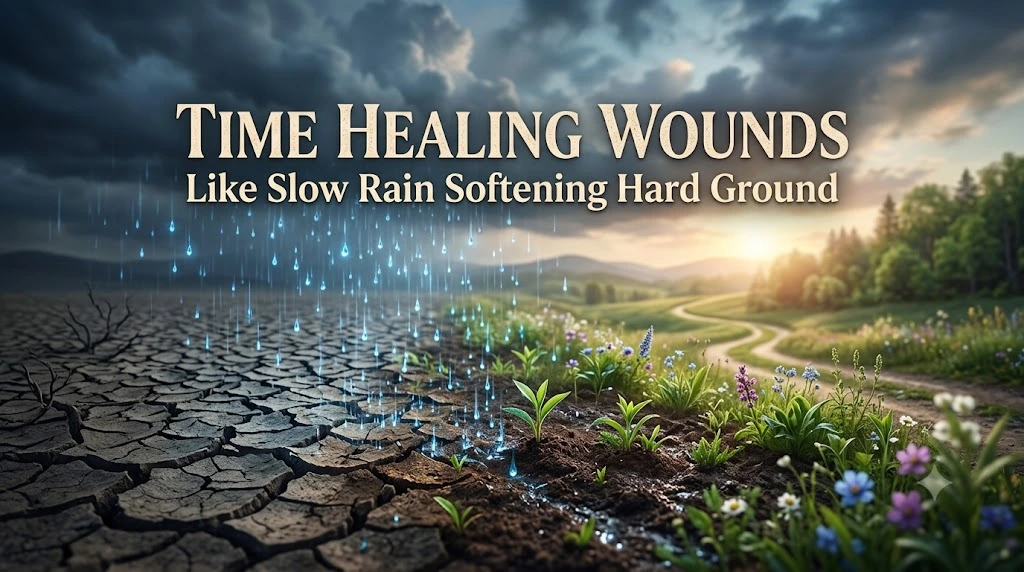
5. Time Healing Wounds Like Slow Rain Softening Hard Ground
Meaning:
This simile compares emotional healing over time to rain softening hard, dry earth. It suggests patience, gentleness, and gradual change.
Usage Insight:
This comparison works well in stories about emotional healing, especially those focusing on recovery from grief, heartbreak, or hardship.
Example Sentences:
- Time healed her wounds like slow rain softening hard ground, gradual but undeniable.
- His anger softened over the months like slow rain softening hard ground, patient work that couldn’t be rushed.
6. An Hour Crawling By Like a Snail Crossing an Endless Path
Meaning:
This simile likens a slow hour to a snail’s pace. It suggests boredom, restlessness, and the frustrating feeling that time has almost stopped.
Usage Insight:
This fits well in scenes of waiting, boredom, or anxious anticipation. It works especially in fiction where tension grows slowly.
Example Sentences:
- The last hour of the shift crawled by like a snail crossing an endless path.
- Waiting for the verdict felt like a snail crossing an endless path, each minute stretching further than the last.
7. Memories Layering Like Rings Hidden Inside an Old Tree Trunk
Meaning:
This simile compares life experiences to the rings in a tree. It shows history, depth, and how years quietly add up.
Usage Insight:
This comparison works well in reflective writing about identity or personal history. It’s especially useful in essays that show how our past experiences shape who we are.
Example Sentences:
- Her memories layered like rings hidden inside an old tree trunk, each one marking a different season of her life.
- His character had formed like rings hidden inside an old tree trunk, shaped quietly by years no one else could see.
8. The Future Approaching Like a Train Whose Whistle Grows Steadily Louder
Meaning:
This simile likens an upcoming event to a train’s whistle getting louder as it approaches. It hints at inevitability, builds anticipation, and creates a sense of urgency.
Usage Insight:
Use this comparison in scenes that build up to a big event. It works well for foreshadowing change, deadlines, or unavoidable outcomes in fiction.
Example Sentences:
- Graduation loomed like a train, its whistle growing louder and harder to ignore.
- The deadline drew closer like a train whose whistle grows steadily louder, demanding attention whether she was ready or not.
9. A Lifetime Passing Like a Single Breath Taken and Released
Meaning:
This simile compares the brevity of an entire life to one breath, suggesting how quickly, in retrospect, decades can feel like they’ve gone by.
Usage Insight:
This works well in reflective and philosophical writing. It’s great for essays or eulogies that think about the briefness of life.
Example Sentences:
- Looking back, his lifetime passed like a single breath taken and released, quick despite everything it held.
- Her ninety years felt, to her, like a single breath taken and released, gone before she had noticed its passing.
10. Old Habits Fading Slowly Like Ink Diluted Drop by Drop
Meaning:
This simile compares the slow fading of old habits to ink losing its colour when mixed with water. It shows that change happens gradually, not all at once.
Usage Insight:
This comparison fits nicely in personal growth or recovery stories. It works best when showing change that occurs slowly, not suddenly.
Example Sentences:
- His old habits faded slowly like ink diluted drop by drop, less visible with each passing month.
- The fear that once controlled her decisions faded like ink diluted drop by drop, until it barely lingered at all.
11. A Deadline Looming Like Storm Clouds Gathering on the Horizon
Meaning:
This simile compares a deadline to storm clouds gathering far away. It shows pressure, tension, and a strong sense of urgency.
Usage Insight:
This is effective in high-pressure or work-focused scenes. It shows stress building up to an important date or event.
Example Sentences:
- The deadline loomed like storm clouds gathering on the horizon, impossible to avoid any longer.
- Exam week approached like storm clouds gathering on the horizon, and she could feel the pressure building daily.
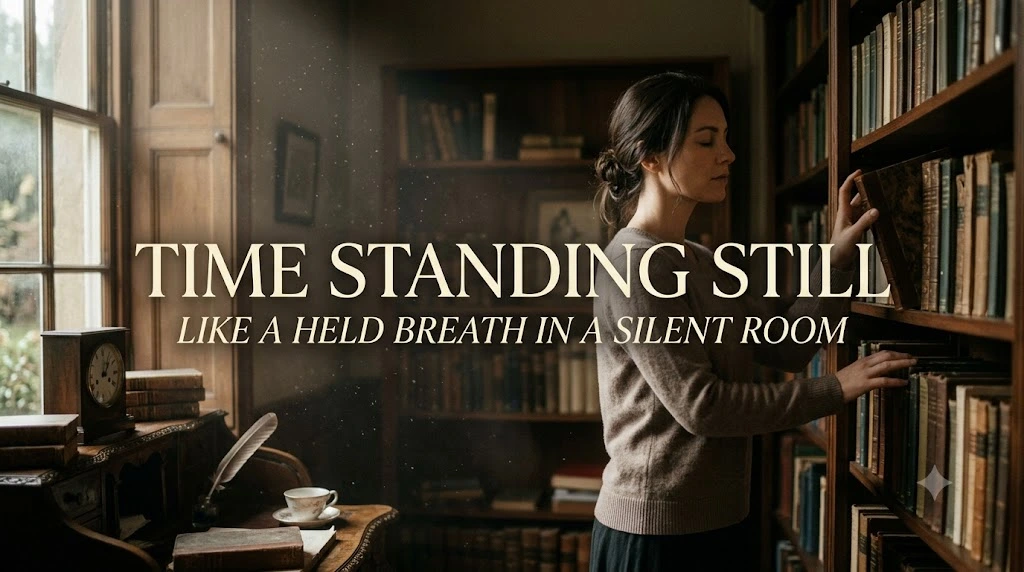
12. Time Standing Still Like a Held Breath in a Silent Room
Meaning:
This simile compares a moment when time feels frozen to holding your breath. It suggests stillness, tension, and a heavy pause.
Usage Insight:
Use this comparison at pivotal emotional moments, particularly right before an important decision, announcement, or realization in a story.
Example Sentences:
- Time stood still like a held breath in a silent room the instant she opened the letter.
- For one long second, everything felt like a held breath in a silent room, waiting for someone to move first.
13. Seasons Cycling Like a Song Returning to Its Familiar Chorus
Meaning:
This simile compares the repeating pattern of seasons to a song’s chorus returning, suggesting rhythm, familiarity, and comforting predictability.
Usage Insight:
This works nicely in nature or seasonal writing, particularly in reflective essays exploring the comforting repetition found in nature’s cycles.
Example Sentences:
- The seasons cycled like a song returning to its familiar chorus, comforting in their predictability.
- Autumn arrived again like a song returning to its familiar chorus, welcome and instantly recognizable.
14. Regret Lingering Like an Echo That Refuses to Fully Fade
Meaning:
This simile compares persistent regret over time to an echo that continues faintly, suggesting how certain feelings about the past remain even as their intensity softens.
Usage Insight:
This comparison is effective in emotionally reflective writing, particularly when exploring how past mistakes continue to influence present feelings.
Example Sentences:
- Regret lingered in him like an echo that refuses to fully fade, quieter now but never entirely gone.
- Years later, the memory remained like an echo that refuses to fully fade, softened yet still audible.
15. The Present Moment Glowing Like a Single Candle in an Otherwise Dark Room
Meaning:
This simile compares the value of the present moment to a lone candle providing light, suggesting clarity, presence, and the importance of focusing on right now rather than the past or future.
Usage Insight:
This works beautifully in closing passages or reflective conclusions, particularly in mindfulness-themed writing or personal essays about living intentionally.
Example Sentences:
- The present moment glowed like a single candle in an otherwise dark room, small but enough to see by.
- She learned to focus on now, letting it shine like a single candle in an otherwise dark room.
How to Use Similes Effectively in Writing
Similes can turn an abstract concept like time into something readers can truly feel, but only when used with intention and restraint. Here are some practical tips for using them across different types of writing.
Poems: Focus on emotional resonance and sensory detail rather than clever wordplay alone. A single, well-placed simile about time often carries more weight than several crowded into one stanza.
For Stories: Use similes to reflect how a character experiences time, particularly by connecting pacing, urgency, or nostalgia to the emotional tone of a scene.
Essays: Similes work best in essays when they clarify a complex or abstract idea by linking it to something familiar. Keep them purposeful, since formal writing rewards clarity over decoration.
For Songs: Similes in lyrics about time should feel natural to sing and instantly understandable, often built around universal images listeners can picture right away.
Creative Descriptions: Match your similes to the pace of the scene. Quick, urgent comparisons suit fast-moving moments, while slower, gentler similes suit reflective or nostalgic ones.
As a general rule, one meaningful simile will always outshine several ordinary ones. Before including a comparison, ask whether it adds clarity or emotional depth; if it doesn’t, it’s better left out.
FAQs
1. What are the best similes for time?
The best similes for time are comparisons that use “like” or “as” to describe how time feels, moves, or passes, such as time slipping through her fingers like sand she couldn’t hold onto or years passing like pages turned by an impatient reader. These comparisons help writers capture the emotional experience of time in a vivid, memorable way.
2. What is the difference between a simile and a metaphor?
A simile compares two things using “like” or “as,” such as “time slipped like sand,” while a metaphor states that one thing is another without comparison words, such as “time was sand slipping through her fingers.” Both add imagery to writing, but similes tend to feel slightly more explicit in their comparison.
3. Why are similes useful when writing about time?
Similes help writers express something as abstract and invisible as time by connecting it to familiar physical images and experiences. This makes time’s passage, whether fast, slow, or frozen, easier for readers to visualize and emotionally connect with.
4. Can similes be used in academic writing?
Yes, similes can be used in academic writing when they help clarify a complicated idea, though they should be used sparingly and with clear purpose. In formal writing, similes work best when they support understanding rather than serve only as decoration.
5. How do I create my own original similes for time?
Start by reflecting on a specific moment when time felt unusually fast, slow, or meaningful, then consider what everyday image or experience captures that same feeling. The strongest similes usually come from honest, personal observation rather than familiar or overused comparisons.
Conclusion
Time moves in a way that words alone often struggle to capture, stretching, slipping, and settling in ways that feel deeply personal to each of us. These best similes for time do more than simply describe a passing moment; they add clarity, imagery, and emotional depth that plain description often cannot achieve alone. Whether you’re writing a poem about a fleeting summer, a story that needs a sense of urgency, or a reflective essay on how quickly life moves, the right simile can turn an abstract idea into something readers genuinely feel. Like rings hidden inside an old tree trunk, our years accumulate quietly, and the best similes help us notice and honor that quiet accumulation. Take a moment to notice how time feels right now, and let your comparisons capture that feeling as honestly as you can.