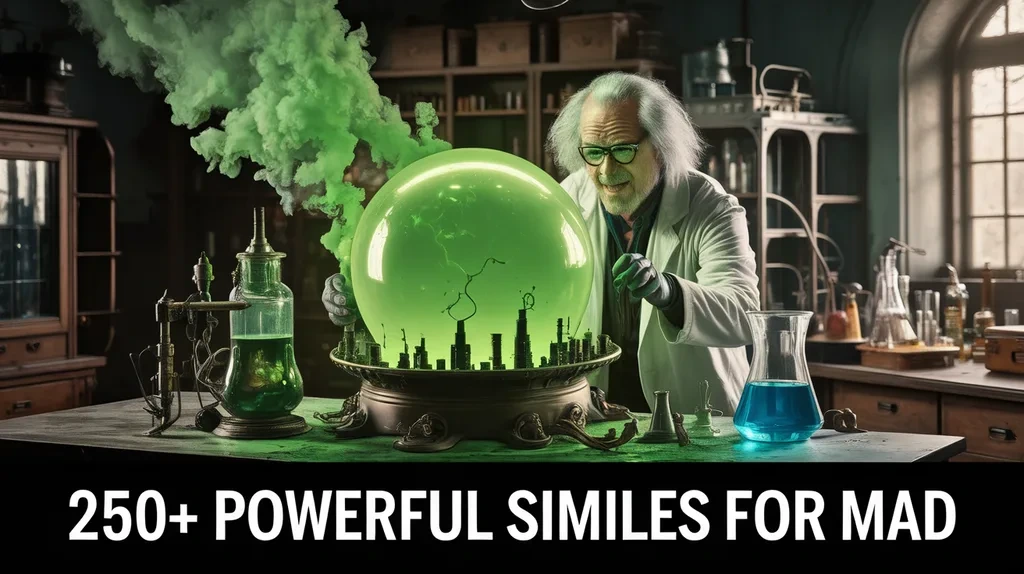
Anger is one of the most intense emotions a person can feel, and capturing it on the page requires more than just saying someone was “mad” or “furious.” A simile is a figure of speech that compares two unlike things using “like” or “as,” helping writers turn a flat emotion into something readers can practically feel in their chest. Similes matter in figurative language because they translate internal experiences—like the heat and pressure of anger—into vivid, external images.
When a writer compares rage to “a volcano ready to erupt,” the reader doesn’t just understand anger, they sense its danger and unpredictability. Nature similes are especially powerful for describing anger, since natural forces like storms, fire, and wild animals already carry that same explosive, uncontrollable energy. In the same way that trees are often used to symbolize strength, growth, resilience, wisdom, and human emotion, forces of nature are used to symbolize the intensity and unpredictability of anger.
Great similes in literature use this kind of charged imagery to make emotional scenes feel immediate and real rather than simply stated. In this article, you’ll discover 15 powerful similes for mad, complete with meanings, usage insights, and example sentences to elevate your own writing.
What Is a Simile?
A simile is a comparison between two different things, usually joined by “like” or “as,” used to make writing more vivid and expressive. Instead of simply stating a fact, a simile helps the reader visualize or emotionally connect with an idea.
For example, saying “he was mad as a volcano ready to erupt” instantly creates a sense of danger and building pressure, far more powerful than simply saying “he was very angry.”
Mad as a Hornet’s Nest Disturbed
Meaning:
This simile compares anger to the sudden, chaotic aggression of hornets when their nest is disrupted, suggesting swift and dangerous fury.
Usage Insight:
It works best when describing anger that erupts suddenly and affects multiple people at once, such as group conflicts or heated confrontations.
Example Sentences:
- The office grew mad as a hornet’s nest disturbed the moment the layoffs were announced.
- Her comment stirred the room mad as a hornet’s nest disturbed, with everyone talking over each other at once.
Mad as a Bull Charging Red Cloth
Meaning:
This simile compares anger to the fierce, single-minded aggression of a bull provoked into charging, suggesting intense focus and force.
Usage Insight:
It’s ideal for describing anger directed at one specific target, especially in confrontational or high-stakes scenes.
Example Sentences:
- He went mad as a bull charging red cloth the second he saw the scratch on his new car.
- She turned mad as a bull charging red cloth, storming toward the manager’s office without slowing down.
Mad as a Boiling Kettle Left Too Long
Meaning:
This simile compares anger to pressure that builds gradually until it finally releases, suggesting frustration that has been simmering beneath the surface.
Usage Insight:
It works well when describing anger that has been building slowly rather than appearing suddenly, especially in long-term conflicts.
Example Sentences:
- After months of being ignored, she was mad as a boiling kettle left too long, ready to say everything she’d held back.
- His patience finally gave out, mad as a boiling kettle left too long after years of the same excuses.
Mad as a Storm Gathering on the Horizon
Meaning:
This simile compares anger to the ominous buildup before a storm, suggesting tension and warning signs before an emotional outburst.
Usage Insight:
It’s effective in dramatic or suspenseful writing, particularly when foreshadowing a coming conflict.
Example Sentences:
- His silence felt mad as a storm gathering on the horizon, and everyone in the room braced for what was coming.
- She could see it building in his expression, mad as a storm gathering on the horizon before he finally spoke.
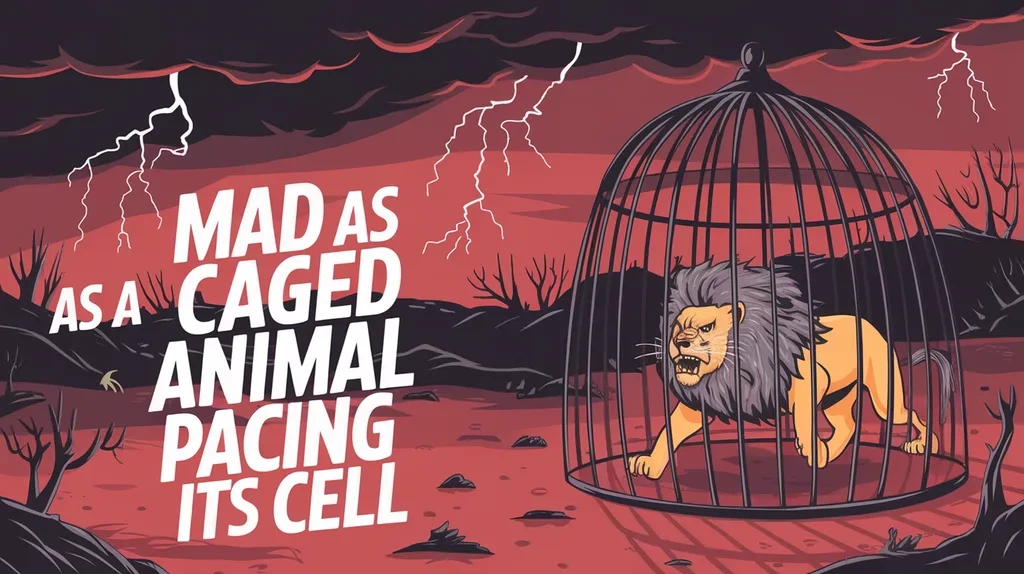
Mad as a Caged Animal Pacing Its Cell
Meaning:
This simile compares anger to restless frustration, suggesting a feeling of being trapped, powerless, or unable to release built-up tension.
Usage Insight:
It works well when describing anger tied to helplessness or confinement, whether literal or emotional.
Example Sentences:
- Stuck in traffic with no way out, he was mad as a caged animal pacing its cell.
- She felt mad as a caged animal pacing its cell, trapped in a job that gave her no room to grow.
Mad as a Volcano Ready to Erupt
Meaning:
This simile compares anger to a volcano on the verge of explosion, suggesting immense pressure building toward an unavoidable release.
Usage Insight:
It’s best used for high-intensity emotional climaxes, where the anger is about to boil over into action or confrontation.
Example Sentences:
- By the time he reached the podium, he was mad as a volcano ready to erupt, unable to hold back any longer.
- The tension in the family had grown mad as a volcano ready to erupt, and everyone knew the argument was coming.
Mad as a Wildfire Spreading Unchecked
Meaning:
This simile compares anger to a fire that spreads rapidly and uncontrollably, suggesting an emotion that grows faster than it can be managed.
Usage Insight:
It works well when describing anger that escalates quickly, particularly in group settings or fast-moving conflicts.
Example Sentences:
- Rumors of the scandal spread through the town, and outrage grew mad as a wildfire spreading unchecked.
- Her frustration turned mad as a wildfire spreading unchecked, consuming every calm thought she’d had moments before.
Mad as a Thundercloud Rolling In
Meaning:
This simile compares anger to the dark, heavy presence of storm clouds approaching, suggesting visible tension before an emotional outburst.
Usage Insight:
It’s effective for describing anger that is clearly building on someone’s face or in their body language before words are spoken.
Example Sentences:
- His expression turned mad as a thundercloud rolling in the moment he read the message.
- She walked into the room mad as a thundercloud rolling in, and everyone quietly stepped aside.
Mad as a Wasp Trapped in a Jar
Meaning:
This simile compares anger to frantic, agitated energy that has nowhere to go, suggesting sharp, restless frustration.
Usage Insight:
It works well when describing short bursts of intense irritation, especially in tense or claustrophobic situations.
Example Sentences:
- Waiting on hold for an hour left him mad as a wasp trapped in a jar.
- She snapped at the smallest interruption, mad as a wasp trapped in a jar after a long, difficult day.
Mad as a Dog Straining at Its Leash
Meaning:
This simile compares anger to restrained aggression, suggesting a strong urge to react that is being forcibly held back.
Usage Insight:
It’s ideal for describing controlled anger, where a character wants to lash out but is holding themselves back.
Example Sentences:
- He stood mad as a dog straining at its leash, biting back every word he wanted to say.
- She clenched her fists, mad as a dog straining at its leash, forcing herself to stay calm during the meeting.
Mad as a Pot Boiling Over
Meaning:
This simile compares anger to a situation where built-up pressure finally spills out, suggesting an emotional release that can no longer be contained.
Usage Insight:
It works well when describing the exact moment frustration turns into an outburst, especially after prolonged tension.
Example Sentences:
- After the third delay, she was mad as a pot boiling over and demanded to speak with a supervisor.
- His temper went mad as a pot boiling over the instant he heard the excuse again.
Mad as a Rattlesnake Coiled to Strike

Meaning:
This simile compares anger to a defensive, dangerous readiness, suggesting a warning that a reaction is imminent if provoked further.
Usage Insight:
It’s effective in tense confrontations, particularly when a character feels threatened or cornered before reacting.
Example Sentences:
- He answered the accusation mad as a rattlesnake coiled to strike, his voice low and sharp.
- She stood her ground, mad as a rattlesnake coiled to strike, refusing to back down from the argument.
Mad as a Riptide Pulling Against the Shore
Meaning:
This simile compares anger to a strong, hidden force working against calm on the surface, suggesting inner turmoil beneath a composed exterior.
Usage Insight:
It works well when describing anger that a character is trying to hide or suppress in front of others.
Example Sentences:
- She smiled through the meeting, mad as a riptide pulling against the shore beneath her calm expression.
- His polite tone hid a temper mad as a riptide pulling against the shore, ready to surface the moment they were alone.
Mad as a Drum Pounded Without Rhythm
Meaning:
This simile compares anger to a chaotic, uncontrolled outburst, suggesting emotion expressed without restraint or structure.
Usage Insight:
It’s ideal for describing loud, unfiltered anger, particularly in dramatic arguments or emotional breakdowns.
Example Sentences:
- His words came out mad as a drum pounded without rhythm, loud and impossible to follow.
- The argument grew mad as a drum pounded without rhythm, each voice louder than the last.
Mad as a Match Struck in Dry Grass
Meaning:
This simile compares anger to a small spark that instantly ignites into something much larger, suggesting how quickly a minor irritation can escalate.
Usage Insight:
It works well when describing situations where a small comment or event triggers a disproportionately strong reaction.
Example Sentences:
- One offhand remark left him mad as a match struck in dry grass, and the argument spread instantly.
- Her patience was already thin, and his joke made her mad as a match struck in dry grass.
How to Use Similes Effectively in Writing
Similes can transform flat description into vivid imagery, but only when used with intention. Here are some practical tips for using similes for mad—and similes in general—across different types of writing:
- poems: Choose similes that match the poem’s emotional tone. A poem about buried frustration calls for “mad as a boiling kettle left too long,” while a poem about explosive rage might use “mad as a volcano ready to erupt.”
- In stories: Use similes to reveal a character’s emotional state without stating it directly. Instead of writing “he was furious,” show it through “he stood mad as a dog straining at its leash.”
- essays: Use similes sparingly and purposefully to add stylistic flair when describing emotional reactions, especially in narrative or reflective essays.
- In songs: Choose short, rhythmic similes that flow naturally when sung aloud, since lyrical similes need to sound as good as they read.
- creative descriptions: Match the simile to the intensity of the emotion—use quiet, building similes for slow-burning anger, and explosive, forceful similes for sudden outbursts.
- General rule: Avoid overusing similes in a single paragraph. One well-placed comparison is often more powerful than several stacked together.
FAQs
1. What are some powerful similes for mad?
Some powerful similes for mad include “mad as a volcano ready to erupt,” “mad as a hornet’s nest disturbed,” and “mad as a boiling kettle left too long.” Each one captures a different stage or style of anger, from sudden outbursts to slow-building frustration.
2. What is the difference between a simile and a metaphor?
A simile compares two things using “like” or “as” (e.g., “mad as a wildfire spreading unchecked”), while a metaphor states that one thing is another without using comparison words (e.g., “his anger was a wildfire”). Similes are generally softer and more descriptive, while metaphors are more direct and symbolic.
3. Why are nature similes so effective for describing anger?
Nature similes work well because forces like storms, fire, and wild animals already carry unpredictable, intense energy, making them ideal for representing the power and danger of anger in a way readers can visualize.
4. Can similes be used in academic writing?
Yes, similes can be used in academic writing, particularly in reflective, narrative, or descriptive writing, but they should be used sparingly and appropriately to maintain a professional tone.
5. How do similes improve creative writing?
Similes improve creative writing by turning abstract emotions into vivid, sensory images, helping readers feel a character’s anger rather than simply reading about it.
Conclusion
Anger is a complex emotion, and describing it well means capturing not just the feeling itself, but its intensity, buildup, and unpredictability. Powerful similes for mad give writers a way to bring that raw emotion to life, whether it’s the slow simmer of frustration or the sudden eruption of rage. By comparing anger to volcanoes, wildfires, coiled snakes, and boiling kettles, these similes add clarity, imagery, and emotional depth that plain description simply can’t achieve. Whether you’re writing poetry, fiction, essays, or song lyrics, choosing the right simile can turn a simple emotional beat into a moment readers truly feel. The next time you need to describe anger in your writing, reach for one of these comparisons and let your words carry all the heat and power that mad emotion deserves.